


 VN
VN EN
ENOver recent years, the hospitality industry has witnessed a powerful wave of digital transformation. From Property Management Systems (PMS), customer service chatbots, and contactless check-in to data analytics tools and Artificial Intelligence (AI), technology is now present at almost every touchpoint in the guest journey.
However, a paradox is emerging. As more businesses invest in automation, customers increasingly desire more personalised and emotional experiences. This indicates that the future of the hospitality industry lies not in choosing between technology and human interaction, but in the ability to harmoniously combine both elements. This is precisely why the "Tech-enabled Human Touch" trend, or "Technology-supported Human Experience," is becoming a key development direction for the global service industry. In this model, machines handle repetitive tasks, data processing, and performance optimisation, while humans focus on values that technology struggles to replace, such as empathy, emotional understanding, and relationship building.
AI is changing the tourism and hospitality industry faster than ever before
According to Euromonitor's Voice of the Consumer: Travel Survey 2025, 51% of global consumers have used AI tools to assist with travel planning. This indicates that AI is no longer a technology of the future but has become part of current consumer behaviour. Euromonitor's Top Five Trends Shaping Travel into 2026 report also states that nearly 60% of surveyed travel and hospitality businesses expect generative AI to directly impact operations within the next 12 months. Personalising experiences and enhancing operational efficiency are becoming key drivers for the adoption of AI in the tourism industry.
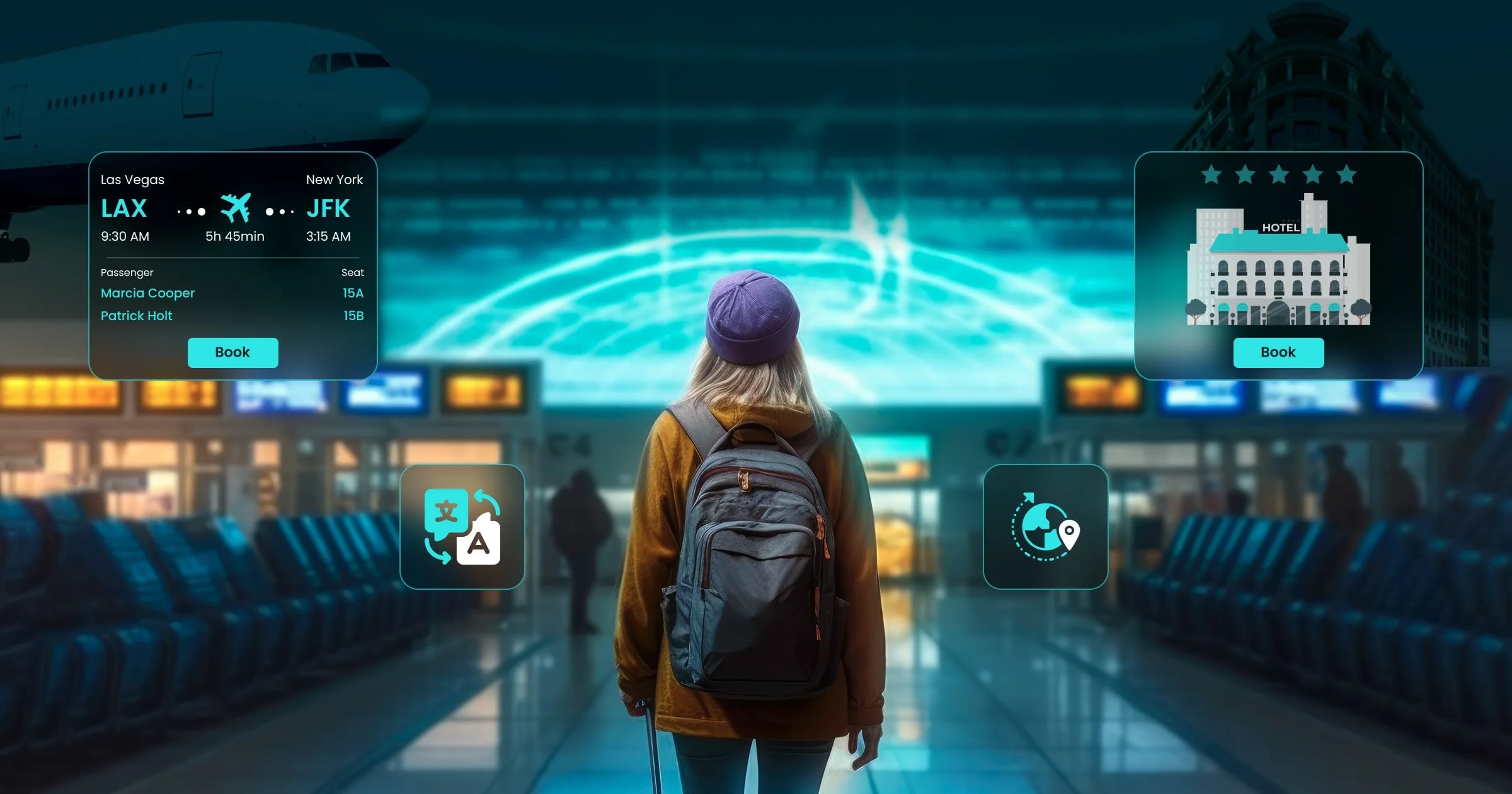
In Vietnam, the readiness to embrace AI is even higher than in many regional markets. A Decision Lab report shows that 78% of Vietnamese internet users have used at least one AI platform in the past three months, and 33% use AI daily. AI is gradually becoming a part of Vietnamese consumers' lives, work, and decision-making processes. These figures indicate that today's customers not only accept technology but also expect businesses to leverage it to deliver faster, more convenient, and more personalised experiences.
But customers need human connection more than ever
Despite the widespread application of AI, many studies show that consumers are not yet ready to completely replace human-to-human interaction with machines. According to Deloitte's research on the future of the hospitality industry, 76% of hotel operators believe that personalised experiences enhance brand reputation and repeat customer rates. Simultaneously, 70% believe that technology can help create better personalised experiences. Notably, Deloitte does not view technology as a replacement for humans but as a tool to help employees serve customers more effectively.

Another customer service experience survey shows that 80% of consumers achieve better results when assisted by a human rather than interacting solely with AI. Only 2% of respondents wished to communicate entirely with a chatbot without employee support. This reflects an important reality: customers appreciate the convenience that technology offers, but when problems arise, they still want to be heard by a real person. In the hotel industry, where emotions play a crucial role in customer experience, the human element remains the foundation for differentiating brands.
Tech-enabled Human Touch: A new operating model for the hospitality industry
While the initial phase of digital transformation focused on replacing humans with technology, the current phase aims to empower humans with technology. In the Tech-enabled Human Touch model, AI will handle data processing, demand forecasting, process automation, and decision support. Meanwhile, hotel staff will focus on activities that create emotional value, such as consulting, customer care, problem-solving, and relationship building. For example, AI can analyse stay history to identify customer preferences, automatically suggest suitable room types, or forecast service usage needs. However, greeting guests by name, remembering special requests, or subtly handling unforeseen situations still requires human presence. In other words, AI helps staff understand customers better, but it is humans who create positive emotions for customers.
Typical applications of Tech-enabled Human Touch in hotels
One of the most common applications today is personalising the customer experience. Through data collected from previous stays, AI can help hotels predict preferences for room types, dining menus, service usage times, or special needs of individual guests. This allows staff to proactively prepare and create a sense of being cared for from the very first touchpoints.

Additionally, chatbots and virtual assistants can handle frequently asked questions, assist with bookings, or provide basic information 24/7. This helps front desk teams reduce administrative workload to focus more on high-value interactions. In revenue management, AI also supports market demand analysis, room occupancy forecasting, and real-time pricing recommendations. However, the final decision still requires evaluation by experienced managers who understand the hotel's business context.
The biggest challenge is not technology, but trust
Although AI is developing rapidly, trust remains the biggest barrier to technology adoption. According to many studies on consumer behaviour, customers often worry that over-reliance on AI could diminish individuality, creativity, and the feeling of being cared for during the service experience. Factors such as transparency, the ability to explain decisions, and human presence still play a crucial role in building trust with customers. This is especially true for the hotel industry, where the core product is not a room or a meal, but the experience.

Customers may be satisfied using AI to book a room, but they still want a dedicated staff member to assist them if their trip encounters problems. They may accept a chatbot advising on services, but still wish to receive a sincere greeting from the hotel team on special occasions. That is why the future of hospitality is not "AI replacing humans" but "AI empowering humans to excel."
The future belongs to hotels that balance technology and emotion
According to Euromonitor, personalisation, technology, and authentic experiences are the three major trends shaping the global travel industry in the new era. Businesses that invest solely in technology while neglecting the human element will struggle to create sustainable differentiation. Conversely, those that leverage data and AI to empower their teams to deliver deeper experiences will have greater opportunities to build long-term competitive advantages.
In an increasingly digital world, the value of empathy, connection, and genuine care does not diminish. On the contrary, these values are becoming scarcer and more valuable than ever.
Conclusion
The development of AI is opening up unprecedented opportunities for the hospitality industry to enhance operational efficiency, personalise experiences, and optimise resources. However, technology only truly creates value when it is used to serve people. The Tech-enabled Human Touch trend indicates that the future of hospitality does not belong to hotels with the most technology, but to those that use technology to help their teams understand guests better, serve them more effectively, and create more emotionally rich experiences. Ultimately, guests may forget a smart booking app, but they will always remember the feeling of being cared for by real people. If your business is seeking solutions to balance technology and emotional experiences to enhance competitiveness in this new era, contact NewSun Hospitality for consulting from our experienced team of hospitality experts.
- Hotline: +84 768 68 2913
- Email: dosm@nshm.com.vn
- Zalo OA: https://zalo.me/2452770272256938463 (NewSun Hospitality)
- Website: https://nshm.com.vn/ (NewSun Hospitality)
References:
- Decision Lab. (2025). The State of Consumer AI in Vietnam 2025. Retrieved from https://www.decisionlab.co/
- Deloitte & Mews. (2024). Humanising Hospitality Through Technology. Retrieved from https://www.deloitte.com/
- Euromonitor International. (2025). AI: A Turning Point in Global Travel. Retrieved from https://www.euromonitor.com/
- Euromonitor International. (2025). Top Five Trends in Travel. Retrieved from https://www.euromonitor.com/
- Euromonitor International. (2025). Top Five Trends Shaping Travel into 2026. Retrieved from https://www.euromonitor.com/
- Pega & YouGov. (2025). Consumer Attitudes Toward AI Customer Service. Retrieved from ITPro.
- Kantar. (2025). Connecting with the AI Consumer. Retrieved from https://www.kantar.com/