


 VN
VN EN
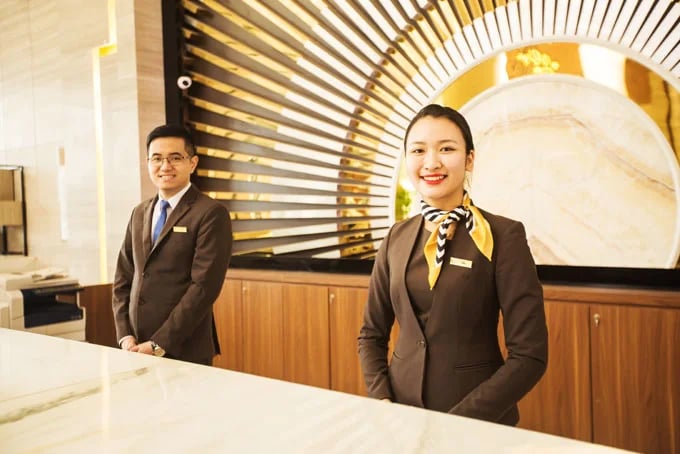
ENIn the hospitality industry, not every experience is perfect. A room not ready on time, an unfulfilled special request, or an incident during a stay can all lead to customer dissatisfaction. What's noteworthy is that customers often don't judge a hotel based on whether an incident occurred, but rather on how the hotel responds to and resolves the issue. At the first touchpoint of the customer journey, the front office acts as the "face" of the hotel. This is not only where check-in and check-out procedures are handled, but also where most guest feedback, inquiries, and complaints are received. In many cases, just a few minutes of conversation at the front desk can determine whether a customer becomes a brand advocate or leaves negative reviews on online platforms.
According to Deloitte, modern customer expectations extend beyond receiving standard service; they also seek prompt, personalised responses and immediate problem resolution. Customer experience is now the most critical competitive factor for hotel brands. This raises a crucial question for hotel managers: Are front-line staff sufficiently empowered to resolve customer issues at the point of occurrence?
What is empowerment and why is it increasingly important in the hotel industry?
Empowerment is a management approach that allows frontline employees to proactively make decisions within a predefined scope to address customer needs or issues without waiting for approval from multiple management levels.

In a hotel environment, this might include allowing front desk staff to proactively upgrade rooms in appropriate situations, assist guests with room changes when issues arise, offer service vouchers as an apology, or flexibly handle special requests without seeking management approval. The essence of empowerment is not about giving employees more power, but about equipping them with the right tools, knowledge, skills, and confidence to make sound decisions when needed.
Why is the front desk the department that needs the most empowerment?
The front desk is where direct customer interaction is most frequent throughout the entire stay. It is also the first point of contact for guests when they encounter problems. According to numerous studies on customer experience in the hotel industry, response speed and the ability to resolve issues at the point of occurrence significantly impact customer satisfaction. When an employee constantly has to seek management approval for simple situations, guest waiting times increase, negative emotions escalate, and the likelihood of poor reviews also rises.
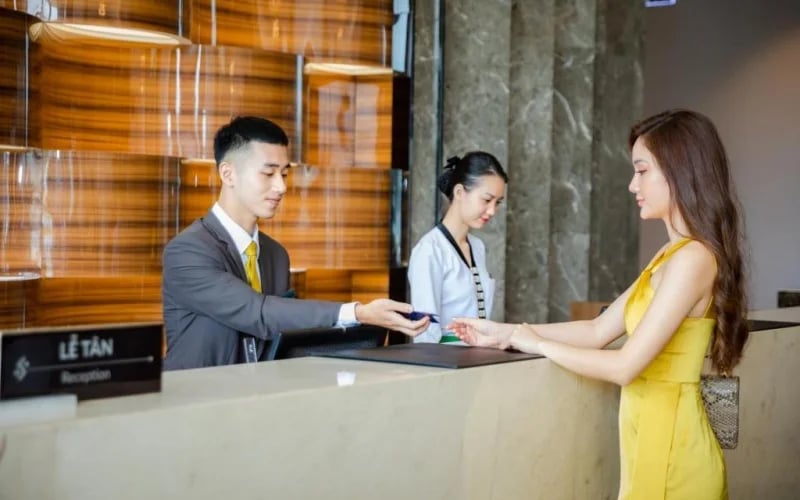
Conversely, when front desk staff have sufficient authority to resolve issues within their scope, guests perceive professionalism, proactivity, and care from the hotel. In many cases, a well-resolved experience can foster greater loyalty than experiences without any issues. This is why many international hotel brands consider empowerment a crucial part of their customer experience management strategy.
Key benefits of empowering front desk staff
Reduced complaint resolution time
In the service industry, time is a critical factor in shaping customer perception. An issue resolved within five minutes often creates a far more positive experience than a similar issue that takes hours awaiting approval. When front desk staff are appropriately empowered, hotels can significantly reduce the time taken to handle emerging situations, while also limiting information transfer across multiple management levels.
Enhanced customer experience
Customers do not expect absolute perfection. What they expect is to be heard, understood, and supported promptly. An employee who can proactively offer solutions directly at the front desk makes guests feel more respected and cared for. This is a crucial factor in improving satisfaction scores and the likelihood of repeat visits.
Reduced pressure on management teams
In many hotels, mid-level managers spend most of their time dealing with repetitive operational issues instead of focusing on business strategy or team development. When an effective empowerment system is in place, common situations are handled at the frontline. This frees up management to focus on more strategic matters.
Increased employee engagement
One reason service employees feel unmotivated is their lack of decision-making power over their own work. When trusted and empowered, employees tend to be more proactive, more confident, and feel their role is more meaningful to the overall success of the business. This contributes to higher engagement and reduced turnover rates in the hotel industry.
Why do many hotels still struggle with implementing empowerment?
Despite the clear benefits, many hotels remain hesitant to empower frontline staff. The most common reason is the fear that employees will make wrong decisions, leading to financial losses or inconsistencies in service quality. However, the problem often lies not in empowerment itself, but in how it is implemented. [caption id="attachment_6470" align="aligncenter" width="640"]

Cheerful Vietnamese business team applauding[/caption] Empowerment does not mean letting employees decide everything themselves. An effective empowerment programme always comes with clear procedures, specific authority limits, sample scenarios for reference, and continuous training. In the context of Vietnam's tourism and hospitality industry still facing a shortage of high-quality personnel, investing in training and developing the capabilities of frontline teams is more essential than ever. According to the Vietnam Tourism Training Association (VITEA), the tourism industry currently needs about 40,000 new workers annually but can only meet approximately 20,000. Furthermore, only about 43% of the current workforce is professionally trained. These figures indicate that enhancing the decision-making capabilities of existing teams can yield faster and more sustainable results than continuous new recruitment.
How to effectively implement empowerment in hotels?
For empowerment to truly be effective, hotels need to establish a clear empowerment framework for each position. Employees must understand what they are allowed to decide, within what budget limits, and in which situations they need to report to their superiors.

Alongside this, training programmes are needed for complaint handling skills, communication skills, problem-solving mindset, and emotional management. Employees can only make good decisions when they are equipped with the necessary knowledge and tools. Additionally, businesses need to foster a culture that accepts mistakes within controlled boundaries. If employees constantly fear reprimand for every decision they make, they will tend to revert to the old way of waiting for instructions from superiors.
Conclusion
In an era where customer experience is a core competitive factor in the hospitality industry, the ability to resolve complaints quickly and effectively at the first point of contact is as valuable as any marketing campaign. Empowering front-line staff is not merely a human resources management technique, but a strategy to enhance customer experience. When staff are trusted, trained, and appropriately empowered, they can transform undesirable situations into opportunities to build customer trust and loyalty. This is when the front office not only performs operational functions but also becomes a crucial force in building the brand and increasing hotel revenue. If your business is seeking solutions to enhance customer experience, increase the proactivity of your front-line team, and build a culture of service excellence, contact NewSun Hospitality for in-depth consulting from hotel operations experts.
- Hotline: +84 768 68 2913
- Email: dosm@nshm.com.vn
- Zalo OA: https://zalo.me/2452770272256938463 (NewSun Hospitality)
- Website: https://nshm.com.vn/ (NewSun Hospitality)
References:
- Deloitte. (2024). Hotel Guest Experience Strategy: Next Generation Hotel Guests Have Checked In. Retrieved from Deloitte Insights. https://www.deloitte.com/
- Vietnam Tourism Education Association. (2025). Tourism workforce development challenges in Vietnam. Reported by VietnamNet. Retrieved from https://vietnamnet.vn/
- Voice of Vietnam. (2025). Tourism industry needs high quality hands-on training to improve workforce. Retrieved from https://english.vov.vn/
- Vietnam News Agency. (2025). Vietnam’s tourism industry needs high quality hands-on training to improve workforce. Retrieved from national tourism workforce reports.