


 VN
VN EN
ENFrom "overnight stay" to "day-use experience"
For many years, hotel business performance has typically been measured by familiar metrics such as occupancy, ADR, and RevPAR. Operational logic has therefore revolved around a fundamental unit: an overnight stay. However, as travel behaviour becomes increasingly flexible, the lines between "travelling," "resorting," "going out," and "finding time to recharge" are becoming less distinct.
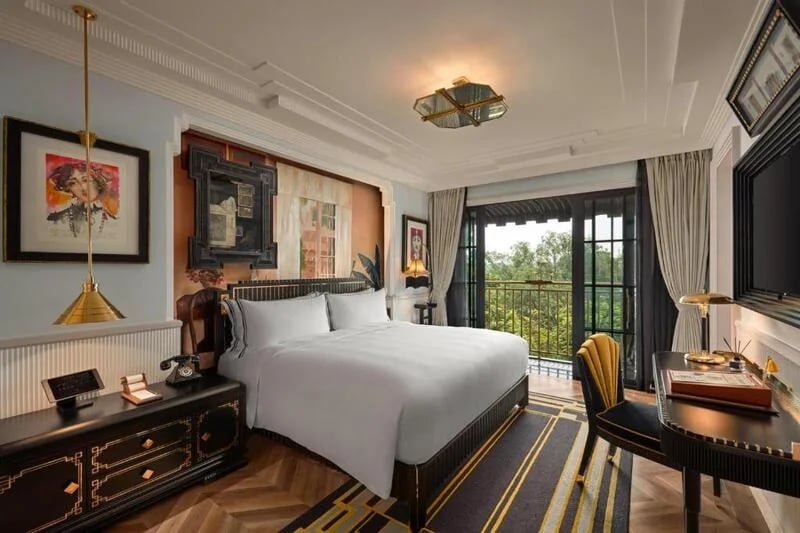
This is the context in which "Daycation" has emerged as a notable trend. While a Staycation involves guests choosing to relax at a hotel or resort near their home instead of taking a long trip, a Daycation takes it a step further: guests enjoy the hotel's products and services for the day without an overnight stay. A Daycation could be a day by the pool, a spa and wellness session, a brunch, a private workspace, an F&B experience, a family package, or a series of services designed as a "mini getaway."
Notably, Daycation does not create entirely new demand. It commercialises existing needs that hotels have not yet systematically packaged and sold.
When travel doesn't necessarily mean an overnight stay
The Vietnamese tourism market has a favourable foundation for short-duration experience models. According to the Vietnam National Authority of Tourism, in the first six months of 2026, Vietnam served approximately 81 million domestic tourists, with total revenue from tourism estimated at 569 trillion VND. During the same period, international arrivals reached about 12.2 million, indicating that travel and tourism consumption demand continues to be large-scale.
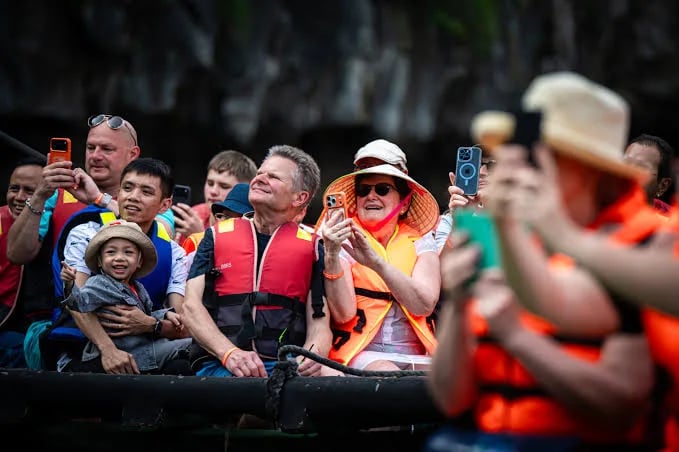
However, the number of tourists does not equate to the number of overnight stays. This is precisely the gap that Daycation can address. A person can spend an entire day at a destination, using restaurants, swimming pools, spas, gyms, entertainment areas, or other amenities without needing to rent a room. If a hotel only considers "staying guests" as true customers, a significant portion of consumer demand may be outside its revenue system.
This trend also aligns with changes in Vietnamese travel behaviour. Q&Me once noted that 30% of surveyed individuals took a domestic trip at least once every three months; among the surveyed group, nature, culture, and cuisine were important reasons when choosing a destination. Meanwhile, Euromonitor identified that Vietnamese consumers tend to prefer day trips and are increasingly interested in relaxation, safety, personalisation, and experiences that offer a distinct feeling.
This suggests a significant shift in market perspective: not every need for rest requires an overnight room.
Daycation is not "selling rooms by the hour"
One of the risks when approaching Daycation is equating this model with day-use rooms or selling rooms by the hour. The two concepts may be related but are not entirely the same.
Day-use primarily addresses the need to use a room for a specific period. In contrast, Daycation should be viewed as an in-day experience product, where a room is merely an optional component.
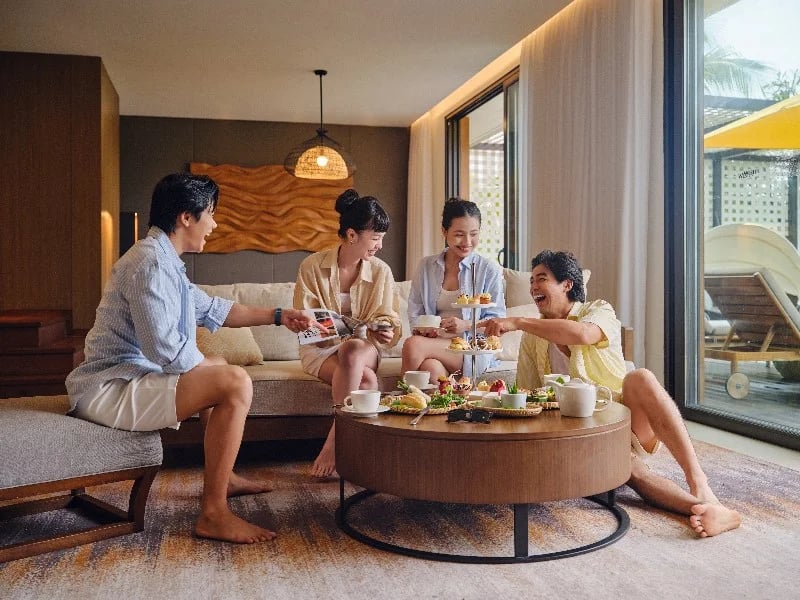
A premium Daycation package might include breakfast or brunch, access to the pool, spa treatments, fitness, afternoon tea, cocktails, children's activities, or a private space. The product's value lies not in "how long guests stay in the room," but in the overall experience guests receive during their time at the hotel.
This is a crucial strategic difference. If a hotel only sells "non-overnight rooms," it is trying to optimise an existing asset. If it designs Daycation as a complete product, the hotel is creating a new revenue stream based on its existing service ecosystem.
Why should hotels be interested in Daycation?
1. Expanding the market beyond overnight guests
A city hotel might be only a 15 to 30-minute drive from a customer's home. For this group of customers, an overnight weekend stay is sometimes unnecessary. They might simply want to escape their daily routine for a few hours, enjoy a good meal, use the spa, relax by the pool, or spend time with family.
This is a customer segment that the traditional accommodation model struggles to reach if the product is designed primarily for those needing a room. Daycation allows hotels to expand their market to local residents, families, couples, business travellers with free time, transit guests, groups of friends, and even those seeking a different workspace or relaxation environment.
Q&Me also shows that Vietnamese people tend to organise their own trips and consider price an important factor in their travel decisions. In this context, a product with a lower total cost than an overnight stay but still offering the feeling of "being on holiday" can become a worthwhile option for certain segments.
2. Increasing revenue from existing assets
A hotel owns more than just guest rooms. Behind each room is an ecosystem comprising restaurants, bars, swimming pools, spas, gyms, event spaces, landscaping, entertainment facilities, and a team of staff.
If a hotel focuses solely on selling rooms, these assets may not be fully utilised during certain hours or off-peak days. Daycation creates an opportunity to combine them into commercially valuable products.
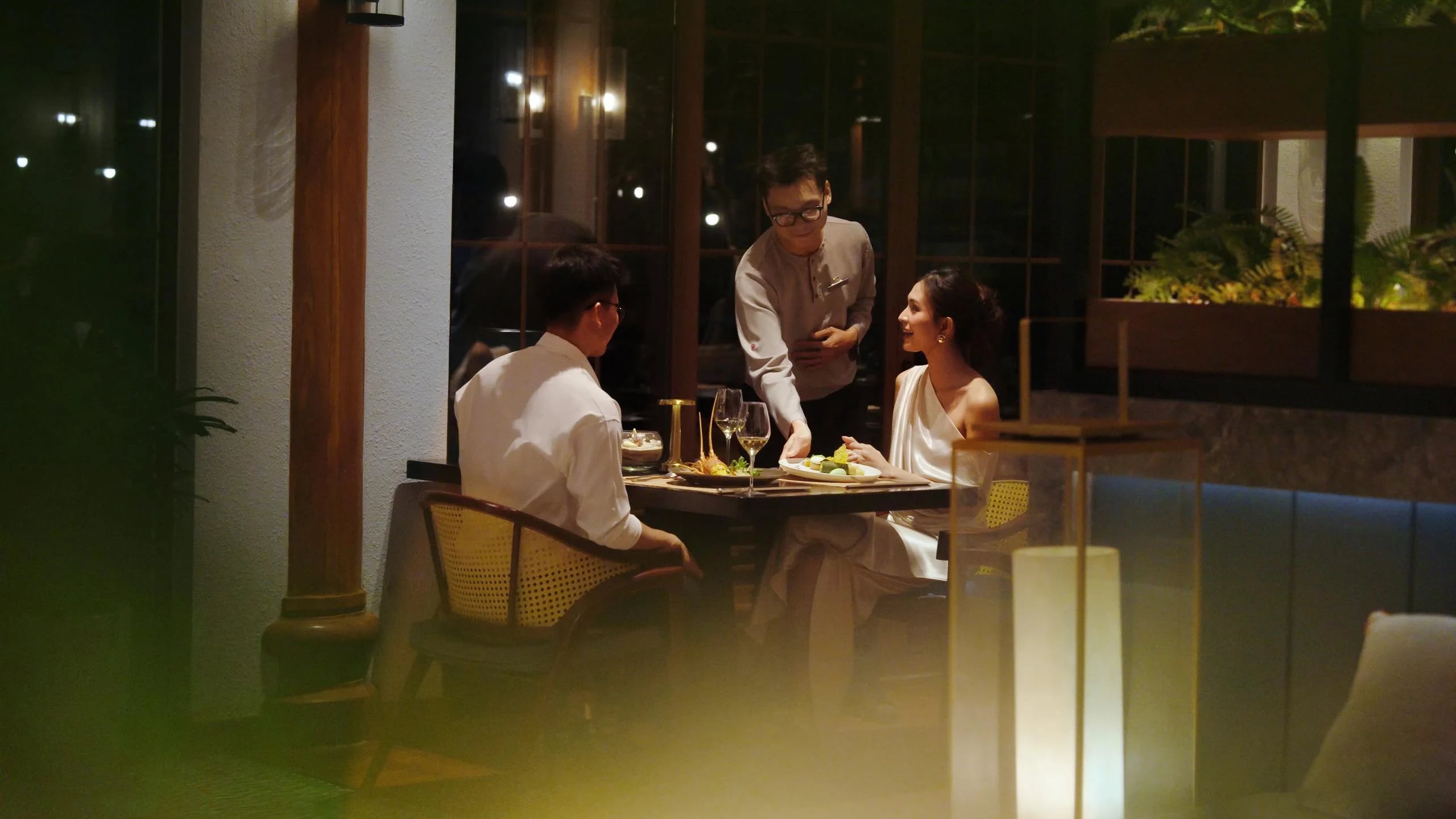
In particular, F&B can become one of the most significant drivers. Instead of selling a brunch or an afternoon tea separately, hotels can create packages that include brunch, pool access, spa, or wellness activities. In this scenario, each customer is no longer seen merely as a "cover" at the restaurant but becomes a multi-service revenue source.
3. Reducing reliance on room occupancy
In the hotel industry, rooms are an asset with "finite" availability over time. A room night that isn't sold can almost never recover its revenue the next day. But other services can be designed more flexibly.
A swimming pool can still serve Daycation guests even if the hotel doesn't have many vacant rooms. A restaurant can serve additional local guests at appropriate times. A spa can create seasonal packages. Meeting spaces can be converted into private dining products, workshops, or wellness experiences.
Therefore, Daycation does not necessarily have to compete with room revenue. If well-managed, it can become an additional revenue layer, especially during periods of weak accommodation demand.
How should hotels design Daycation?
The first step isn't to create many more packages, but to clearly define the job to be done for each guest segment. A couple might need an "escape for two"; families might need a "family day out"; a group of friends might be interested in the pool, F&B, and entertainment; business travellers might need a workspace combined with wellness; while local guests might be looking for a short, yet luxurious, day off.

Based on that demand, the hotel then designs the product. A resort might develop Daycation with a focus on wellness, family, or nature experiences. A city hotel could concentrate on brunch, spa, rooftop, afternoon tea, pool, and lifestyle. A luxury hotel could create private Daycations with dining, treatments, and concierge experiences.
The key is that the product must offer clear perceived value. Customers need to immediately understand what they will receive, how long the experience will last, what makes it unique, and why this package is a better value than purchasing individual services.
Then there's the operational challenge. While daycations can generate additional revenue, they can also put pressure on the experience of overnight guests if the number of day guests, time slots, and usage areas are not controlled. Therefore, a booking mechanism, capacity limits, area allocation, peak hour management, and specific policies for different guest segments are essential.
From "Room Night" to "Experience Revenue"
In the next phase of the hospitality industry, competition may no longer be about who sells more rooms, but about who can convert more touchpoints into revenue while maintaining service quality.
Daycations are one way for hotels to achieve this. This model is particularly suitable for hotels with a rich ecosystem of amenities, located near residential centres or urban destinations, with strong F&B, spa, wellness, swimming pools, or spaces that can be repurposed.

However, for Daycation to create real value, businesses cannot start by asking, "What else can we sell?". The question should begin with, "How do customers want to spend their day, and where can the hotel best design that experience?"
When the answer is clear enough, Daycation is no longer a secondary product. It can become a new revenue stream, a tool to increase engagement with local customers, and more importantly, a shift from hospitality based on accommodation to hospitality based on experience.
NewSun Hospitality: Rethinking Business Models Based on Market Demand
For investors and hotel businesses, effective Daycation exploitation requires more than just a promotional programme. It demands a synchronised approach across market research, product positioning, experience design, pricing, distribution, operations and technology.
With an approach from research, diagnosis, solution design to implementation and operational support, NewSun Hospitality can work with investors to assess the Daycation potential of each project, identify target segments, design product models, and build commercialisation plans tailored to the asset's characteristics.
The market is shifting from "a place to stay" to "a place for experiences". This is also a time for hotels to re-evaluate how they generate revenue.
- Hotline: +84 768 68 2913
- Email: dosm@nshm.com.vn
- Zalo OA: https://zalo.me/2452770272256938463 (NewSun Hospitality)
- Website: https://nshm.com.vn/ (NewSun Hospitality)
References
- Vietnam National Authority of Tourism. (2026). Preliminary Review of Work in the First 6 Months of 2026. Tourism Information Centre.
- Deloitte. (2026). 2026 travel industry outlook. Deloitte Consumer Industry Center.
- Deloitte. (2026). Flight or fold: 2026 Deloitte summer travel survey. Deloitte Consumer Industry Center.
- Decision Lab. (2026). The rise of independent travel in Vietnam is changing how destinations, airlines, and tour brands compete. Decision Lab.
- Euromonitor International. (2025). Travel in Vietnam. Euromonitor International.
- Euromonitor International. (2026). Megatrends in Vietnam. Euromonitor International.
- Kantar. (2026). Connecting with the tourism community. Kantar.
- Q&Me. (2026). Vietnamese favorite domestic travel destination. Asia Plus Inc.
- Q&Me. (n.d.). Online travel behavior of Vietnamese. Asia Plus Inc.
- Savills Vietnam. (2025). Hotel & serviced apartments market brief. Savills Vietnam.