


 VN
VN EN
ENVietnam Hotel Investment Landscape: End of 2026
While the post-pandemic recovery phase was defined by the "return of demand", late 2026 is ushering in a different era for Vietnam's hotel market: a restructuring phase focused on enhancing asset quality and efficiency. Opportunities still exist, but project selection criteria are significantly shifting. Investors are no longer solely interested in prime locations, room count, or new construction potential, but are increasingly prioritising revenue generation, cost control, asset value appreciation, and long-term competitiveness.
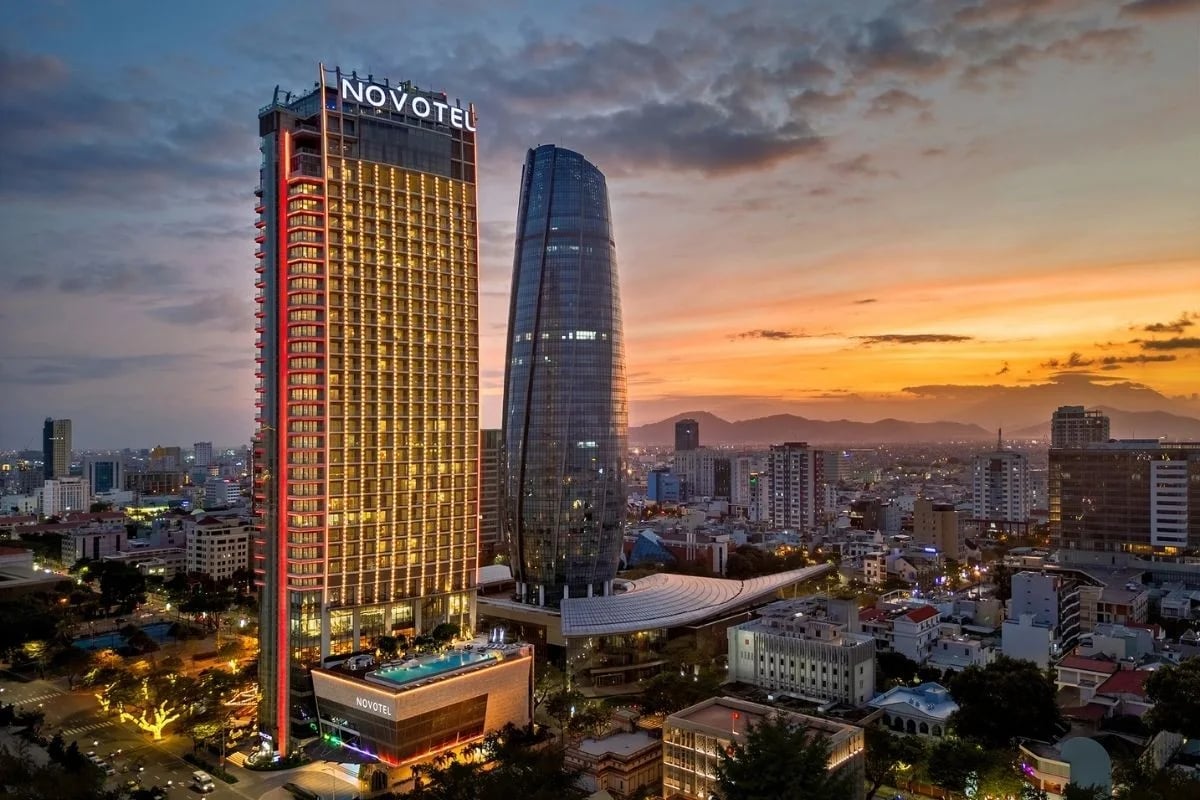
The latest data indicates that market demand fundamentals remain positive. In the first six months of 2026, Vietnam welcomed approximately 12.2 million international visitors, an increase of 14.8% compared to the same period in 2025; domestic visitors reached about 81 million, and total tourism revenue was estimated at 569 trillion VND. Previously, Q1 2026 recorded approximately 6.76 million international visitors, the highest ever recorded in a single quarter, up 12.4% year-on-year. These figures show that visitor traffic continues to form a crucial foundation for accommodation, leisure, and tourism services in Vietnam. However, increased demand does not mean every hotel project will be profitable. In the same destination, hotels with similar locations can still achieve very different business results depending on product positioning, operational quality, distribution systems, pricing strategy, and customer acquisition capabilities. This is why late 2026 should be seen not just as a time to "invest in hotels," but as a time to invest in a hotel business model capable of efficient operation.
1. Asset Upgrades and Repositioning Become a Noteworthy Investment Trend
One of the most prominent trends in the hotel market in 2026 is the shift from developing entirely new projects to upgrading, renovating, and repositioning existing assets. According to Savills Hotels, over 68% of the existing hotel supply in Vietnam is owner-operated. A portion of these properties has not fully adopted international operating standards or invested adequately in the customer experience. This creates a significant "value gap": an asset that may not be performing optimally is not necessarily a poor asset, but rather one operating below its potential. This is particularly important for investors in late 2026. Instead of committing large capital to an entirely new project, investors can consider operational hotels with room for improvement in design, product, brand, revenue, and operations. A project with a good location, suitable asset structure, and existing customer base but operating below standard can generate more attractive value growth than a new project that has to build its market from scratch.

Savills also notes that new supply in Hanoi and Ho Chi Minh City faces certain limitations. In Hanoi, approximately 4,000 new rooms are expected to enter the market by 2028, primarily in the upscale and luxury segments, while Ho Chi Minh City currently has fewer than 1,500 rooms in its pipeline. Given that land availability and project development procedures are increasingly critical factors, leveraging existing assets in strategic locations becomes a notable direction. Therefore, late 2026 may see increased M&A activity, changes in operating models, product upgrades, and hotel brand repositioning. Investment value lies not just in the purchase price of the asset, but in the gap between current performance and achievable performance after restructuring.
2. Investing in Experiences Rather Than Just Space and Facilities
The hotel market is entering a phase where "more" no longer equates to "better." A hotel with numerous facilities but lacking a brand story, identity, and compelling reasons for guests to choose it can still struggle to compete. According to Savills, in some coastal destinations like Ha Long, Nha Trang, and Mui Ne, existing supply is significantly concentrated in the mid-range segment, where price competition is intense. Meanwhile, demand from European, Indian, Northeast Asian guests, and Vietnam's expanding middle class is shifting towards a greater emphasis on quality, experience, service, and amenities.

This creates a significant shift in investment thinking. Future hotels should not be designed solely based on the question "how many rooms?", but rather by starting with "which customers will choose this product and what are they willing to pay for?". A resort can gain an advantage through local experiences, wellness, cuisine, nature, or specialized retreats. An urban hotel can differentiate itself through design, F&B, co-working spaces, MICE, or cultural experiences. A small boutique hotel may not compete on the quantity of amenities but can compete on personalization and brand story. For investors, this means Product Definition must be completed before deciding to invest in design and construction. Customer positioning, concept, room structure, F&B, amenities, target selling price, and revenue strategy need to be studied as a unified system.
3. The Premium Segment Still Holds Potential, But "Premium" Must Come With Real Value
A paradox is emerging in the global tourism market: consumers tend to be more cautious with spending, yet are still willing to pay more for experiences they truly value. Deloitte, in its 2026 Travel Industry Outlook report, notes that travelers are becoming more cautious due to economic uncertainties, reflected in their consideration of the number of trips, duration, travel distance, and accommodation class. However, the demand for travel has not disappeared; instead, behavior is shifting towards "value-driven," meaning consumers are still spending but demand clearer value in return.

This is an important signal for the premium segment in Vietnam. The opportunity lies not simply in building a 5-star hotel, but in the ability to demonstrate why customers should pay a higher price. A larger room does not necessarily lead to a higher selling price. But a quality sleep experience, personalized service, distinctive design, excellent cuisine, wellness, private spaces, or local experiences can create significantly higher perceived value. Therefore, the investment trend in late 2026 will lean more towards selective premiumization. Investors need to clearly identify the factors that drive willingness to pay, rather than broadly expanding amenities and increasing investment costs without a corresponding increase in revenue.
4. New Destinations Will Attract Attention, But Infrastructure Must Come First
Alongside traditional hubs like Hanoi, Ho Chi Minh City, Da Nang, and popular resort destinations, new markets are attracting interest as transport infrastructure improves. Savills assesses that areas such as Quy Nhon, Phu Yen, Ho Tram, and some satellite areas in the North are benefiting from infrastructure development progress, including Long Thanh International Airport and key expressways. However, infrastructure potential does not automatically guarantee the success of hotel projects.

A new destination often requires time to develop its tourism ecosystem, including air routes, transportation, attractions, restaurants, entertainment, human resources, and distribution networks. Therefore, investors need to evaluate destinations based on their development cycle rather than solely on property value appreciation expectations. A project might have a prime land plot but still fail if there isn't a suitable customer market. Conversely, a moderately sized asset in an area with good infrastructure, a product that meets demand, and an effective distribution strategy can generate more sustainable cash flow. By late 2026, therefore, the competition will not only be between destinations but also between business models that truly understand the destination.
5. Hotel Investment Models Will Shift From "Building Assets" to "Building Cash Flow"
One of the most significant shifts in hospitality investment thinking is the move from a real estate mindset to a business mindset. A hotel cannot be fully evaluated solely by land value, construction costs, or post-completion asset value. True effectiveness must be viewed through its ability to generate revenue from rooms, F&B, MICE, wellness, ancillary services, and, more importantly, its ability to convert revenue into operating profit.

This makes metrics such as Occupancy, ADR, RevPAR, GOP, and GOPPAR increasingly crucial in the decision-making process. A project might achieve high occupancy but still not be efficient if it relies too heavily on discounting. Conversely, a hotel with moderate occupancy that maintains a good ADR, effectively controls costs, and has a diversified revenue structure can generate more attractive cash flow. Therefore, pre-investment market research needs to delve deeper into customer sources, seasonality, competitive pricing, ADR growth potential, operating costs, staffing structure, distribution costs, and sales strategies. This step helps investors determine whether a hotel idea truly has the potential to become a viable business model or is merely an attractive concept on paper.
6. Green Investment and Efficient Operations Will Become Competitive Standards
Sustainable development is gradually shifting from an image story to an operational efficiency story. For a hotel, energy saving, water management, waste reduction, HVAC optimisation, and the selection of sustainable materials and design can all directly impact operating costs over the asset's lifecycle. Deloitte's research on the future of the hospitality industry also indicates that new accommodation models are combining experiences with solutions to reduce environmental impact, from independent energy systems to local materials and more flexible development models.

In Vietnam, this trend is particularly significant for resorts and projects in natural destinations. As customers increasingly value authenticity, wellness, nature, and responsible experiences, the "green" factor can simultaneously create brand value and operational efficiency. However, "green" should not be simply understood as adding a few environmental communication activities. An effective sustainable strategy must be integrated from the design phase, technology selection, development of operating procedures, to staff training and customer communication.
Late 2026: What is the investment formula for hotels worth considering?
Overall, the Vietnamese hotel market in late 2026 will not lack opportunities, but opportunities are becoming more selective. Tourist growth provides a favourable foundation, while changes in consumer behaviour, technology, and supply structure are forcing investors to change their approach. The formula for effective investment is therefore no longer simply good location + beautiful asset + strong brand. A promising project needs to be built on the foundation of the right market, the right product, the right business model, the right operations, and the ability to adapt to data, technology, and customer behaviour. For existing assets, the crucial question is: how much value is the asset currently generating, and how much more value can it generate after repositioning? For new projects, the question to ask is: what market need does this product address, and is its competitive advantage sustainable enough to protect pricing for years to come? That is also why late 2026 can be seen as a time for "smart investment in hospitality", rather than chasing the number of projects. Successful investors will not necessarily be those who own the most rooms, but rather those who best understand how to transform assets into a system that generates sustainable revenue and profit.
NewSun Hospitality: Partnering from Investment Strategy to Operational Efficiency
In an increasingly competitive market, a hotel project needs to be viewed as a holistic business problem even before the investment decision is made. From market research, customer segment identification, business model development, product definition, design review, to pre-opening preparation, operational management, Sales & Marketing, and digital transformation, every decision can directly impact the asset's performance for many years. NewSun Hospitality provides comprehensive hotel consulting and management solutions, accompanying investors from the idea generation phase to actual implementation and operation. With an approach based on market data, business efficiency, and customer experience, NewSun aims to help each asset not only operate to standard but also maximise its commercial potential. Are you preparing to invest in a hotel or resort, or do you need to re-evaluate the performance of an existing asset? Contact NewSun Hospitality to analyse the market, build a business model, and find the right direction for your project.
- Hotline: +84 768 68 2913
- Email: dosm@nshm.com.vn
- Zalo OA: https://zalo.me/2452770272256938463 (NewSun Hospitality)
- Website: https://nshm.com.vn/ (NewSun Hospitality)
References
- Deloitte. (2026). 2026 Travel Industry Outlook. Deloitte Consumer Industry Center.
- Deloitte. (2026). The future of hospitality: Navigating new frontiers. Deloitte.
- Savills Vietnam. (2025, December 19). Upgrading and repositioning: Key strategies shaping Viet Nam’s hospitality market in 2026. Savills Vietnam.
- Savills Vietnam. (2026). 2026 Hotel Sector Outlook. Savills Vietnam.
- Vietnam National Authority of Tourism. (2026). Q1 2026: Vietnam tourism continues to be a growth highlight, affirming its position as a safe and attractive destination. Tourism Information Technology Centre.
- Vietnam National Authority of Tourism. (2026). Fourth consecutive month welcoming over 2 million international visitors, tourism sector completes 35% of annual plan. Tourism Information Technology Centre.
- Vietnam National Authority of Tourism. (2026). Vietnam National Authority of Tourism organises preliminary review of work for the first 6 months of 2026. Tourism Information Technology Centre.