


 VN
VN EN
ENIn the hospitality industry, the speed of response and accuracy in the booking process directly impact customer experience, operational efficiency, and business revenue. However, at many hotels, resorts, tourism businesses, and cruise operators, booking reception still relies heavily on manual methods such as phone, email, messaging apps, or spreadsheets. While these tools offer the advantages of ease of use and low initial investment, they reveal numerous limitations as business scale and transaction volume increase.

As the network of travel agents expands, a single employee may have to receive and process multiple booking requests simultaneously. Each booking typically involves several steps, such as checking inventory, confirming prices, updating information, responding to partners, and transferring data to relevant departments. Without a centralised management system, this process can become complex, time-consuming, and prone to errors. For the tourism and accommodation industry, where booking demands can arise at any time, relying entirely on manual processes also makes it difficult for businesses to scale their service capacity. This is why many businesses are gradually transitioning to online booking platforms to automate processes and enhance operational efficiency.
Heavy reliance on staff working hours
One of the most obvious limitations of manual booking processes is the reliance on the working hours of the sales, reservations, and operations teams. When an agent sends a request via email, phone, or messaging app outside of business hours, the information may have to wait until the next working day to be reviewed and responded to. This waiting period can affect the partner's experience, especially during peak demand for services.

For businesses with agent networks in multiple markets or serving international clients, time zone differences exacerbate the problem. A booking request made when staff are not working may be delayed, while room or service availability can change constantly. If partners do not receive a timely response, they may choose another provider who can confirm faster. Expanding booking reception capabilities is not just about working hours but directly relates to revenue generation potential. When a business lacks tools for continuous operation, sales opportunities arising in the evening, on weekends, or holidays may not be processed in a timely manner. This creates a gap in business operations that online booking systems can help address.
Increased manual workload for the operations team
A booking received via email or messaging app often cannot be automatically converted into immediately usable data within the management system. Staff must read the information, check service availability, cross-reference pricing policies, and re-enter data into various software or spreadsheets. As the number of bookings increases, these repetitive tasks can consume significant time and reduce team productivity. The manual workload also means staff spend most of their time on administrative tasks instead of focusing on higher-value activities. The sales team may spend less time on agent development, partner care, or seeking new revenue opportunities. Meanwhile, the reservations and operations departments may have to constantly handle requests for information checks, updates, and booking confirmations. As a business scales, increasing staff numbers to handle bookings is not always the optimal solution. If the process remains manual, operating costs may rise, but efficiency may not improve proportionally. Therefore, automating repetitive tasks is becoming a crucial direction for businesses to optimise resources.
Prone to errors and data inconsistency
Manual booking processes often require staff to enter and transfer information through various channels. A booking might be sent via email, further discussed via a messaging app, and then updated in a spreadsheet or management software. When data has to pass through multiple steps, the risk of errors regarding service dates, guest numbers, room types, or special requests increases.

Small data entry errors can have a significant impact on customer experience and operational activities. Inaccurate recording can lead to service confusion, incur processing costs, or reduce agent trust in the business. In some cases, staff have to spend extra time checking and correcting information, prolonging the entire booking process. Besides the risk of errors, using multiple communication channels also leads to data inconsistency. Departments may be using different versions of information if updates are not synchronised. This increases the difficulty in controlling bookings and affects the ability to make decisions based on accurate data.
Difficulty controlling real-time service availability
In the hotel, resort, and cruise industry, room availability or vacant slots can change constantly. If a business still checks information through manual inter-departmental communication, response times can be prolonged, and the data provided to agents risks being inaccurate at the time of confirmation. This is one of the reasons that can lead to overbookings or discrepancies in service availability information. When multiple agents send requests within a short period, the reservations team needs to constantly check and update service availability. If data is not centrally managed, tracking room or slot availability heavily relies on staff experience and coordination skills. The pressure to process increases during peak seasons, when the number of requests is high and service availability changes more rapidly. The lack of real-time lookup capability also affects the agent's experience. Instead of being able to proactively check information and make bookings immediately, partners have to wait for a response from the business. This reduces the flexibility of the transaction process and can affect the agent's ability to close deals with end customers.
Difficulty managing agent information and transaction history
When bookings are received through multiple emails, chat groups, or individual spreadsheets, compiling the transaction history for each agent can become complex. Staff must search for information from various sources to check previous bookings, cross-reference transaction volumes, or confirm order statuses. This process is not only time-consuming but can also make it difficult to maintain a consistent experience for partners.

The lack of a centralised data system also makes it difficult for businesses to assess the performance of individual agents. Metrics such as booking volume, revenue, transaction frequency, or service usage trends may need to be manually compiled. When data is not updated regularly, management reports can be delayed and may not fully reflect the actual business situation. For businesses expanding their distribution network, agent data is a crucial resource. Centralised management capabilities help businesses better understand the effectiveness of each partner, thereby enabling them to develop appropriate sales policies and support programmes. If data remains scattered across multiple tools, extracting value from this information will be significantly limited.
Difficulty scaling business without a proportional increase in resources
As the number of agents and bookings increases, manual processes often require businesses to add more staff to maintain processing speed. This model may meet short-term needs but can create cost pressure as the business continues to expand. Increasing staff also does not fully resolve the issue if operational processes lack standardisation and data is not connected. In many cases, business growth outpaces the current team's processing capacity. Employees may have to work at a higher intensity, while response times and accuracy may not be consistently maintained. This can affect the quality of service to agents and reduce the long-term efficiency of business operations. An online booking system can help businesses expand their service capacity without a corresponding increase in resources for repetitive tasks. When agents can proactively look up information and perform certain steps on the system, the internal team gains more time to focus on business development activities. This is one of the key benefits of digitising the B2B booking process.
Lack of timely data to support management operations
Booking data not only serves to confirm transactions but also holds value for management and strategic planning. Information on market demand, the performance of individual agents, service usage trends, and booking times can help businesses evaluate their operational effectiveness. However, when data is stored disparately and updated manually, compiling this information often becomes a time-consuming process.

Reports generated from spreadsheets can be dependent on individual data entry and compilation processes. This means data is at risk of being delayed or not fully reflecting the situation at the time a business needs to make decisions. In a rapidly changing business environment, a lack of timely information can reduce the ability to react to market fluctuations. When data is centrally managed on a single platform, businesses can more easily monitor booking activities and analyse the effectiveness of each channel. This also provides a foundation for future integration with other management systems, thereby building a data-driven operational model. Digital transformation, therefore, not only improves current processes but also creates new management capabilities for businesses.
Digitalising the booking process – A necessary step for hospitality businesses
The limitations of manual booking processes indicate that continued reliance on email, phone, or messaging apps can hinder a business's scalability and operational optimisation. As the market becomes increasingly competitive, response speed, accuracy, and continuous service capability will become critical factors in maintaining a competitive edge. Therefore, digitising the booking process is gradually becoming a practical necessity rather than just a technological trend. Implementing an online booking system helps businesses standardise processes, centralise data, and enable agents to proactively conduct transactions. Instead of processing each request through multiple individual channels, businesses can establish a unified, transparent, and more manageable transaction environment. This not only optimises internal resources but also enhances the experience of partners throughout the collaboration process. However, the transition from manual processes to a digital platform must be carried out based on each business's operational characteristics and business objectives. A suitable solution needs to meet current needs while also being scalable and integrable in the future. Therefore, choosing a partner with experience in both technology and operations will help businesses build a more effective transformation roadmap.
NewSun Hospitality partners with businesses to optimise B2B booking processes
Drawing from our experience partnering with businesses in the tourism, hotel, resort, and cruise sectors, NewSun Hospitality has identified numerous bottlenecks in booking operations that stem not only from a lack of technology but also from unstandardised processes and disconnected data. Therefore, technology solutions must be built upon a deep understanding of business models and actual operational needs. This also guides NewSun Hospitality's research and development of platforms that support businesses in their digital transformation journey.
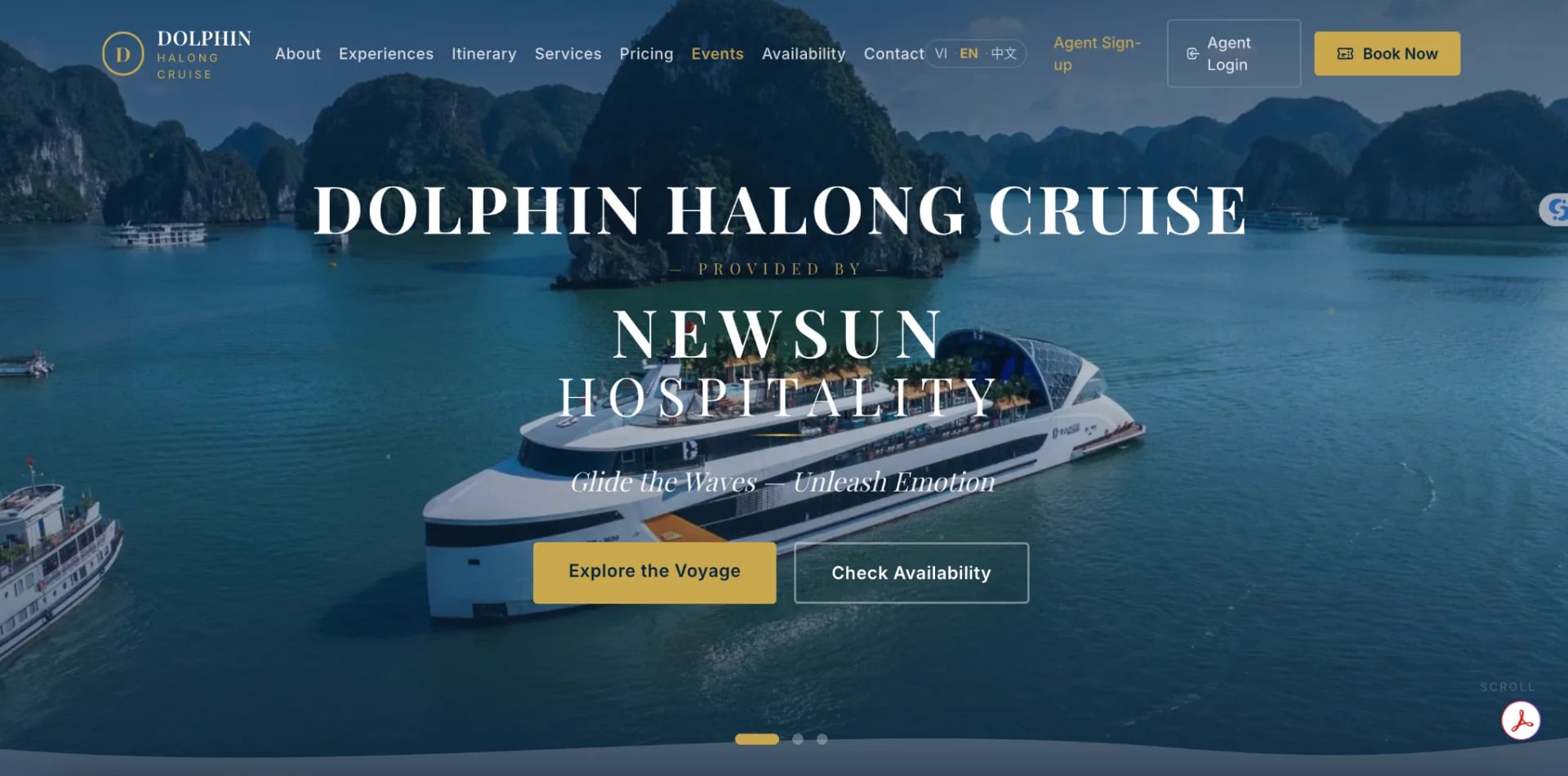
Our 24/7 B2B Booking Portal solution was developed to help businesses build an online transaction channel for agents and partners. Through the system, users can proactively look up information, check service availability, make bookings, and track transaction history on a single platform. Expanding the ability to receive continuous bookings helps businesses enhance flexibility, reduce manual processing, and gradually optimise operational efficiency. As technology reshapes the hospitality industry, transitioning from manual booking processes to a digital management model not only helps businesses overcome current limitations but also provides a foundation for improving management capabilities, expanding partner networks, and building a more flexible business model for the future. With expertise in strategic consulting, operational management, and technology solution implementation, NewSun Hospitality aims to be a trusted partner for businesses on their journey towards digital transformation and sustainable development.
- Hotline: +84 768 68 2913
- Email: dosm@nshm.com.vn
- Zalo OA: https://zalo.me/2452770272256938463 (NewSun Hospitality)
- Website: https://nshm.com.vn/ (NewSun Hospitality)