

 VN
VN EN
ENWhat is B2B Booking?
In the tourism and hospitality industry, sales activities extend beyond direct transactions between businesses and end customers. A significant portion of revenue is generated through a network of travel agents, tour operators, event organisers, and distribution partners. These entities connect business products with customers, while also helping to expand markets and increase access to potential customer segments.
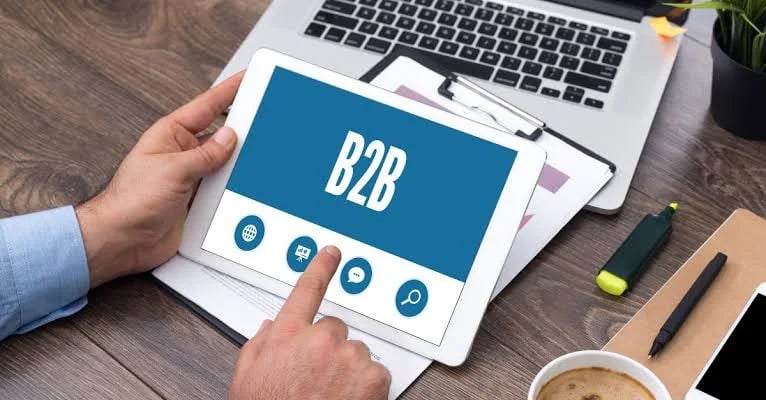
B2B Booking, or business-to-business service booking, is a transaction model where agents or partners book rooms, services, or purchase products from a business for redistribution to end-customers. Instead of customers directly contacting hotels, resorts, or cruise operators, agents act on their behalf to find information, check service availability, and make bookings according to agreed partnership policies. The B2B Booking model is widely applied in the business operations of hotels, resorts, cruises, tours, and experience products. Through an agent network, businesses can access various markets and customer segments without needing to build direct sales teams in every region. This is also a crucial distribution channel that helps businesses maintain stable revenue streams and expand their business scale.
How does B2B Booking work?
The B2B Booking process typically begins when an end-customer needs a tourism product or service. The agent receives the request, recommends suitable products, and checks information regarding prices, room availability, or remaining inventory. After the customer selects a service, the agent sends a booking request to the service provider to confirm and complete the transaction.

In the traditional model, communication is often conducted via phone, email, or messaging platforms. Sales staff or the reservations department receive information, check service availability, and respond to the agent. When booking volumes are low, this method can meet basic operational needs, but it gradually reveals limitations as the partner network and transaction volume increase. With technological advancements, many businesses are shifting to online B2B Booking platforms. Through these systems, agents can log in with their own accounts, proactively search for products, check availability, view pricing policies, and make bookings. Transaction data is centrally stored, making it easier for businesses and partners to track, manage, and reconcile information.
The difference between B2B Booking and B2C Booking
B2B Booking and B2C Booking are both forms of online service booking but differ significantly in their target users and operational objectives. B2C Booking targets end-customers who directly search, select, and pay for products or services. In contrast, B2B Booking is designed for agents, tour operators, and business partners who need to distribute products to their customers. For B2C Booking, systems typically focus on user experience, information search capabilities, public price display, and online payment support. Meanwhile, B2B Booking must meet various requirements related to partnership policies, such as specific pricing for each agent, account permissions, credit limit management, transaction history tracking, and reconciliation support. Therefore, B2B Booking platforms often have more complex administrative and operational structures compared to booking systems for individual customers. These two models are not mutually exclusive and can coexist within a multi-channel distribution strategy. Businesses can use B2C Booking to develop direct sales channels while maintaining B2B Booking to effectively leverage their agent and partner network. Combining multiple distribution channels helps businesses expand market reach and reduce reliance on a single revenue source.
The role of agent channels in the tourism and hospitality industry
The agent channel is a crucial bridge between service providers and end-customers. Through their network, hotels, resorts, tourism businesses, and cruise operators can bring their products to various markets. Agents not only support sales but also play a role in consulting, itinerary building, and combining multiple services to create products tailored to specific customer groups.

For many Hospitality businesses, building direct sales teams in all target markets can require significant resources. The agent channel allows businesses to leverage the existing customer networks, market experience, and sales capabilities of their partners. This enables businesses to expand brand reach and access new customer segments with a more appropriate investment level. Beyond market expansion, agents also help businesses maintain a stable booking volume across various business cycles. Partners can proactively develop tours, holiday packages, or service bundles based on the business's products. When long-term partnerships are maintained, the agent network can become a crucial foundation supporting sustainable revenue growth.
Agent channels help businesses expand their market reach
Each travel agent typically possesses a unique customer base, operational area, and sales strengths. By collaborating with multiple agents, businesses can simultaneously reach diverse customer segments without directly building an entire sales system in each locality. This is particularly significant for hotels, resorts, and cruises looking to expand their market beyond traditional operating regions. Through agents, businesses can also access specialised customer segments such as group travellers, corporate clients, MICE clients, or international guests. Experienced partners in each market often have a deep understanding of local customer behaviour, needs, and consumption trends. This information can help businesses tailor products, pricing policies, and sales strategies more effectively. However, expanding the number of agents also places higher demands on management capabilities and partner support. If a business remains entirely dependent on manual communication methods, the workload can rapidly increase with the network's scale. Therefore, building a centralised booking management system is crucial for maintaining efficiency when expanding B2B operations.
Agent channels contribute to increased revenue and optimised occupancy
In the hotel and tourism industry, revenue depends not only on the number of guests but also on the ability to utilise capacity during different periods. Agent channels can help businesses access diverse customer sources and create additional sales opportunities during times of fluctuating market demand. When managed effectively, a partner network can help businesses maintain stable booking volumes and improve product utilisation.

For hotels and resorts, agents can assist with group room sales, creating holiday packages, or combining accommodation services with transportation and experiential activities. For cruise operators, agents can distribute products to individual travellers, groups, or various target markets. The diversity of the distribution network helps businesses reduce reliance on a single customer group or sales channel. However, increasing the number of bookings only creates value if the business can manage data and control processes effectively. If information is scattered or booking confirmation takes too long, business opportunities can be affected. Therefore, combining the agent channel with a suitable technology platform will help businesses enhance revenue generation and optimise operational efficiency.
Agent channels help enhance customer accessibility
Not all customers prefer to search for and book services directly with businesses. Many still opt to use services from familiar agents for advice, itinerary planning assistance, and handling any issues that may arise. Especially for high-value products or complex itineraries, the agent's advisory role can significantly influence purchasing decisions.

Agents often have an advantage in customer understanding and the ability to provide comprehensive solutions. Instead of just selling a hotel room or a cruise programme, agents can combine multiple services such as transportation, accommodation, tours, and experiences. This saves customers time searching while providing a journey tailored to their needs and budget. For service providers, partnering with agents helps expand customer touchpoints without directly managing the entire consultation process. However, for agents to serve customers effectively, businesses need to provide product information, service availability, and pricing policies quickly and accurately. This is the factor that differentiates an effective distribution network from a disconnected system.
Challenges in managing agent networks manually
When the number of agents is small, businesses can manage information via email, phone, or spreadsheets. However, as the partner network grows, processing transactions manually can create significant pressure on sales and operations teams. Each agent may have different pricing policies, support needs, and transaction histories, making the management process more complex. Exchanging information through multiple channels also increases the risk of data discrepancies or slow responses. Staff may have to constantly check service availability, cross-reference prices, and update information for each partner. During peak seasons, a rapid increase in requests can make it difficult for businesses to maintain processing speed and service quality. Furthermore, scattered booking data limits the ability to evaluate the effectiveness of each agent. Businesses may spend a lot of time compiling transaction volumes, revenue, and sales trends. When data is not centrally managed, developing partnership policies and making business decisions also becomes more challenging.
B2B Booking Portal – The optimal platform to support agent sales activities
Technological advancements are enabling businesses to transition from manual booking management to digital operational processes. A B2B Booking Portal can serve as an online transaction gateway, allowing agents to proactively access information and perform necessary actions on a single platform. This reduces reliance on multi-channel communication and enhances transparency in collaborative activities.
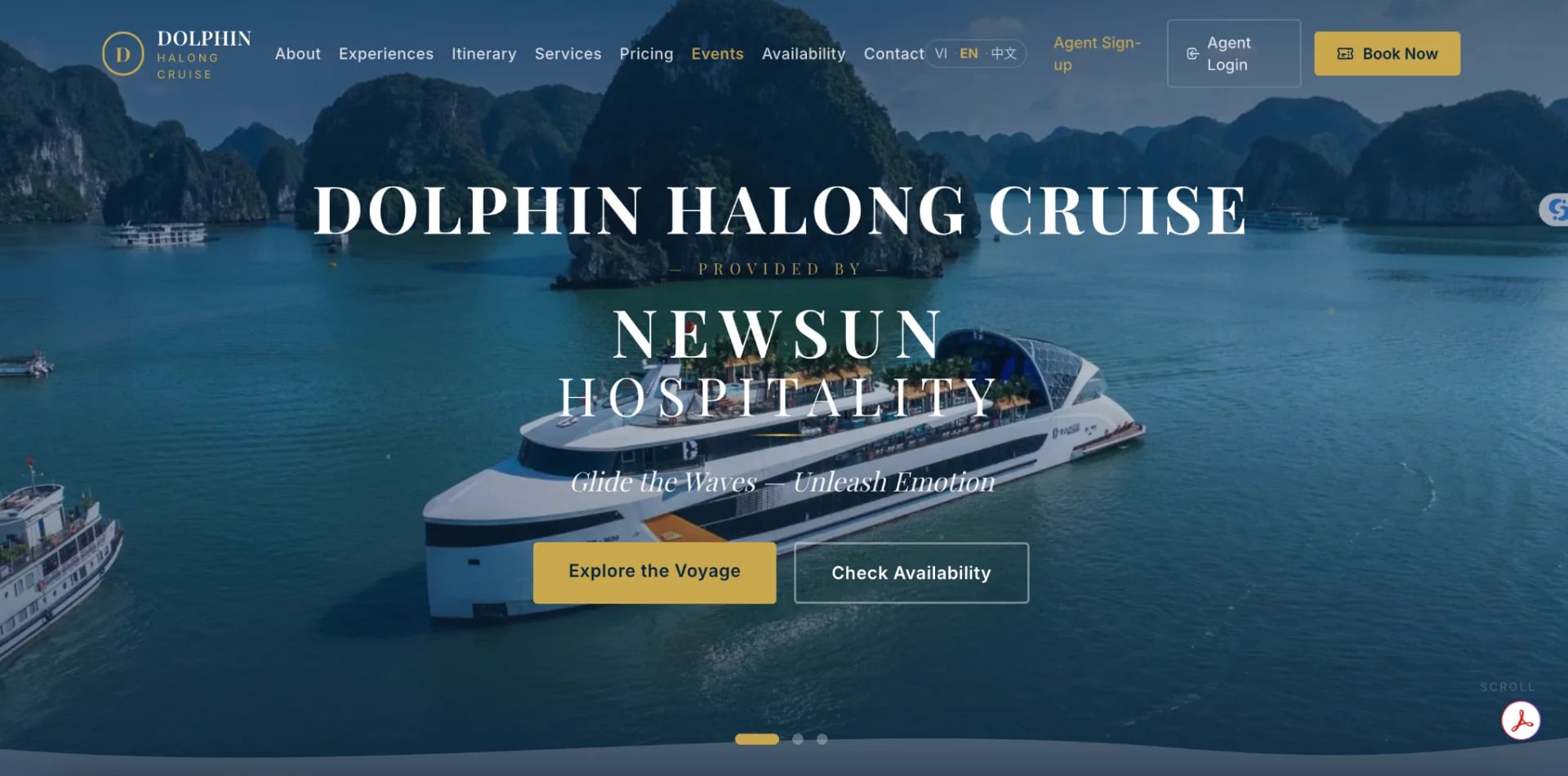
Through the system, agents can log in with their own accounts, search for products, check availability, and make bookings according to established policies. Transaction information is centrally stored, making it more convenient for both the business and partners to track booking history. Expanding the ability to receive continuous transactions also helps businesses reduce the risk of missing sales opportunities outside business hours. For businesses, a B2B Booking Portal is not just a service booking tool but also a platform that supports distribution network management. When data is centralised and processes are standardised, teams can reduce repetitive workloads and dedicate more time to partner development activities. This is a crucial step in building a flexible, efficient, and scalable B2B sales model.
NewSun Hospitality partners with businesses to develop their B2B Booking channel
In our journey alongside tourism businesses, hotels, resorts, and cruises, NewSun Hospitality recognises that the travel agent channel is not merely a distribution method but a crucial component of growth strategy. To effectively leverage this channel, businesses need to establish clear cooperation procedures, appropriate business policies, and a technological platform to support data management. Combining operational capabilities with digital solutions will help businesses enhance partner experiences and optimise business efficiency. Based on these practical needs, NewSun Hospitality has researched and developed the 24/7 B2B Booking Portal Solution for businesses in the Hospitality industry. This system allows agents to proactively look up information, check service availability, make bookings, and track transaction history anytime, anywhere. The solution aims to standardise B2B sales processes, reduce manual workload, and provide a foundation for businesses to expand their partner network. In an increasingly competitive tourism and hotel market, developing an agent network must be accompanied by effective management and operational capabilities. B2B booking not only helps businesses expand their market and increase revenue opportunities but also creates a sustainable cooperative ecosystem between suppliers and distribution partners. With a focus on combining operational consulting and technology application, NewSun Hospitality aims to accompany businesses in digitising booking operations and enhancing long-term competitiveness.
- Hotline: +84 768 68 2913
- Email: dosm@nshm.com.vn
- Zalo OA: https://zalo.me/2452770272256938463 (NewSun Hospitality)
- Website: https://nshm.com.vn/ (NewSun Hospitality)