


 VN
VN EN
ENFor many years, businesses in the tourism and hospitality industry have heavily invested in technology solutions to enhance customer experience and optimise operational efficiency. However, when it comes to digital transformation, most businesses tend to focus on B2C sales channels such as booking websites, mobile applications, or online payment systems, while the booking process for B2B partners is still primarily handled via email, phone, or messaging apps.

This reality creates a significant gap in operational activities. As the agent network expands and service booking demands occur continuously, maintaining manual processes not only reduces work efficiency but also directly impacts revenue and competitiveness. Therefore, digitalising B2B booking processes is becoming a priority for many hotels, resorts, and tourism businesses.
What are the limitations of traditional B2B booking?
In many businesses, every service booking request from an agent involves multiple steps: receiving information, checking room or service availability, confirming prices, responding to partners, and updating data on the management system. When booking volumes are high, this process can easily lead to slow responses, data entry errors, or missed information.

This operational method not only consumes human resources but also makes it difficult for businesses to effectively monitor the performance of each agent. Dispersed data across multiple emails, Excel files, or communication apps makes report compilation time-consuming and inconsistent. For businesses with partners in various provinces or international markets, reliance on office hours further reduces the ability to process bookings outside working hours.
What value does B2B booking process digitisation bring?
Accelerate booking processing speed
An online booking system allows agents to proactively check service availability, select products, and submit bookings directly on the platform without waiting for a response from sales staff. This significantly shortens processing time and enhances the partner experience.
Reduce pressure on the operational team
When search, booking, and transaction tracking operations are automated, Sales, Reservation, and Operations teams can focus on higher-value tasks such as market development, customer care, or revenue optimisation. This is a key benefit that helps businesses scale without needing to proportionally increase staff.
Minimise errors during processing
Manual data entry always carries the risk of errors regarding stay dates, guest numbers, or service types. A digitised booking system standardises processes, centralises data storage, and minimises human-induced errors, thereby improving service quality and reducing incident resolution costs.
Centralised data management
All information regarding bookings, transaction history, sales by agent, and sales performance is stored on a single platform. This allows management to easily monitor business activities, analyse market trends, and make data-driven decisions rather than relying on intuition.
Expand 24/7 sales capability
Partners can make bookings at any time, independent of the business's working hours. This is a particularly important advantage for entities serving international clients or with agent networks operating across different time zones. Expanding continuous booking reception helps businesses avoid missing out on business opportunities that arise outside office hours.
Which businesses should prioritise B2B booking process digitisation?
This solution is particularly suitable for hotels, resorts, cruises, tour operators, hotel management companies, and businesses with extensive agent networks or distribution partners. As booking volumes increase, investing in a centralised management platform not only optimises current processes but also creates a foundation for future business expansion.

For businesses implementing a digital transformation strategy, B2B booking digitisation is also a crucial step to connect with other management systems such as PMS, CRM, Revenue Management, or Business Intelligence, forming a synchronous and efficient operational ecosystem.
Essential criteria for a modern B2B booking system
To maximise effectiveness, a B2B booking platform must not only meet booking functionality but also ensure long-term scalability and integration. Some important criteria include:
- User-friendly interface, easy for both businesses and agents to use.
- Real-time service availability lookup.
- Centralised management of booking data and transaction history.
- Multi-language support and stable operation across various devices.
- Flexible user permissions based on partner groups.
- Ability to integrate with existing enterprise management systems.
- Data security and scalability according to business size.
A system that fully meets these criteria will not only help businesses address current needs but also lay the groundwork for sustainable future growth.
NewSun Hospitality accompanies businesses on their digitisation journey
With experience in strategic consulting, operational management, and implementing technology solutions in the Hospitality sector, NewSun Hospitality has developed the 24/7 B2B Booking Portal Solution to help businesses digitise their entire booking process for partners.
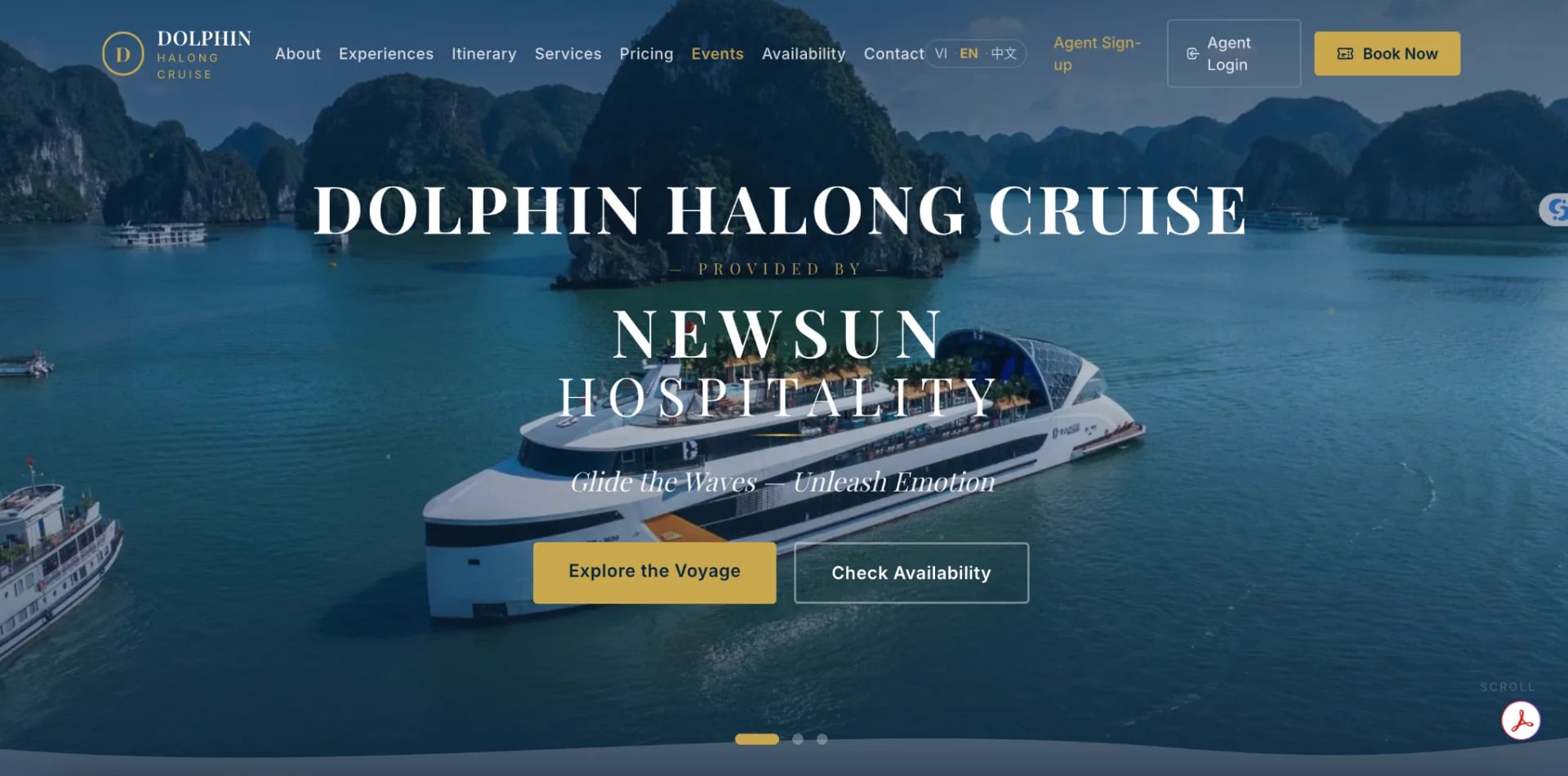
The system allows agents to proactively search for services, check availability, make bookings, track transaction history, and manage information on a single online platform. This solution has been successfully implemented at cruise brands in Ha Long Bay, optimising operational processes, enhancing partner experience, and helping businesses expand revenue from the B2B channel. In an increasingly competitive tourism and hospitality industry, digitising the booking process not only helps businesses operate more efficiently but also creates a distinct advantage in building partner networks and achieving sustainable development.
- Hotline: +84 768 68 2913
- Email: dosm@nshm.com.vn
- Zalo OA: https://zalo.me/2452770272256938463 (NewSun Hospitality)
- Website: https://nshm.com.vn/ (NewSun Hospitality)