


 VN
VN EN
ENFor many years, the appeal of a cruise product was primarily determined by ship design, service quality, itinerary, and onboard amenities. However, as the tourism industry undergoes a significant digital transformation, technology has become an equally crucial factor in shaping customer experience and enhancing operational efficiency. From information search, booking, and payment to the journey itself, customers increasingly expect every interaction to be fast, convenient, and personalised.

According to the Cruise Lines International Association (CLIA), global cruise passenger numbers are projected to reach approximately 34.6 million in 2024, surpassing pre-pandemic levels and continuing an upward trend in the coming years. This surge in demand is accompanied by increasing competitive pressure among brands, compelling businesses to invest in solutions that enhance customer experience while optimising operational costs. This is a key reason why technology has become central to the development strategies of most major cruise lines worldwide. Beyond international brands like Royal Caribbean, MSC Cruises, and Carnival Cruise Line, many Asian cruise operators are also heavily investing in smart management systems, artificial intelligence, big data, and automation. This reflects the reality that competition in the cruise industry now extends beyond service quality to the ability to leverage technology to create distinctive experiences.
Changing Customer Behaviour is Driving Digital Transformation
One of the biggest drivers behind the cruise industry's significant investment in technology stems from changing customer expectations. Millennials and Gen Z now account for an increasing proportion of luxury travellers. These customers grew up with the internet and smartphones, so they expect their entire travel journey to be digitally connected.
According to the Deloitte 2025 Travel Outlook, modern travellers prioritise brands that offer a seamless experience from online to real-world interactions. They expect to be able to find information, book services, make payments, select cabins, reserve restaurants, register for entertainment activities, or contact staff all through a single application. Businesses that fail to meet these expectations will find it increasingly difficult to compete as digital experiences become the new industry standard. Furthermore, social media significantly influences cruise selection decisions. According to Statista, most customers consult images, videos, and online reviews before booking services. This means businesses not only need to invest in service quality but also build a robust digital ecosystem to maintain customer engagement throughout the entire experience lifecycle.
Technology is transforming the entire cruise experience
While technology was once primarily used for booking management, its application now extends across almost the entire customer journey. From the initial information search, AI can analyse needs and suggest suitable itineraries based on budget, preferences, or past travel history. Once a guest completes a booking, the system automatically sends trip information, assists with payments, suggests additional services, and pre-prepares accommodation profiles.

Throughout the journey, many cruise lines have implemented facial recognition technology, smart room keys, electronic wristbands, or mobile applications to replace traditional keys. Guests can open cabin doors, make payments at restaurants, book spa appointments, or track their itinerary with a single device. This not only enhances convenience but also significantly reduces waiting times at service counters. After the trip concludes, the CRM system continues to store data on consumer behaviour, spending levels, preferences, and customer feedback to support future customer care and sales campaigns. As a result, with each return visit, guests receive suggestions and offers that are more tailored to their individual needs.
AI and Big Data are creating new revenue streams
A common misconception is that technology primarily helps businesses save costs. In reality, its greater value lies in its ability to increase revenue by leveraging customer data. Throughout their journey, each passenger generates thousands of data points related to their consumption behaviour, from cabin choices and favourite menus to entertainment activities and the duration of service usage.

According to Deloitte, AI helps businesses analyse this data in real-time to provide tailored recommendations. For example, a passenger who frequently uses the spa might receive an exclusive offer for a wellness treatment on the second day of their journey. A family with young children could be offered children's activities or family photo packages, while a couple celebrating their anniversary might be recommended a private dinner on deck. This personalisation strategy not only enhances the guest experience but also significantly increases ancillary revenue. Instead of selling the same product to every customer, businesses can optimise the value of each transaction through personalised recommendations.
Technology optimises operations and enhances management efficiency
Beyond the guest experience, technology also offers clear operational benefits. A modern cruise ship can serve hundreds to thousands of passengers simultaneously, supported by hundreds of staff and numerous complex technical systems. Without smart management platforms, resource coordination becomes difficult and prone to errors. Many cruise lines now implement integrated management systems that connect data from front office, housekeeping, F&B, engineering, logistics, and customer service departments on a single platform. AI is also used to forecast food consumption, manage inventory, optimise staff schedules, and support predictive maintenance for critical equipment. According to Statista, investment in supply chain management technology, data analytics, and operational optimisation are the top three priorities for cruise businesses from 2025–2027. This demonstrates that technology is directly enhancing business efficiency, rather than merely serving as a support tool.
Green transition also requires technological support
The pressure for sustainable development is growing for the tourism industry in general, and the cruise sector in particular. Standards for emissions, energy consumption, and waste management are becoming increasingly stringent, while travellers are also showing greater interest in environmentally responsible brands.

To meet these demands, many cruise lines have invested in real-time systems for fuel consumption monitoring, itinerary optimisation, fresh water management, wastewater treatment, and emissions control. IoT technology combined with AI helps businesses track engine performance, predict technical risks, and significantly reduce fuel consumption throughout the voyage. According to CLIA, most new cruise ships delivered today are designed with the goal of reducing emissions and increasing energy efficiency. This demonstrates that technology is becoming a crucial foundation for the cruise industry to move closer to its sustainable development goals.
What opportunities exist for cruise businesses in Vietnam?
Vietnam possesses many advantages for developing cruise tourism, with famous destinations such as Ha Long Bay, Lan Ha Bay, Nha Trang, and Phu Quoc. Coupled with the growth of international visitors and the trend of luxury leisure travel, the domestic cruise market is considered to have significant room for development.
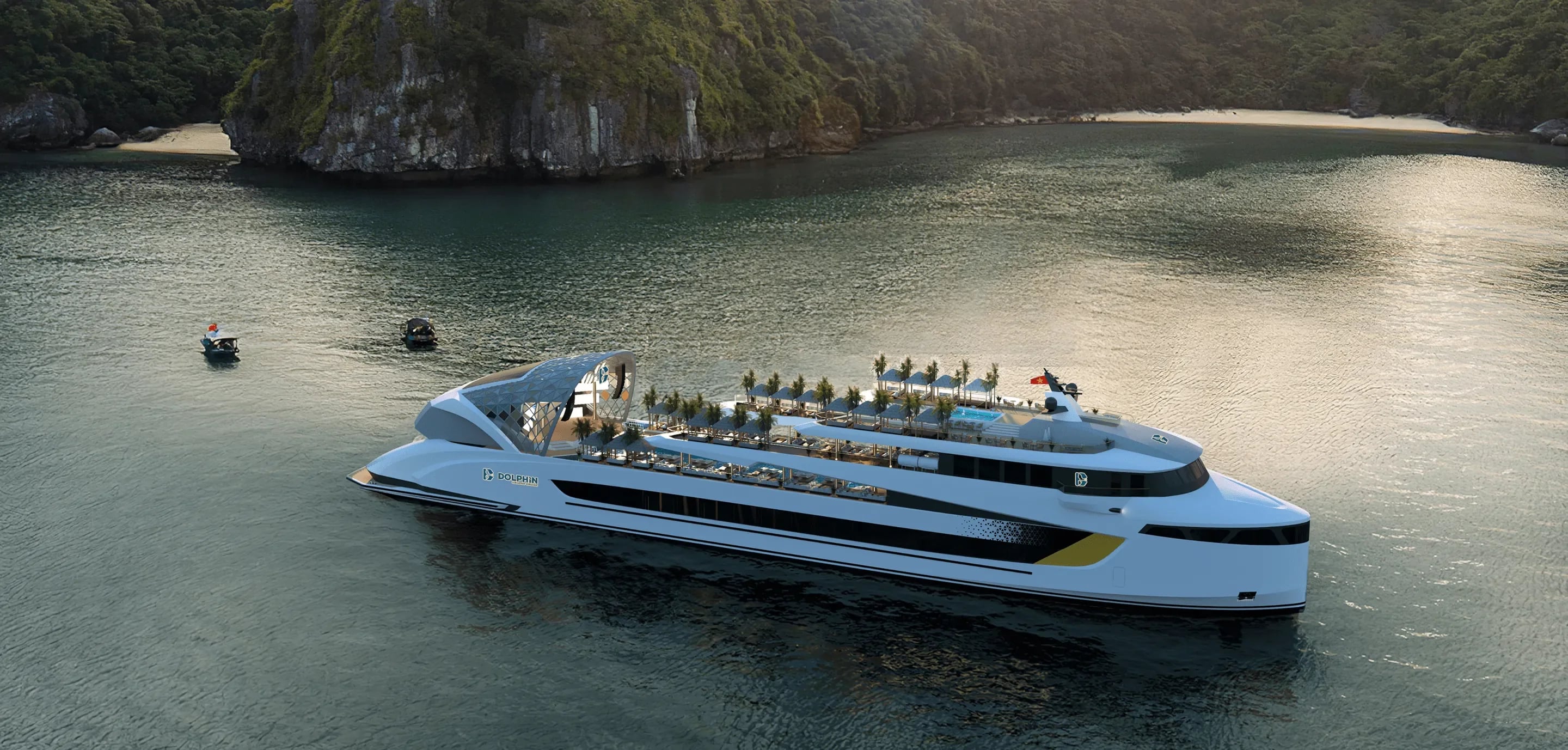
However, to compete with international brands, Vietnamese businesses cannot solely invest in new vessels or upgrade facilities. More importantly, they must build modern management capabilities, apply AI, data, and digital platforms to optimise operations and enhance customer experience. Businesses that invest early in digital transformation will have more opportunities to create a sustainable competitive advantage, especially as international customers increasingly expect high-quality service and technological experiences.
Conclusion
Investing in technology is no longer an experimental trend but has become a long-term development strategy for the cruise industry. From enhancing customer experience, optimising operations, increasing revenue, to meeting sustainable development goals, technology is present in almost all core business activities. In the future, the differentiation between brands will not only come from fleet size or service quality but also from the ability to leverage data, apply AI, and build a comprehensive digital ecosystem. In the context of digital transformation reshaping the luxury hospitality industry, cruise businesses need more than isolated technology investments; they require a holistic development strategy. With expertise in business strategy consulting, operations, and digital transformation in the hotel, resort, and cruise sectors, NewSun Hospitality partners with investors in market research, business model development, operational optimisation, AI application, and customer experience enhancement, helping businesses improve their competitiveness and achieve sustainable growth in the digital era.
- Hotline: +84 768 68 2913
- Email: dosm@nshm.com.vn
- Zalo OA: https://zalo.me/2452770272256938463 (NewSun Hospitality)
- Website: https://nshm.com.vn/ (NewSun Hospitality)
References:
- Cruise Lines International Association. (2025). State of the Cruise Industry Report 2025.
- Deloitte. (2025). 2025 Travel Industry Outlook.
- Deloitte. (2025). The Next Generation of Cruise Passengers.
- Euromonitor International. (2025). Travel and Tourism Global Outlook.
- Statista. (2025). Cruise Industry Worldwide – Statistics & Facts.
- Statista. (2025). Digital Transformation and AI Adoption in Hospitality Industry.