


 VN
VN EN
ENHaving understood how AI is transforming the hospitality industry in the second article of the AI Hotel Lab series, the question most managers are now asking is: Which hotel roles can AI replace, and which jobs will still require human involvement? This is no longer a hypothetical question. In fact, AI is already present in most hotel departments, from room sales, customer service, and revenue management to technical operations. According to Deloitte, the majority of customers believe that AI will be increasingly used in guest interactions and to personalise experiences. At the same time, global hotel chains also view AI as the area with the greatest potential for innovation in the coming years.
However, this does not mean AI will replace all hotel staff. What is happening is a restructuring of work. Repetitive tasks, data processing, or those following standard procedures will gradually be taken over by AI, while jobs requiring emotion, adaptability, and relationship building will remain human advantages.
AI is replacing "tasks", not "people"
A common misconception when discussing AI is viewing it from the perspective of "a job will disappear". In reality, AI doesn't replace an entire role but rather the tasks within that role. For example, a front desk agent doesn't just handle check-ins and check-outs. They also manage complaints, advise on services, assist guests in unexpected situations, coordinate with various departments, and create the hotel's first impression. Among these, AI can certainly handle booking verification, sending check-in instructions, answering common questions, or automatically generating invoices. However, when a guest is upset about a cancelled flight or wants to change their itinerary at the last minute, the human element remains crucial. This is why many hospitality experts believe AI will serve as a "digital colleague" rather than a complete replacement.
Hotel roles most likely to be significantly impacted by AI
Reservation Agent
Among hotel departments, reservation agents are considered one of the roles most significantly impacted by AI development. This is because most of their work is process-driven and can be standardised, such as receiving booking requests, advising on suitable room types, quoting prices, confirming room availability, introducing ancillary service packages, or sending confirmation emails after guests complete their bookings. These are all tasks that AI can perform quickly and with high accuracy.
Unlike traditional chatbots that operate based on pre-programmed scripts, today's Generative AI platforms can understand conversation context, identify customer intent, and provide flexible answers like a real consultant. The system can also communicate in multiple languages, remember each customer's interaction history to personalise advice, and proactively suggest additional services such as airport transfers, room upgrades, or spa and dining packages tailored to individual needs. For large hotels or those with high online booking volumes, AI not only significantly reduces the workload of the Reservations department but also maintains 24/7 continuous service, even outside business hours or during peak seasons. This helps prevent the loss of potential customers due to slow responses, while also improving the conversion rate from inquiries to actual bookings. Therefore, many experts believe that the future role of reservation agents will gradually shift from handling operational tasks to managing special cases, caring for VIP guests, and overseeing the quality of the AI system's performance.
Customer Service Agent
Along with the reservations department, customer service is also an area being automated at a rapid pace thanks to AI development. In fact, most questions asked by guests are repetitive, such as check-in and check-out times, WiFi passwords, instructions for using hotel amenities, booking airport transfers, making restaurant reservations, requesting additional in-room items, or inquiring about nearby attractions. These requests can be fully received, processed, and responded to instantly by AI without human intervention.
According to Statista, AI chatbots, virtual assistants, and automated communication systems are currently among the most widely deployed AI applications by hotel businesses worldwide to enhance customer experience and optimise operational efficiency. Using AI not only significantly shortens response times but also allows hotels to serve thousands of customers simultaneously with consistent quality, unaffected by shift factors or human resource limitations. In addition to answering common questions, AI can proactively send pre-arrival notifications, service usage reminders, collect post-stay feedback, or offer personalised promotions based on previous consumption behaviour. This enhances customer satisfaction while creating more cross-selling opportunities and increasing hotel revenue. However, for emotionally charged situations such as handling serious complaints, resolving service crises, or caring for VIP guests, the human role remains central.
Marketing Department
Marketing is one of the departments undergoing the most significant changes due to AI. Previously, building a communication campaign often required marketing teams to spend considerable time on tasks such as market research, target customer analysis, ideation, content writing, image design, SEO optimisation, email marketing, and campaign performance tracking. Today, most of these tasks can be supported by AI at speeds many times faster than traditional methods.
AI tools can analyse customer data to identify potential user profiles, predict search trends, suggest SEO keywords, and generate content for websites, social media, email marketing, or online advertisements in just minutes. AI can even create images, videos, ad banners, and test multiple content versions to optimise conversion rates for each target customer segment. This does not mean AI will completely replace marketing teams, but rather it is changing the nature of their work. Instead of spending most of their time on production-oriented activities, marketing personnel will focus more on brand strategy development, customer behaviour research, developing creative ideas, and managing overall campaign effectiveness. These are all areas that still require strategic thinking, creativity, and the ability to understand human emotions – elements that AI cannot yet fully replace.
Roles where AI can only assist, not yet replace
Front Desk
The front desk is always considered the "face" of the hotel, the first and last point of contact for guests throughout their stay. Therefore, despite the increasing application of AI at the front desk, complete replacement of this position in the near future remains unlikely. Currently, many hotels have implemented contactless check-in systems, facial recognition, automated document verification, electronic room keys, chatbots to assist guests before check-in, and self-service kiosks to reduce waiting times. AI can also answer common questions, guide guests on service usage, automatically send invoices, and assist with administrative procedures much faster than traditional processes.
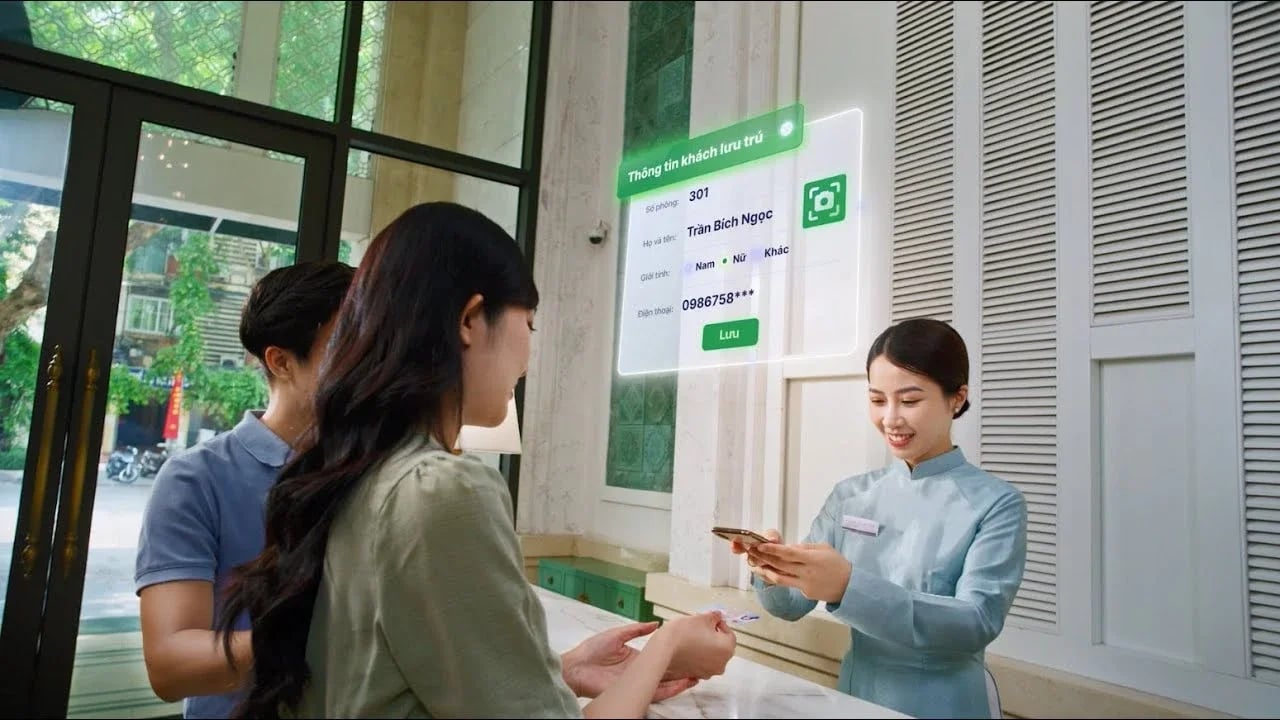
However, a receptionist's duties extend beyond operational tasks. They are also the first point of contact, creating initial impressions, handling unforeseen situations such as room upgrades, overbookings, assisting VIP guests, resolving complaints, or simply making guests feel welcome through friendly and refined communication. According to Deloitte, while guests appreciate AI for enhancing service speed and convenience, most still desire human interaction during critical moments of their stay. This indicates that AI will serve as a supportive tool to boost receptionist efficiency rather than completely replacing the role.
Housekeeping staff
The Housekeeping department is also witnessing an increasing adoption of AI and automation solutions in its operations. Smart management systems can analyse real-time occupancy data to automatically schedule room cleaning, optimise staff assignments, predict task completion times, and monitor the cleanliness status of each room. Additionally, robotic vacuum cleaners, delivery robots, and IoT sensors are being implemented by many international hotels to reduce repetitive workloads.

However, hotel room cleaning is not merely about surface sanitation. An experienced housekeeper must also assess cleaning quality, detect minor damages in rooms, check the completeness of amenities, identify unusual signs, or flexibly handle specific requests from individual guests. These tasks all require keen observation, practical assessment skills, and professional experience that current AI or robots cannot yet fully perform. In the coming years, AI will likely become an "operational assistant" for the Housekeeping department, optimising labour productivity and reducing mechanical tasks. Nevertheless, the quality of room service will still heavily depend on the diligence, responsibility, and professional standards of the human team.
Hotel Manager
While operational positions can be automated to varying degrees, hotel management is the role that AI is least likely to replace. This role demands a combination of strategic thinking, leadership, people management, and practical experience to make decisions that directly impact the business's operations. AI can support managers by aggregating data from various sources, generating real-time reports, forecasting revenue, analysing market trends, flagging operational risks, or proposing optimal solutions for staffing and costs. This provides managers with more data to make quicker and more accurate decisions. However, issues such as building corporate culture, inspiring teams, negotiating with partners, resolving internal conflicts, managing media crises, or shaping long-term development strategies still require human acumen, courage, and leadership. AI can provide information, but it cannot replace the responsibility and role of a leader in making final decisions. Therefore, instead of replacing managers, AI will become a "data advisor" helping them make more effective decisions in an increasingly competitive and volatile hotel industry.
Skills that will become more valuable in the AI era
The real concern is not AI replacing humans, but rather those who do not know how to use AI being left behind.
In this new landscape, hotels will prioritise personnel who can combine professional expertise with the ability to leverage AI. Skills such as critical thinking, problem-solving, cross-cultural communication, emotional intelligence, team leadership, and data-driven decision-making will become crucial competitive advantages. In other words, AI will reduce the demand for repetitive tasks but increase the value of personnel capable of creativity, adaptability, and delivering unique customer experiences.
NewSun Hospitality's Perspective
In the hospitality industry, technology has never been the ultimate goal. The core value still lies in the experience customers receive. AI can remember the preferences of millions of customers, forecast demand with high accuracy, and process thousands of requests in just seconds. But AI cannot replace the genuine smile of a front desk agent, the manager's finesse in handling a sensitive situation, or the feeling of being cared for that professional service provides. Therefore, the question managers should ask is not "How many employees will AI replace?", but rather "How can employees work more effectively with AI?" That is the sustainable direction for the hotel industry in this digital transformation era.
Conclusion
AI will undoubtedly change the human resource structure in hotels. Positions with procedural and repetitive workloads will be increasingly automated. However, roles associated with emotion, creativity, leadership, and building customer experiences will remain with humans for many years to come. The hotel of the future will not be a place with fewer employees, but one where humans and AI collaborate to deliver faster, more accurate, and more personalised service. AI is no longer a future trend but is becoming a competitive capability for hotels today. If your business is seeking solutions to apply AI to operations, optimise revenue, enhance customer experience, and train management teams, NewSun Hospitality is ready to partner with you through consulting, training, and digital transformation programmes tailored to each hotel model.
- Hotline: +84 768 68 2913
- Email: dosm@nshm.com.vn
- Zalo OA: https://zalo.me/2452770272256938463 (NewSun Hospitality)
- Website: https://nshm.com.vn/ (NewSun Hospitality)
References:
- Deloitte. (2024). AI's transformative role in the hospitality industry. Deloitte UK.
- h2c GmbH. (2025). AI & Automation in Hospitality: Navigating Today's Challenges, Shaping Tomorrow's Gains.
- Statista Research Department. (2025). Artificial intelligence (AI) use in hospitality – Statistics & Facts. Statista.
- Statista Research Department. (2025). Business areas where hotel chains are currently using or planning to use artificial intelligence (AI) worldwide. Statista.