


 VN
VN EN
ENFor many years, the luxury hospitality industry focused on creating opulent spaces with expensive materials, elaborate designs, and "showcase" experiences. However, as we move into 2025–2026, customer mindsets are shifting dramatically, especially among the two key consumer generations: Gen Z and Millennials.
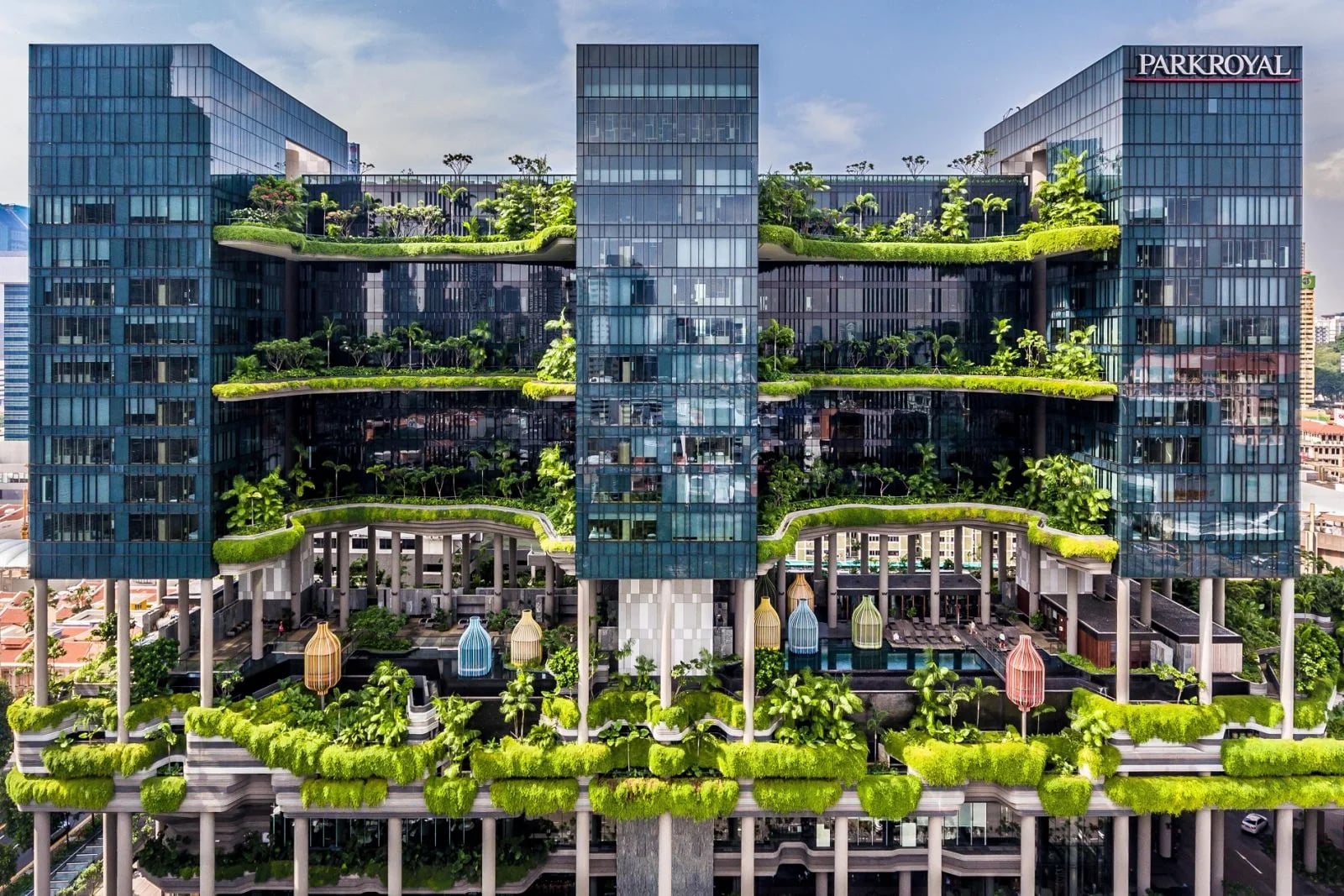
Today, guests are not only interested in how "beautiful" a hotel is, but also ask: is the hotel sustainable? Is the space environmentally friendly? Are the materials used safe, natural, and long-lasting? In the context of growing ESG, sustainable hospitality, and wellness lifestyles, sustainable materials are becoming a crucial factor shaping the future of hotel architecture. This is no longer just a "green marketing" trend, but is gradually becoming a real competitive advantage in the modern hospitality industry.
What are sustainable materials in hotels?
Sustainable Materials are materials researched, selected, and applied to minimise negative environmental impacts throughout their entire lifecycle, from raw material extraction, production, and transportation to eventual reuse or decomposition. In the context of the hospitality industry's increasing focus on ESG and sustainable development, sustainable materials are becoming a crucial part of modern hotel design and operational strategies.
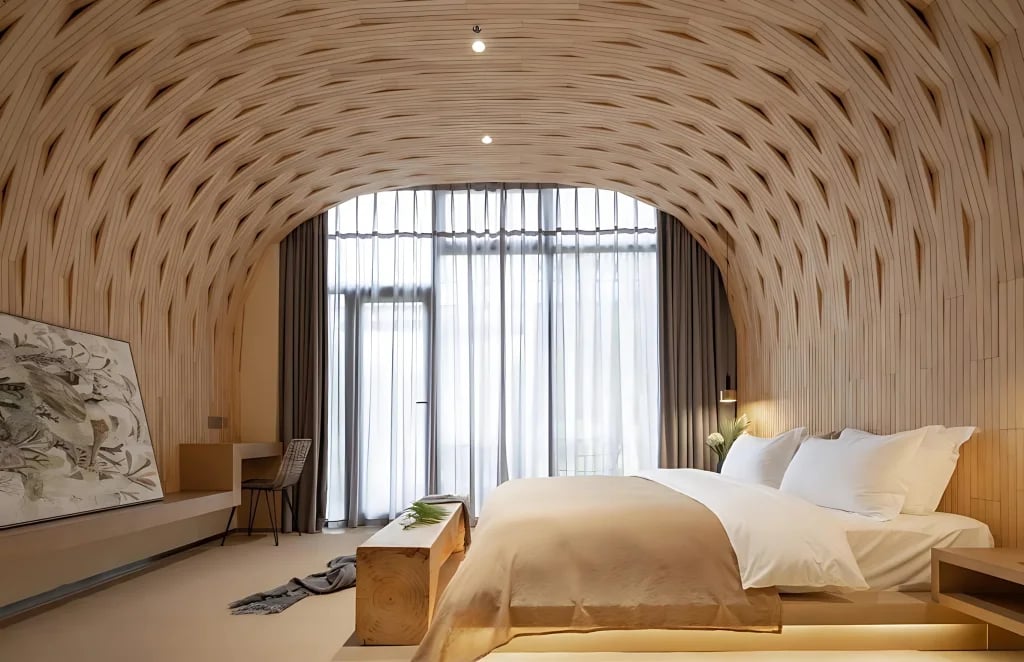
In the hotel and resort sector, common sustainable materials currently include recycled wood or FSC-certified wood, bamboo, rattan, and various indigenous natural materials to reduce carbon footprints and leverage local resources. Additionally, many hotels prioritise low-VOC paints to limit harmful emissions, sustainably sourced natural stone, recycled materials, organic fabrics, and insulating, energy-saving material systems to optimise long-term operational efficiency. The biggest difference in this trend is that materials no longer just serve to complete the aesthetics of a building; they have become part of the hotel's "brand language." By choosing environmentally friendly materials, hospitality brands can clearly demonstrate their commitment to ESG, sustainability, and social responsibility. This is also a factor increasingly considered by Gen Z and Millennial customers when selecting accommodation, especially as sustainable consumption becomes a global trend.
Why are sustainable materials becoming an essential trend in hospitality?
1. Gen Z and Millennials increasingly prioritise sustainable brands
Gen Z and Millennials are becoming the primary customer segment for the global tourism and hospitality industry. This generation also has a stronger awareness of the environment, climate, and sustainable consumption. According to the "Gen Z & Sustainability" report by Statista, nearly one-third of Gen Z consumers are willing to pay more for environmentally friendly products and brands. The report also shows that sustainability is becoming one of the factors directly influencing the younger generation's brand choices.
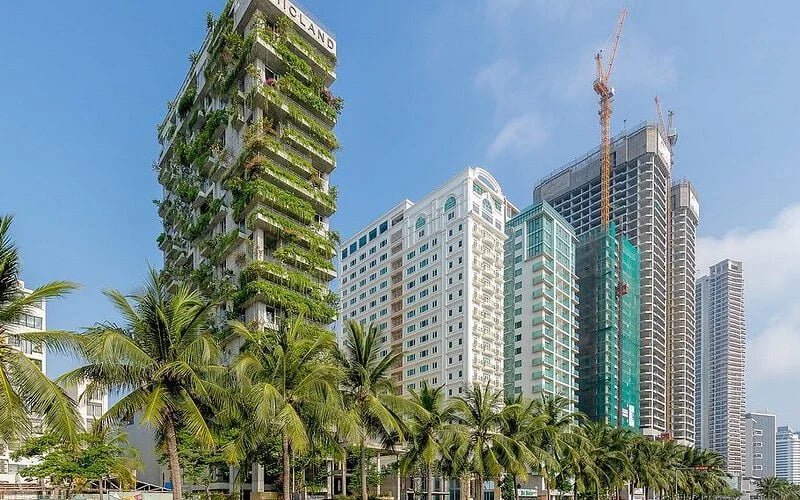
In the tourism sector, a report by Deloitte indicates that Millennials and Gen Z are driving the development of new travel experience models, where personal experience, lifestyle, and brand values are as important as material amenities. This explains why an increasing number of luxury hotels prioritise natural materials, handcrafted furnishings, and ecological architecture to create a more intimate, "authentic," and environmentally friendly experience.
2. Sustainability is becoming the new competitive standard for resort real estate
According to Savills Vietnam, ESG is no longer a mere formality but is becoming a crucial factor in enhancing the competitiveness and long-term value of real estate projects. In the hospitality industry, this means hotels and resorts need to integrate sustainability from the design phase, material selection, and building operations.

Savills also cites data from the World Green Building Council, stating that currently operating buildings contribute approximately 39% of global energy-related carbon emissions. This makes the use of sustainable materials and green design a major priority for the construction and hospitality industries in the future. In this context, sustainable materials not only help hotels reduce their environmental impact but also enhance brand image and attract sustainability-conscious young customers.
When materials are no longer just a "building component," but become a brand experience
One of the major changes in modern hospitality is that customers are increasingly sensitive to the "feeling of space." They care about:
- Whether the space feels relaxing
- Whether materials are natural and friendly
- Whether the air in the room is pleasant
- Whether the furnishings are local and handcrafted
- Whether the hotel genuinely demonstrates sustainability or merely "greenwashes"
According to a study on Gen Z's sustainable consumption behaviour in Vietnam published in the Journal of Development and Integration, brand trust and transparency play a crucial role in promoting green consumption behaviour. This shows that young customers are increasingly sensitive to brands that "talk about sustainability" but lack practical action. In the hotel industry, materials are one of the most visual proofs of a brand's sustainability commitment.
Notable case studies in Vietnam
1. Topas Ecolodge – Minimalist architecture and indigenous materials
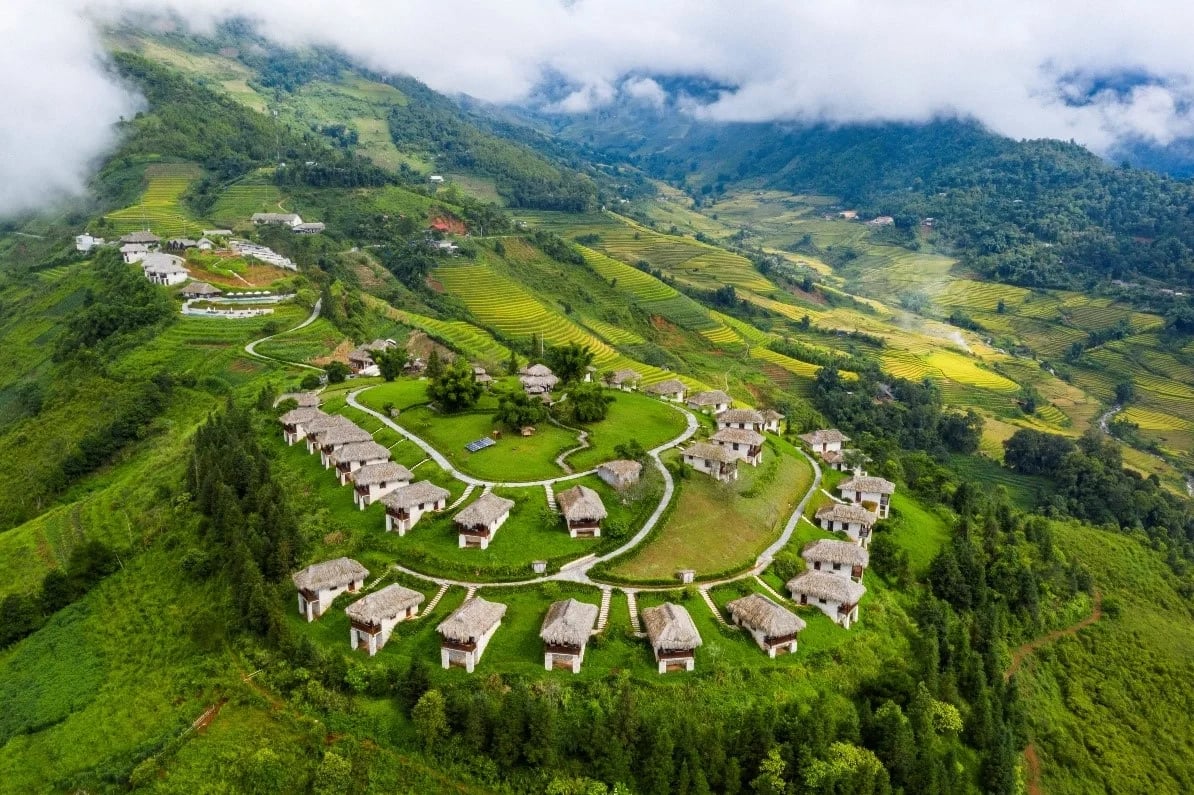
Topas Ecolodge is a prime example of a resort model applying sustainable materials in Vietnam. The resort uses local white granite, thatched roofs, and natural wood to minimise impact on the Sapa mountain landscape. Instead of pursuing lavish architecture, Topas Ecolodge focuses on integration with nature and an "eco-luxury" experience, where materials become a significant part of the spatial emotion.
2. Amanoi – Luxury hospitality combined with natural materials
Amanoi is a prime example of combining ultra-luxury with a sustainable design philosophy. The resort leverages natural materials, open spaces, and architecture integrated with the terrain to create an absolutely relaxing experience for guests. Instead of showcasing technology or elaborate furnishings, Amanoi focuses on the quality of space, natural light, and connection with the pristine landscape of Nui Chua National Park.
3. Six Senses Ninh Van Bay – Sustainable luxury and a "low impact" philosophy
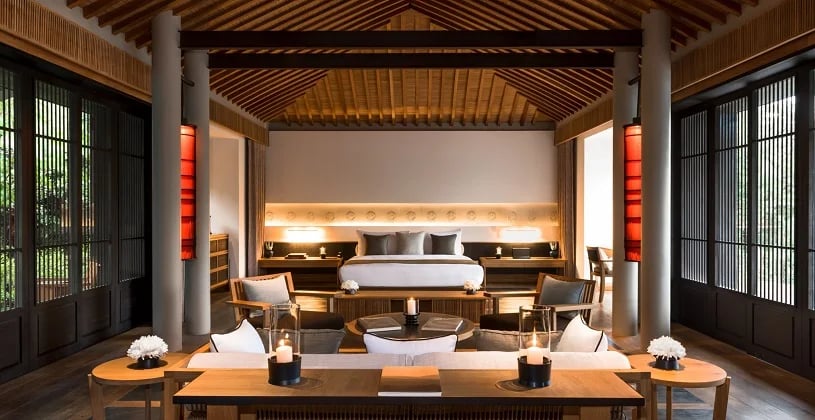
Six Senses Ninh Van Bay is a pioneering brand in Vietnam's sustainable luxury model. The resort prioritises natural materials like local wood, bamboo, and stone, while minimising disruption to the natural terrain. Its architectural design embodies "low impact" principles – reducing environmental effects while ensuring a premium resort experience.

4. InterContinental Danang Sun Peninsula Resort – Ecosystem preservation in design
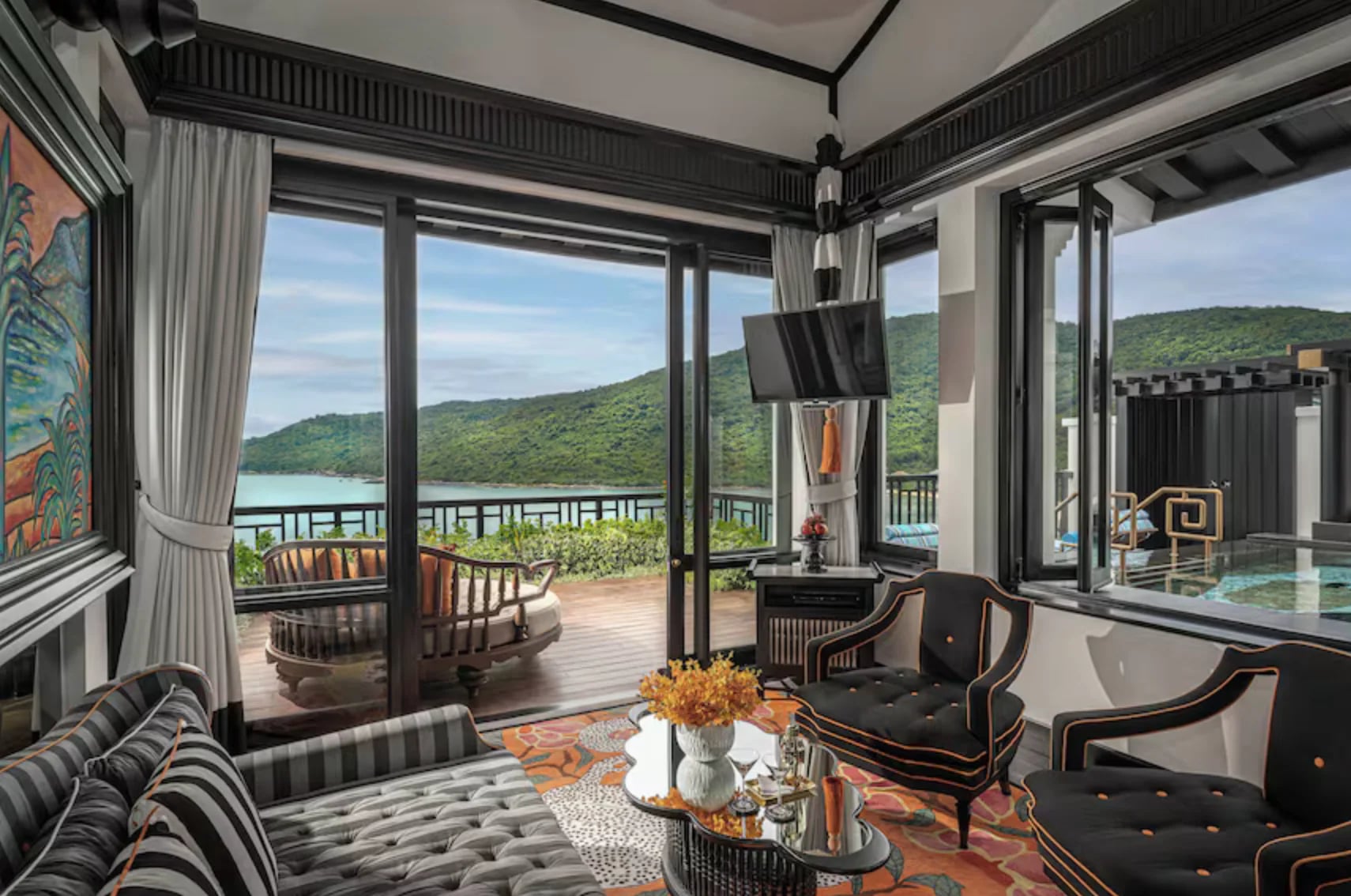
InterContinental Danang Sun Peninsula Resort is a prominent case study for resort design that integrates with the ecosystem. The project leverages the natural mountain slopes of the Son Tra peninsula, extensively using wood, bamboo, and handcrafted details imbued with Vietnamese identity. This helps the resort create an experience that is both luxurious and close to nature – a factor increasingly valued by Millennials and Gen Z guests.
How are sustainable materials creating a competitive advantage?
Enhance brand value
In the era of social media and lifestyle branding, hotel spaces are not just for accommodation but also serve as a tool to convey brand image. Natural materials, green architecture, and ecological design help hotels build a "premium but responsible" image – luxurious yet environmentally conscious.
Increase appeal to young customers
According to studies by Statista and numerous surveys on sustainable consumer behaviour, Gen Z and Millennials tend to prioritise brands that clearly demonstrate ESG and sustainability commitments. This means that sustainable materials are not just a technical factor in construction, but are directly influencing customers' booking decisions.
Optimise long-term operations
Many modern sustainable materials offer the ability to:
- Better insulation
- Reduce energy consumption
- Increase building lifespan
- Reduce maintenance costs
- Improve indoor air quality
In the long term, this is a crucial factor in helping hotels balance sustainability and financial efficiency.
Conclusion
Sustainable materials are gradually becoming the "new language" of modern hotel architecture. As Gen Z and Millennials increasingly prioritise sustainability, wellness, and value-driven experiences, hotels not only need to be more aesthetically pleasing but also more "responsible" towards the environment and community. In a context where ESG is becoming a global standard for real estate and hospitality, investing in sustainable materials is not merely a design trend, but a long-term strategy to enhance brand value, optimise operations, and build a sustainable competitive advantage for the future. NewSun Hospitality partners with hotels, resorts, and accommodation brands in developing sustainable hospitality strategies, upgrading customer experiences, and optimising operating models in line with global ESG trends. If you are seeking solutions for sustainable hotel development, upgrading space design, or applying eco-friendly materials to attract Gen Z and Millennial guests, please contact NewSun Hospitality for strategic consulting tailored to your brand's direction and the latest market trends.
- Hotline: +84 768 68 2913
- Email: dosm@nshm.com.vn
- Zalo OA: https://zalo.me/2452770272256938463 (NewSun Hospitality)
- Website: https://nshm.com.vn/ (NewSun Hospitality)
References:
- Deloitte. (2019). Gen Z and millennial travel: The wanderlust generations. Deloitte US. Retrieved from https://www2.deloitte.com/us/en/pages/technology-media-and-telecommunications/articles/gen-Z-and-millennial-travel-the-wanderlust-generations.html
- Savills Vietnam. (2023). The importance of ESG in the real estate market. Retrieved from https://vn.savills.com.vn/blog/article/214213/vietnam-viet/tam-quan-trong-cua-esg-trong-thi-truong-bat-dong-san.aspx
- Savills Vietnam. (2024). ESG Program – Pioneering Sustainability Initiative by Savills Property Management. Retrieved from https://www.savills.com.vn/blog/article/215148/vietnam-eng/esg-program---pioneering-sustainability-initiative-by-savills-property-management.aspx
- Statista. (2023). Gen Z & sustainability: How radical is the “green generation”? Retrieved from https://www.statista.com/study/162147/gen-z-and-sustainability-how-radical-is-the-green-generation/
- Statista. (2023). Gen Z and millennials: The generational gap in sustainable consumption. Retrieved from https://www.statista.com/study/102352/gen-z-and-millennials-the-generational-gap-in-sustainable-consumption/
- Nguyen Le Hoang Long & Mach Tran Huy. (2026). Perceived Greenwashing and Sustainable Consumer Behavior: Evidence from Generation Z in Vietnam. Journal of Development and Integration. Retrieved from https://jdi.uef.edu.vn/en/article/BB1159-SXB87