


 VN
VN EN
ENIn the hotel industry, some issues are very obvious and easily identified: declining occupancy rates, falling revenue, or negative customer feedback. However, many problems unfold much more subtly, almost silently in their early stages, until they begin to directly impact the guest experience and brand value. The "aging" of physical facilities is one such issue.

A hotel does not suddenly deteriorate overnight. Obsolescence often begins with very small details: paint losing its sharpness, uneven lighting, material surfaces showing signs of wear, furniture losing its newness, or equipment no longer operating optimally. These changes can be difficult for the operations team to notice because they occur over time, but guests perceive them almost immediately, especially in the 4–5 star segment, where experience expectations are very high. In an increasingly competitive hotel industry, where experience, not just room product, is the differentiator, "Wear and Tear" is no longer merely a technical maintenance issue, but a strategic challenge in managing Physical Evidence and long-term brand value.
Current Situation: Many hotels are "ageing" faster than they are being upgraded
Following the post-COVID-19 recovery, the global hotel industry has entered a strong growth race to quickly balance cash flow and restore business efficiency. Amid increasing revenue pressure, many hotels prioritise maximising occupancy, increasing operational frequency, and boosting continuous operations to capitalise on rapidly recovering travel demand. However, behind these positive growth figures lies a silent but long-term challenge: the "accelerated wear and tear" of the Physical Evidence system – all the physical elements that create the customer experience in a hotel. When assets are operated at high intensity without a corresponding strategy for maintenance, upgrades, and reinvestment, the accommodation space begins to deteriorate faster in both functionality and perceived experience.
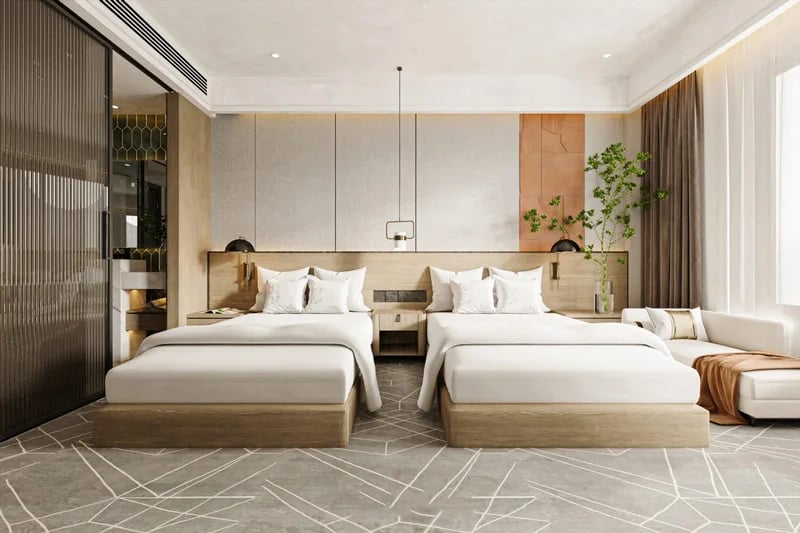
According to JLL Hotels & Hospitality's 2024 report, over 58% of hotels in the Asia-Pacific region face pressure to upgrade facilities within the next 3–5 years to maintain market competitiveness. The report also indicates that customers are increasingly sensitive to the quality of accommodation spaces post-pandemic, especially in the mid-to-upscale segments. Meanwhile, research from Deloitte shows that customers' perception of a hotel's "newness" directly impacts satisfaction, likelihood of return, and willingness to pay. For international and high-end guests, the visual and emotional experience of the space has become an inseparable part of service value. This means that even if operational quality remains stable, a hotel perceived as "aging" by customers risks a significant decline in competitiveness. In Vietnam, this situation is quite common in many hotels that have been operating for 5–10 years or more. Many properties still boast prime locations, good architecture, and stable operating systems, but the overall experience begins to feel "tired" over time. This is not necessarily a severe, easily noticeable deterioration, but often appears through small details that gradually accumulate in the customer experience: inconsistent lighting, interior colours looking dated, materials losing their initial sharpness, rooms no longer feeling modern, or public areas gradually lacking visual vitality. In many hotels, the space may even still be "beautiful" by conventional standards but no longer creates the sense of novelty and discovery it once did. These seemingly minor factors subtly diminish customers' perceived value of the brand.
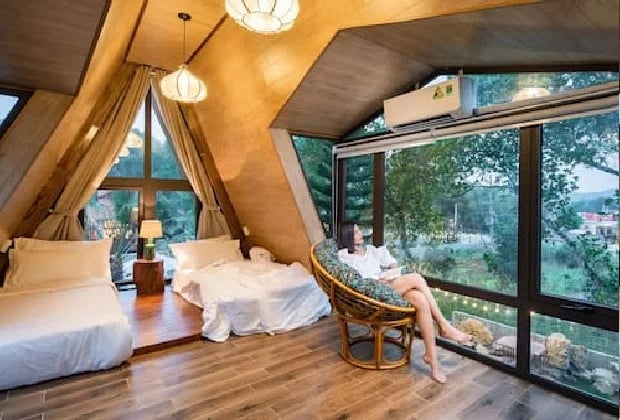
Notably, "aging" in hotels today is no longer just a physical issue; it has become an emotional and experiential perception issue. Modern customers do not evaluate space quality merely by whether it is "broken or not," but by whether it "still feels new, attractive, and worthwhile." A chair that isn't broken, a wall that isn't peeling, or a room with full amenities may not be enough to maintain a premium perception in the eyes of customers. In an era where experiences are heavily consumed through images, social media, and personal emotions, "newness" is not just about materials, but about the ability to keep customers interested and wanting to return. And it is this gap between "still usable" and "still emotionally engaging" that is becoming one of the biggest challenges in the Physical Evidence strategy for many modern hotels today.
Causes: Why do many hotels fall into a state of "perceived deterioration"?
Behind the "Wear and Tear" challenge in the hotel industry is not just the simple physical deterioration of facilities, but also the consequence of many strategic and operational issues accumulated over time. In an increasingly experience-competitive hospitality industry, a hotel gradually becoming "old" is no longer just about the age of the building, but reflects how the brand manages the quality of experience throughout its operational lifecycle. Many hotels remain technically stable, but begin to lose their ability to evoke emotion and maintain a premium perception in the eyes of customers. And it is this "perceived wear and tear" that is becoming a greater challenge than easily visible physical damage.
- Maintenance mindset is "reactive" rather than "preventative"
One of the most common reasons is that many hotels still maintain a reactive maintenance model – meaning repairs are only made when problems are clearly visible or directly impact operations. This often leads to small signs of deterioration, such as inconsistent lighting, materials losing their sharpness, changes in ambient scent, or aging furniture, being overlooked for extended periods. Technically, these issues may not be severe enough for immediate replacement, but experientially, they subtly affect customer emotions at every touchpoint. As small details continuously accumulate, the overall space gradually creates a sense of "fatigue," lacks vitality, and loses its inherent premium feel. In the modern hotel industry, where emotional experience is increasingly important, maintenance is no longer just about repairing equipment, but about preserving the perceived quality of the entire space.

- Pressure to optimise operating costs after market recovery
After COVID-19, many hotel businesses were forced to focus on revenue, occupancy, and cash flow to recover operations. In this context, many hotels chose to cut maintenance budgets, postpone upgrade plans, or delay reinvestment schedules to balance short-term finances. This is an understandable operational decision, but it carries significant long-term risks. Delaying maintenance and upgrades often causes small issues to escalate into major renovation projects with much higher costs in the future. More importantly, the silent deterioration during this period can cause the hotel to gradually lose brand value in the eyes of customers, which businesses sometimes do not immediately recognise through short-term revenue indicators. When market competition intensifies again, restoring image and experience will be much more difficult than maintaining them from the first place.
- Lack of Asset Lifecycle Management strategy
Many hotels invest heavily during the opening phase to create an initial market impact, but lack a long-term strategy for asset lifecycle management. In reality, every hotel space has its own "perceived cycle" – meaning that after a certain period, even if the facilities are still functioning well, customers will start to feel that the experience is no longer as fresh as before. However, not all hotels have a plan for periodic upgrades, partial replacements, or spatial restructuring to align with new market experience trends. Many properties only undertake renovations when they are visibly deteriorated or when revenue starts to be significantly affected. This causes hotels to fall into a state of "experiential aging" even before serious physical damage occurs. Meanwhile, major international brands often consider recreating a sense of newness as a crucial part of their long-term brand value maintenance strategy.
- Growing gap between operational standards and customer expectations
Another major challenge comes from the fact that modern customer expectations are changing much faster than the traditional physical upgrade cycle of hotels. Today, customers are constantly exposed to new, modern, and experience-rich spaces through social media, OTAs, and travel content platforms. This causes the perceived standards of "newness," "aesthetics," and "premium experience" to change almost annually. A space once considered modern 5–7 years ago can quickly become outdated in the eyes of current customers, even if its functionality remains perfectly stable. This is why many hotels maintain good internal operational standards but gradually lose market appeal. The gap between "meeting operational standards" and "meeting emotional expectations" is widening, forcing hotels to view Physical Evidence as an element that needs continuous updating, not just maintaining a "still working well" state.
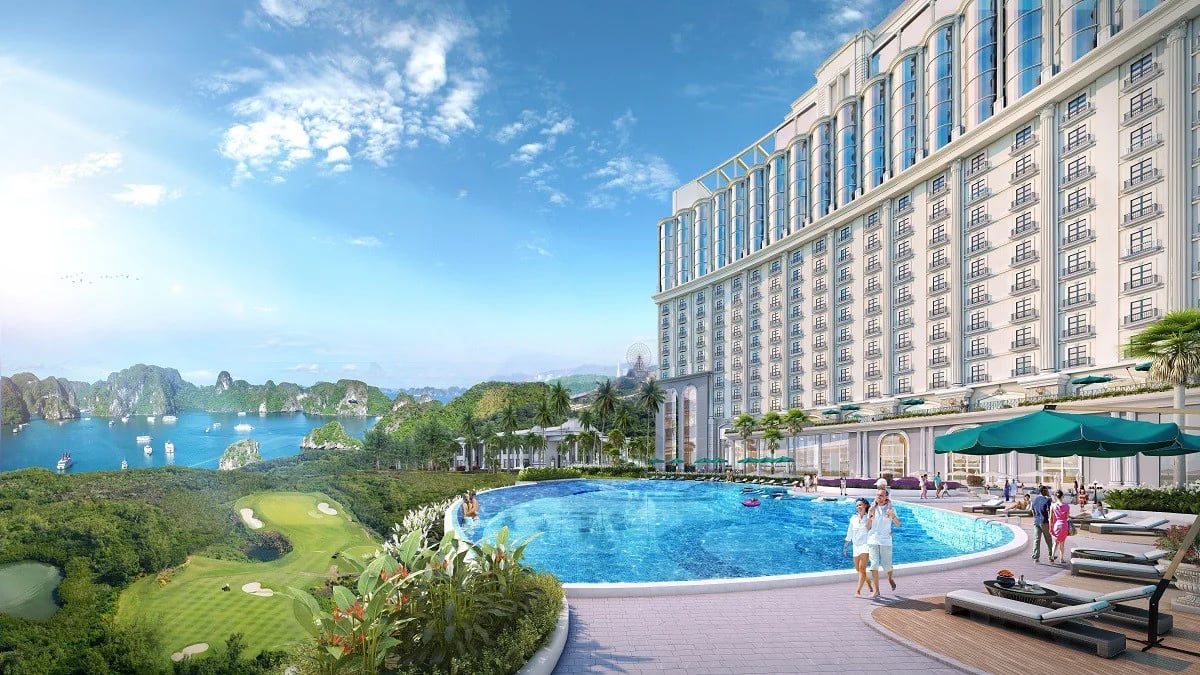
- Lack of coordination between operations, engineering, and brand strategy
In many hotels today, maintenance is still primarily seen as the responsibility of the engineering department, focusing on ensuring stable system operation and minimising breakdowns. However, the customer experience is not solely determined by "whether everything works," but also by the feeling the space evokes. A hotel can be technically sound but still feel old-fashioned, lifeless, or no longer aligned with the desired brand image. This happens when maintenance lacks connection to the brand strategy and customer experience. Lighting, sound, material quality, scent, and the aesthetic condition of the space are all part of brand identity, but are often managed disjointedly across departments. When operations, engineering, and brand do not share a unified experiential goal, it becomes very difficult for hotels to sustainably maintain a premium perception in the eyes of customers.
Consequences: When deterioration begins to erode brand value
If not properly addressed, "Wear and Tear" will not only diminish the aesthetic quality of the space but also lead to far-reaching impacts on business performance, customer experience, and the hotel's brand positioning in the long term.
Decline in perceived customer value
In the luxury hotel segment, customers are not just paying for a room or physical amenities; they are paying for the feeling of quality, meticulousness, and the premium experience that the brand delivers. Therefore, the "newness" of the space significantly impacts the perceived value of the service. When a hotel begins to show signs of aging, such as dull furnishings, uneven lighting, faded materials, or lifeless public spaces, customers will gradually feel that the experience no longer matches the price they are paying. What is noteworthy is that this decline often occurs subtly. Customers may not directly complain about specific details, but the feeling of "no longer worth paying for" will gradually form in their perception. And in the hospitality industry, where emotions are as crucial as functionality, losing that premium perception means the brand is gradually losing value in the eyes of customers.

Difficulties in pricing and competitive strategy
The aging of spaces also directly affects the ability to maintain high prices and market competitiveness. In a context where hotel supply is increasing and customers have more choices, brands that fail to maintain a sense of newness will find it very difficult to create a differential advantage. According to CBRE Hotels (2024), hotels that maintain a strategy of periodic upgrades and experiential reinvestment are able to sustain RevPAR 12–18% higher on average compared to hotels that delay renovations. This shows that reinvesting in Physical Evidence is not merely an expense, but part of a long-term commercial value maintenance strategy. A continuously cared-for and updated space not only helps the hotel maintain a premium image but also creates a reason for customers to be willing to pay higher prices. Conversely, when the experience begins to become outdated, the hotel will be forced to compete on price rather than brand value – something that is very difficult to sustain in the modern hospitality market.
Negative impact on experience and online reviews
In an era of rapidly developing OTAs, social media, and review platforms, spatial experience is no longer just a personal feeling, but can quickly spread as a brand image in the digital environment. Small details such as old-looking rooms, degraded lighting, inconsistent materials, or aesthetically unpleasing public areas can become negative reviews on TripAdvisor, Booking.com, Google Reviews, or social media. The danger is that modern customers often judge hotel quality strongly based on images and visual impressions. A few negative reviews about an "old hotel," "not as advertised," or "not worth the price" can significantly impact new customers' booking decisions. In many cases, the degradation is not severe in terms of operations, but it is enough to erode trust in the brand image – especially in the luxury segment, where customer expectations are always very high.

Increased long-term costs and significant renovation pressure
Another often underestimated consequence is that delaying maintenance and reinvestment typically creates "cumulative costs" over time. Minor damages, if not addressed early, will gradually lead to larger technical, operational, and overall experience issues. For example, a degraded lighting system not only affects aesthetics but also impacts spatial perception and energy consumption; old interior materials not only reduce the experience but also make replacement costs much higher later on. When a hotel allows aging to persist for many years, the business often faces large-scale, costly renovations that can directly affect business operations. In contrast, proactive maintenance strategies and periodic upgrades often help optimize costs much better than a complete "overhaul" after a long period of degradation. This shows that, in the modern hotel industry, managing Wear and Tear is not just a matter of facility maintenance, but also a challenge of managing brand value and long-term investment efficiency.
Solution: From "technical maintenance" to "spatial experience management"
To address the challenge of Wear and Tear sustainably, modern hotels need to completely change their approach to facility management and spatial experience. Maintenance is no longer just a technical activity that happens "behind the scenes," aimed at ensuring all equipment operates stably, but needs to be seen as a crucial part of the strategy for managing customer experience and building long-term brand value. In today's hospitality industry, where emotions and visual experiences directly influence customer satisfaction and their decision to return, maintaining the "newness" of a space has become a strategic competitive factor, not merely a matter of facility maintenance. The first important step is to build a proactive maintenance system combined with a systematic and long-term asset lifecycle management strategy. Instead of only addressing issues when they are clearly apparent or directly impact operations, hotels need to proactively monitor, evaluate, and refresh spaces according to the customer experience cycle. This requires businesses to view Physical Evidence as a "living" asset, always needing to be updated to match the continuously changing expectations of the market. A hotel space, even if functionally sound, but no longer offering a sense of newness, means the experience is gradually losing value in the eyes of customers. Therefore, maintenance and upgrades need to be carried out continuously, systematically, and based on both operational data and the actual experience perceptions of guests.
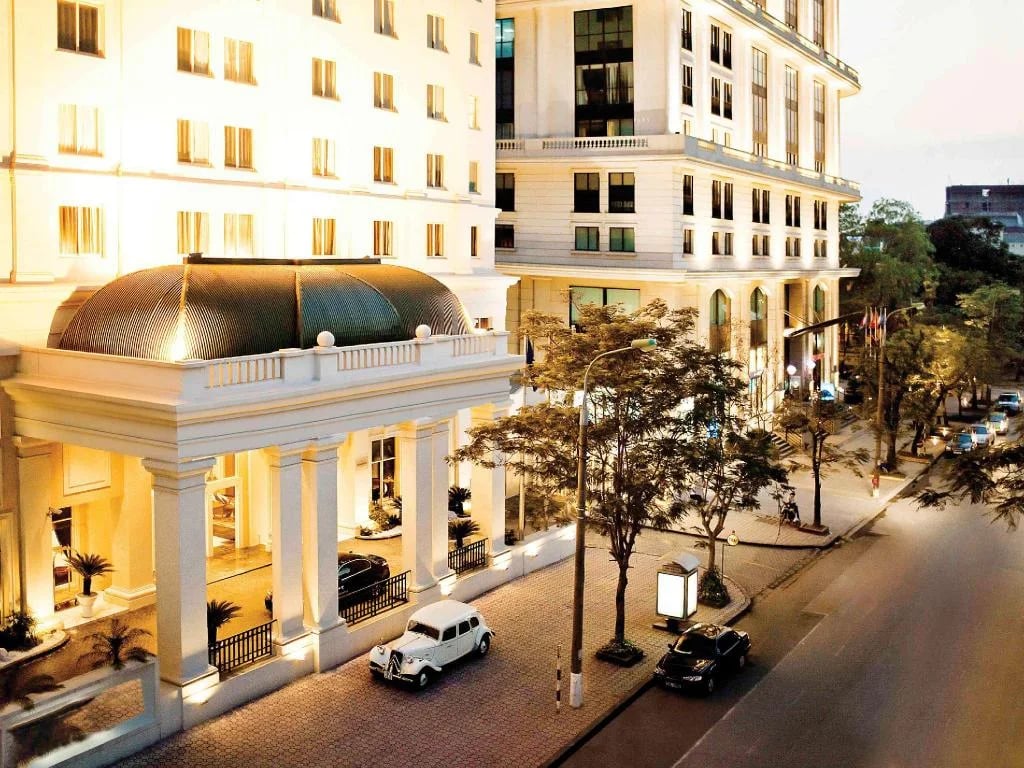
Additionally, hotels also need to change their mindset when considering space upgrades. This should not be viewed merely as an "operating cost," but as a direct investment in revenue, competitiveness, and brand value. In many cases, changes that are not structurally significant but are implemented at the right experience touchpoints can create a huge difference in customer perception. This could involve adjusting the lighting system to create a more modern feel, changing soft furnishings in guest rooms, upgrading the ambient scent, improving the visual experience in public areas, or redesigning décor details to enhance emotional appeal. In an era where customers are increasingly sensitive to experience and image, these seemingly small factors have a significant impact on the "worth paying for" feeling of a hotel brand. In this context, NewSun Hospitality acts as a strategic partner, helping hotels restructure their spatial experience in a systematic, practical, and long-term manner. Not only focusing on addressing current operational issues, NewSun aims to help businesses build a sustainable Physical Evidence strategy – where the hotel space is always maintained in a state that meets new customer expectations and brand positioning in the market. Through consulting services for operations, customer experience optimization, staff training, space quality assessment, and strategic support for Physical Evidence upgrades, NewSun not only helps hotels "repair facilities" but also contributes to refreshing the brand perception in customers' minds. The key is that each upgrade activity is linked to the overall experience and long-term business objectives, rather than just addressing individual issues.
Conclusion
In the modern hotel industry, degradation is no longer measured by a property's age, but by the speed at which the sense of novelty in the customer experience diminishes. A hotel may still be structurally beautiful, but if it no longer evokes emotion and perceived value, the brand will gradually lose its competitiveness. Wear and tear is therefore not merely a technical issue, but a strategic challenge directly related to revenue, brand, and the ability to maintain market position. And in an industry where experience constantly evolves with ever-increasing customer expectations, "refreshing the space" is essentially "refreshing brand value." We invite you to continue reading the next articles in the "Decoding Hotel Physical Evidence Strategy" series to explore the remaining bottlenecks directly impacting customer experience and operational efficiency in the modern hotel industry.
- Hotline: +84 768 68 2913
- Email: dosm@nshm.com.vn
- Zalo OA: https://zalo.me/2452770272256938463 (NewSun Hospitality)
- Website: https://nshm.com.vn/ (NewSun Hospitality)
References
- CBRE Hotels. (2024). Asia Pacific Hotel Market Outlook.
- Deloitte. (2024). Hospitality Industry Outlook.
- JLL Hotels & Hospitality Group. (2024). Hotel Asset Management Trends Report.
- McKinsey & Company. (2024). Customer Experience and Hospitality Value Perception.