


 VN
VN EN
ENIn the hospitality industry, it is precisely these imperfect moments that serve as the clearest "acid test" of a brand's capability. The distinction lies not in whether errors occur, but in how a business chooses to confront and resolve issues when they arise. A complaint, if received and handled with finesse, can be entirely transformed into an opportunity to strengthen customer trust. Conversely, slowness or indifference in responding can easily become the starting point for a prolonged chain of negative experiences, silently eroding the brand's image.

In reality, today's customers do not expect a "flawless" service, but rather a "responsible" one. Therefore, within the overall Process framework, the complaint handling procedure and "service recovery" capability are no longer auxiliary components, but have become strategic elements in hotel operations. The article "DECODING HOTEL PROCESS STRATEGY – PART 2: WHEN COMPLAINTS AREN'T HANDLED, CUSTOMER EXPERIENCE "BREAKS DOWN" will delve into one of the most common bottlenecks that directly impacts revenue and brand reputation.
When response times fail to meet customer expectations
In an environment where customer experience is increasingly central to operational strategy, response speed is no longer just an internal metric but a direct measure of service quality. However, in many hotels today, the complaint handling process is still designed bureaucratically, with multiple layers of approval and the involvement of various departments. A customer complaint, instead of being resolved at the point of contact, often has to go through reception, shift managers, department heads, and even the executive board before a final decision is made. This structure prolongs response times, missing the "golden moment" for managing customer emotions, which is a key factor in the service industry. According to a 2024 McKinsey study, over 70% of negative customer experiences can be "rescued" if handled within 15 minutes, but this rate drops below 40% if the response time extends beyond an hour. The gap between customer expectations and a business's response capability is also becoming increasingly apparent. The American Express Customer Service Barometer survey shows that 78% of customers are willing to return and continue using a service if their complaint is handled effectively. However, only about 33% of customers are satisfied with how businesses currently respond to issues. This indicates that most businesses, including high-end hotels, are still not truly meeting customers' increasingly high expectations for response speed and quality.

In Vietnam, this pressure is even more pronounced as customer behaviour is increasingly influenced by online review platforms. Google Reviews, TripAdvisor, and Booking.com are not just reference channels but have become part of the customer decision-making process. According to a 2024 BrightLocal report, up to 87% of consumers read online reviews before choosing a service, and 73% say they only trust businesses that respond quickly and professionally to negative reviews. In the hotel industry, where each review can directly impact booking rates, response speed becomes a clear competitive advantage. A 2025 ReviewPro report shows that hotels responding to reviews within 24 hours have an average reputation score 10% to 15% higher than those that respond slower. Beyond reputation scores, STR Global also notes a positive correlation between online review scores and RevPAR, with a difference of up to 8–12% between hotels with good and poor response levels. Overall, the speed and quality of response are no longer just a supportive operational factor, but have become a strategic variable directly affecting a hotel's revenue, reputation, and competitiveness. When the complaint handling process is not designed to meet these expectations, businesses not only face the risk of losing current customers but also miss opportunities to attract and persuade potential future customers.
Bottlenecks that make the complaint handling process ineffective
- Complex tiered processes and gaps in empowerment
In many hotels, especially in traditional operating models, the complaint handling process is still designed with a clear hierarchical structure, where decision-making power is primarily concentrated at the management level. This inadvertently means that frontline staff, who directly interact with customers, do not have sufficient authority to resolve issues at the point of occurrence.
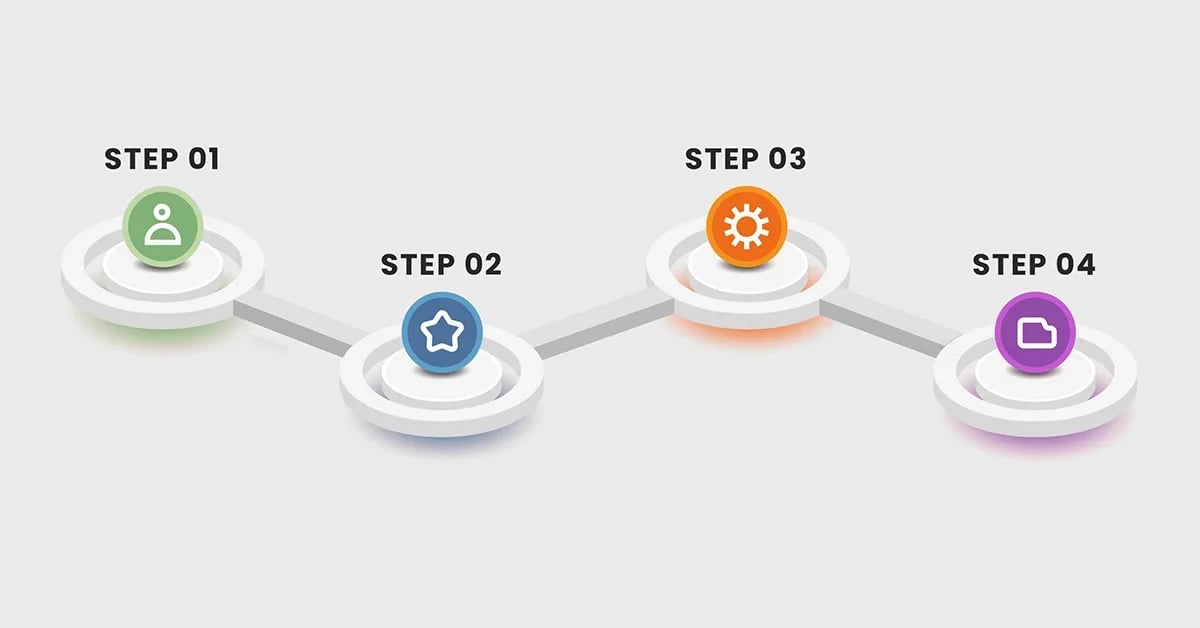
A simple complaint sometimes has to go through multiple internal transfers before being resolved, from reception to shift managers, department heads, and even the executive board. This delay not only prolongs the handling time but, more importantly, misses the "golden moment" for managing customer emotions. According to McKinsey's research, the ability to recover an experience can be nearly halved if a response is not provided within the initial short timeframe. When customers feel their issue is not acknowledged promptly, their level of frustration increases exponentially, far exceeding the original nature of the incident.
- Gaps in establishing a standard framework for service recovery
One common limitation is that many hotels have not yet developed a clear framework for "service recovery" activities. Instead of a standardised system for classifying incidents, response times, compensation levels, or communication methods, complaint handling often depends on individual experience or the immediate decision of each manager. This leads to inconsistency in service quality, where the same issue can be handled in various ways. According to a 2024 Deloitte study, businesses with standardised service recovery processes are up to 25% more likely to improve customer satisfaction compared to those that handle issues ad hoc. Without a "standard framework" as a foundation, quality control and staff training also become more difficult, preventing the process from fully realising its strategic role.
- Incident resolution mindset overshadows emotional management mindset

A fundamental bottleneck lies in how many hotels define the objective of their complaint handling process. In most cases, SOPs focus solely on "problem-solving" in a technical sense, meaning fixing the specific issue the customer reported. However, in the service industry, what customers truly value is not just whether the problem is resolved, but how they feel throughout the process. When the process is not designed to "restore trust" but merely to "fix errors," the hotel may resolve the incident but still lose the customer. This is precisely why many technically correct resolutions still fail to deliver true satisfaction.
- Lack of data connectivity and customer experience history
In an era where personalisation has become the new standard in the service industry, the lack of customer data integration into complaint handling processes is a significant limitation. A loyal customer with a high return rate clearly requires a different approach than a first-time guest, but without data, the process is forced to apply a generic approach to all. According to a PwC report, businesses that integrate customer data into their operations can increase satisfaction levels by up to 20% and significantly improve retention rates. When the process fails to "understand" the customer, the ability to create appropriate solutions is limited, reducing the effectiveness of the entire service recovery system.
The consequence is not just an unhappy customer
If not thoroughly recognised and addressed, limitations in the complaint handling process will not only remain at the operational level but also create ripple effects across the hotel's overall business performance and brand image. Firstly, the most obvious impact is the disruption and loss of seamlessness in the customer experience. A meticulously designed guest journey, from booking and check-in to in-stay services, can be undermined by just one poorly handled touchpoint. In the hotel industry, the experience is not evaluated in isolated parts but by the overall final perception. Therefore, a minor incident, if not responded to promptly and thoughtfully, can "overshadow" all previous positive aspects. According to Harvard Business Review, customers tend to remember negative experiences more strongly than positive ones, with twice the impact on their decision to return.

The next consequence is a significant decline in customer retention rates and customer lifetime value. A Bain & Company report indicates that the cost of acquiring a new customer can be up to five times higher than retaining an existing one. Simultaneously, increasing customer retention by 5% can boost profits by 25% to 95%. However, this only occurs when customers have a sufficiently positive experience or are at least effectively "rescued" in problematic situations. When a complaint is not handled properly, customers not only leave but also carry a negative impression, reducing their likelihood of returning and almost eliminating the chance of building a long-term relationship. On a broader level, the negative impact also extends to online reputation, a factor that is increasingly crucial in consumer behaviour. According to a 2024 BrightLocal survey, 87% of customers consult online reviews before choosing a service, and over 70% state they only trust businesses that respond professionally to negative reviews. In this context, every inadequately handled response not only affects one customer but also influences the decisions of dozens, or even hundreds, of potential customers. A ReviewPro report also shows that online review scores directly correlate with room revenue, with a potential difference of up to 10% between hotels with good and poor reputations. This demonstrates that the complaint handling process not only affects individual experiences but also shapes how the market perceives the brand.
Finally, a consequence often underestimated but with long-term impact is the increase in operating costs. When issues are not thoroughly resolved from the outset, the likelihood of recurring complaints increases, leading to longer resolution times and the involvement of more management levels. According to PwC, businesses with poor customer experiences incur 20% to 30% higher service costs than those with good experiences. Beyond direct costs, negative experiences also increase opportunity costs by losing potential customers and reducing the effectiveness of marketing activities.
Redesigning the Complaint Process: From "Problem Solving" to "Trust Rebuilding"
To transform the complaint handling process from an "operational weakness" into a true competitive advantage, hotels need to implement a fundamental shift in management mindset: from merely focusing on "problem-solving" to "post-incident experience management." The first and foundational step is to build a clear service recovery framework that can be uniformly applied across the entire operational system. An effective framework needs to specifically define incident levels based on their impact on customer experience, while also establishing clear standards for response times, resolution responsibilities, and corresponding corrective actions. When the process is standardised in this way, the hotel not only ensures consistency in service quality but also creates conditions for continuous measurement and improvement. This is also a key focus in NewSun Hospitality's operational consulting services, where SOPs are not merely built as a sequence of actions but designed as an "experience script," integrating both functional and emotional elements into each handling step.

Alongside process standardisation, empowering frontline staff is crucial for effective implementation. In the hotel industry, where every experience unfolds in real-time, response speed often directly depends on the decision-making ability of customer-facing personnel. When staff are empowered within clear boundaries, they can proactively address situations as they arise, rather than relying on multiple approval levels. Empowerment, however, extends beyond simply permitting decision-making; it must be accompanied by training, guidance, and a sufficiently clear process framework to ensure consistency across the entire system. Furthermore, integrating customer data into the complaint handling process is becoming essential as personalisation plays an increasingly vital role. Supported by systems like CRM or PMS, staff can quickly access a customer's stay history, consumption habits, and lifetime value, enabling them to tailor solutions for specific individuals. A loyal customer, for instance, may require a different approach than a first-time guest, not only in terms of the solution but also in communication style and priority level. When the process "understands" the customer, the ability to create accurate and effective solutions is significantly enhanced.

Ultimately, the human element remains central to every process, especially in sensitive situations like complaint handling. Staff training should not be limited to technical resolution skills but must extend to emotional intelligence, communication, and customer empathy. A proper apology, a sincere attitude, or a flexible approach can sometimes have a greater impact than a material solution. NewSun Hospitality's training programmes are designed with this in mind, helping staff not only know "what to do" but also understand "how to do it" to transform a negative situation into a positive experience.
Conclusion: A Complaint is an Opportunity if Handled Correctly
In the hotel industry, every complaint is not just an issue to resolve, but an opportunity to reaffirm service commitment and build customer trust. When the complaint handling process is well-designed, efficiently operated, and integrated with the experience strategy, it can become a "plus" rather than a "minus" in the customer journey. For hotels seeking a comprehensive solution to enhance operational quality and service experience, restructuring the complaint handling process is a necessary step. NewSun Hospitality is ready to be a strategic partner on this journey.
- Hotline: +84 768 68 2913
- Email: dosm@nshm.com.vn
- Zalo OA: https://zalo.me/2452770272256938463 (NewSun Hospitality)
- Website: https://nshm.com.vn/ (NewSun Hospitality)
References
- American Express (2023). Customer Service Barometer.
- ReviewPro (2025). Global Review Index Report.
- Harvard Business Review (2023). The Value of Customer Experience.
- Bain & Company (2023). Customer Loyalty and Retention.
- PwC (2024). Experience is Everything.
- BrightLocal (2024). Local Consumer Review Survey.