


 VN
VN EN
ENAs the global hospitality industry enters a deep post-pandemic recovery phase, a reality is becoming clearer than ever: revenue growth no longer comes from simply expanding room inventory or increasing sales channels, but from the ability to operate lean, consistently, and scalably. According to a 2025 McKinsey report, over 70% of major hotel groups identify "operational excellence" as the leading strategic lever for sustainable growth over the next five years.
In Vietnam, data from the Vietnam National Authority of Tourism indicates that the average occupancy rate for 4–5 star hotels in major cities recovered to 65–75% in 2025; however, RevPAR has not yet reached pre-pandemic levels. This gap is not due to market demand but rather operational efficiency, specifically how hotels design and implement processes. It is within this context that the article “DECODING REVENUE-DRIVING STRATEGIES IN THE HOTEL INDUSTRY – PART 6: 4–5 STAR HOTEL PROCESS STRATEGY TRENDS IN 2026” not only raises questions about the role of Process in modern hotel operations but also offers a deeper perspective: processes are no longer merely control tools but are becoming strategic assets that generate revenue.
Current Hotel Process Status
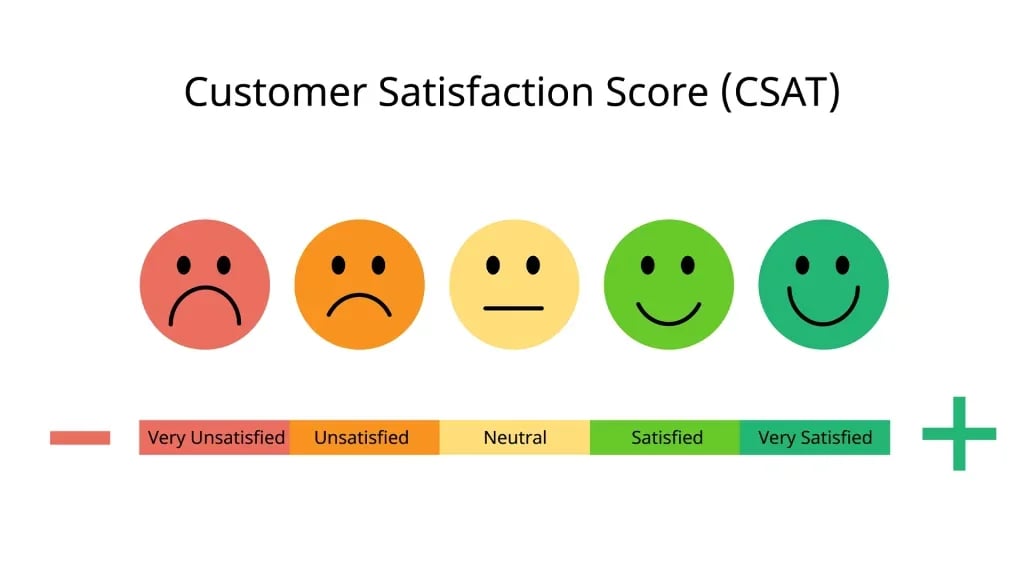
The majority of 4–5 star hotels in Vietnam have established relatively complete SOP systems, especially international brands or projects involving professional consulting firms. However, a clear paradox exists: the "completeness" of a process does not equate to "effectiveness" in operations. Deloitte's Hospitality Industry Outlook 2024 report indicates that up to 58% of frontline staff do not truly understand the core objectives of the processes they are executing. This transforms SOPs into a series of repetitive actions, disconnected from the customer experience, thereby diminishing the value that the process should ideally create. In Vietnam, according to Grant Thornton's Vietnam Hotel Survey 2024 report, despite a strong recovery in occupancy rates for 4–5 star hotels, customer satisfaction scores have not increased proportionally, and have even shown signs of stagnation in some high-end segments. This reflects the reality that customer experience is no longer determined by facilities or location, but increasingly depends on how processes are implemented at each service touchpoint. When processes lack "interpretation" for staff, each customer interaction becomes rigid, lacks emotion, and struggles to create a distinctive impression.
In independent hotels, the issue becomes even more pronounced as processes are often developed reactively to incidents rather than proactively from a long-term operational strategy. According to PwC's 2024 study on the Asia-Pacific hotel market, over 60% of independent hotels admit they only update processes when specific problems arise, rather than proactively designing processes based on the customer journey. The consequence is fragmented processes, a lack of inter-departmental linkage, and frequent operational conflicts. A typical example can be seen in the lack of synchronisation between front desk and housekeeping in handling early check-ins or late check-outs. When one department prioritises maximising occupancy while another is constrained by standard cleaning procedures, the customer experience becomes the "victim" of this inconsistency. Furthermore, the level of process digitisation in many hotels remains limited, especially in integrating customer data into operations. PwC's Experience is Everything report shows that only about 35% of hotels in the Asia-Pacific region are able to connect customer data into service processes to support personalised experiences. In Vietnam, this figure is believed to be even lower among hotels not part of international chains. This leads to processes that remain generic, lacking the ability to adapt to different customer segments.
Meanwhile, customer expectations are changing faster than ever. According to a 2025 Salesforce report, 73% of customers in the service industry expect businesses to understand and meet their individual needs in every interaction. When processes are not designed to "learn" from data and adapt to customer behaviour, they become obsolete even as they are being executed. Overall, it is clear that the challenge of Processes in the hotel industry today is not a lack of processes, but rather how processes are designed, communicated, and operated. When SOPs merely serve as internal controls and fail to become tools that drive customer experience, they inadvertently become barriers rather than drivers of revenue growth.
Trends Shaping Hotel Processes in 2026
2026 is ushering in a pivotal shift for the global hotel industry, where the concept of "Standard Operating Procedures" is gradually being replaced by a more systemic mindset: "Smart Operating Systems." While processes were previously understood as static instructional documents, they are now evolving into a "living entity" within operations, capable of learning from data, adapting to context, and continuously optimising based on customer behaviour. This is not merely a technological trend, but a comprehensive redefinition of the role of Process in hotel revenue growth strategy. To better understand this shift, we can examine four core trends shaping how 4–5 star hotels design and operate processes in this new era.

Firstly, data-driven processes are becoming the new operational standard for the industry. Amidst the exponential growth of customer data, major hotel groups have moved beyond mere data collection to leveraging data as "fuel" for operations. According to a 2025 McKinsey report, hospitality businesses applying advanced data analytics can improve overall operational efficiency by 15% to 25%. Brands like Marriott International and Accor have pioneered the use of artificial intelligence to analyse booking behaviour, stay habits, and customer spending, thereby adjusting service processes in real-time. Accor's internal report for 2025 shows that integrating AI into operational processes has increased customer satisfaction by up to 20%, while significantly reducing service response times. In this context, processes are no longer set once and applied long-term, but are continuously "fine-tuned" based on live data. Next, processes are being restructured around the customer journey rather than internal organisational structure. This is a fundamental change. In the traditional model, each department, such as front office, housekeeping, F&B, or engineering, operates according to separate processes, with the goal of optimising internal efficiency. However, from the customer's perspective, the experience is a seamless chain, not fragmented by organisational boundaries. According to a 2024 Deloitte study, service businesses adopting a "customer journey"-based operating model have 1.5 times higher customer satisfaction than those maintaining a siloed structure. This forces hotels to redesign processes in a cross-departmental manner, where every touchpoint is connected and operates according to a unified experiential logic. This is also why roles such as "Guest Experience Manager" are becoming increasingly common in luxury hotels.

The third trend is the rise of "flexible SOPs", meaning adaptable processes that can adjust to specific situations. In the 4–5 star segment, where customers increasingly expect personalised experiences, a rigid set of SOPs can become a major barrier to service quality. A 2023 Harvard Business Review study indicated that service businesses with a high degree of operational flexibility have a 30% higher customer retention rate compared to businesses using fixed SOPs. This does not mean eliminating standards, but rather designing processes with a "standard framework + flexible space" approach, allowing frontline staff the discretion to adjust within certain limits to meet individual customer needs. When empowered correctly, staff are not just process executors but become "co-creators" of the experience. Finally, technology is serving as the core platform connecting the entire process ecosystem. The development of PMS, CRM, RMS systems, and customer experience management platforms is enabling hotels to integrate all data and processes into a unified system. According to a 2024 PwC report, hotels with a high level of technology integration can reduce operational errors by up to 40% and significantly improve the speed of handling guest requests. Beyond automation, technology also helps "transparentise" processes, allowing management to monitor, measure, and optimise in real-time. In this context, processes are no longer paper documents, but rather a digitised operational flow that can be continuously controlled and improved. These four trends are collectively shaping a new standard for the hotel industry in 2026, where Process is not just an operational tool but a core competitive capability. Hotels capable of transitioning from traditional SOP thinking to intelligent operating systems will not only enhance efficiency but also create a distinct advantage in attracting and retaining customers in an increasingly demanding market.
Challenges in Hotel Operational Processes
Problem 1: Service processes are not standardised into communicable SOPs One of the fundamental bottlenecks for many hotels today lies in the fact that service processes have not been standardised in a "communicable" way. Many businesses have invested in building quite thorough internal SOPs, but they stop at serving operations rather than transforming them into "service promises" that customers can perceive and remember. When processes only exist behind the scenes, the experience becomes vague and lacks distinct positioning. According to a 2024 McKinsey study, service brands capable of "visualising" processes into concrete experiences that customers clearly recognise can increase loyalty by 20–30%. This shows that a good process not only needs to be technically correct, but also must be designed to "tell a story" about service quality.

Problem 2: Slow Complaint Handling and Lack of Service Recovery The complaint handling process at many hotels remains a persistent weakness. In an era where customer experiences are increasingly publicised on digital platforms, the speed and quality of response are no longer mere operational factors but have become part of brand strategy. American Express's Customer Service Barometer survey shows that 78% of customers are willing to return if their complaints are handled effectively, but only 33% are truly satisfied with how businesses respond. In the hospitality industry, where every experience can quickly spread through social media, a delayed response not only means losing a customer but can also trigger a chain of negative effects. ReviewPro's 2025 report also indicates that hotels responding to online reviews within 24 hours have an average reputation score 12% higher than those with slower responses. This highlights the role of a well-designed "service recovery" process, where each incident is not only resolved but also leveraged to strengthen customer trust. Problem 3: SOP Rigidity Hinders Personalisation The rigidity of SOPs is increasingly emerging as a major barrier to personalised experience strategies. While customers increasingly expect "tailored" services, many hotels still operate under overly standardised procedures, leaving frontline staff with insufficient room for flexible situation handling. According to Salesforce's 2025 State of the Connected Customer report, 73% of customers expect businesses to understand their individual needs, but only 51% feel that this actually happens. This gap largely stems from processes that do not adequately "empower" staff. In the 4–5 star segment, where emotional and personalised experiences are decisive factors, an inflexible SOP can inadvertently eliminate opportunities to create memorable moments for guests. Problem 4: Reactive Rather Than Preventive Maintenance In terms of logistical operations, maintenance processes also reveal many limitations, still being heavily reactive. Many hotels only address issues after they have occurred, instead of building a preventive maintenance system based on data and forecasts. According to JLL's 2024 report, reactive maintenance costs can be 3 to 5 times higher than preventive maintenance, not to mention the intangible losses in customer experience when issues arise during a stay. A malfunctioning air conditioning system or an improperly working bathroom fixture not only causes inconvenience but also directly affects the guest's overall impression of the hotel. In an environment where online review platforms are increasingly influential, every technical issue can become a "minus point" that is difficult to rectify if not controlled at the source with appropriate procedures.
Issue 5: Social media crisis management process specifically for the hotel industry. The explosion of social media is creating an entirely new requirement for operational processes: the ability to manage media crises in real-time. However, this is one of the major gaps for many hotels today. Many establishments still handle negative media situations reactively, lacking scenarios and coordination between departments. Meanwhile, according to a 2024 BrightLocal survey, up to 87% of consumers read online reviews before making a decision, and 49% say they only trust businesses that respond positively and professionally to negative reviews. An unprofessional, delayed, or confrontational response can significantly erode trust, and even directly impact booking rates. This shows that, in the digital age, a social media crisis management process is no longer an optional extra, but a mandatory component of every hotel's operational system.
Conclusion
In the new context of the hotel industry, processes are no longer merely an internal control system but have become a core part of business strategy. A well-designed process not only helps optimise costs but also directly generates revenue by enhancing customer experience and increasing repeat business. 2026 will be the time when hotels are compelled to redefine how they view Process. From an operational document, processes need to be elevated into a strategic, flexible, technology-integrated, and customer-centric system. This is no longer an option, but a prerequisite for survival and growth in an increasingly competitive market.
- Hotline: +84 768 68 2913
- Email: dosm@nshm.com.vn
- Zalo OA: https://zalo.me/2452770272256938463 (NewSun Hospitality)
- Website: https://nshm.com.vn/ (NewSun Hospitality)
References
- McKinsey & Company (2025). The Future of Hospitality: Operational Excellence as a Growth Engine.
- Deloitte (2024). Hospitality Industry Outlook: Bridging the Execution Gap.
- PwC (2024). Experience is Everything: Connecting Customer Data to Operations in Hospitality.
- Accor Group Internal Report (2025). AI-driven Personalization in Guest Experience.
- Harvard Business Review (2023). Flexible Operations in Service Industries and Customer Retention.
- American Express (2023). Customer Service Barometer Report.
- JLL (2024). Hotel Maintenance Strategies: Reactive vs Preventive.
- BrightLocal (2024). Local Consumer Review Survey.
- Vietnam National Administration of Tourism (2025). Annual Report on Vietnam Tourism Industry.