


 VN
VN EN
ENIn the previous instalment, we examined the biggest "headache" facing the Ha Long Bay cruise market in 2024–2025: a true "red ocean" , where the game is dominated by "giants" with capacities of up to 500 guests, products are increasingly saturated, and price wars during the low season have become an instinctive reaction for many businesses. When the market is dragged down by capacity pressure, selling prices gradually lose their value as a reflection of the experience, and profit margins are silently but continuously eroded, then what is called "growth" actually conceals many long-term risks.
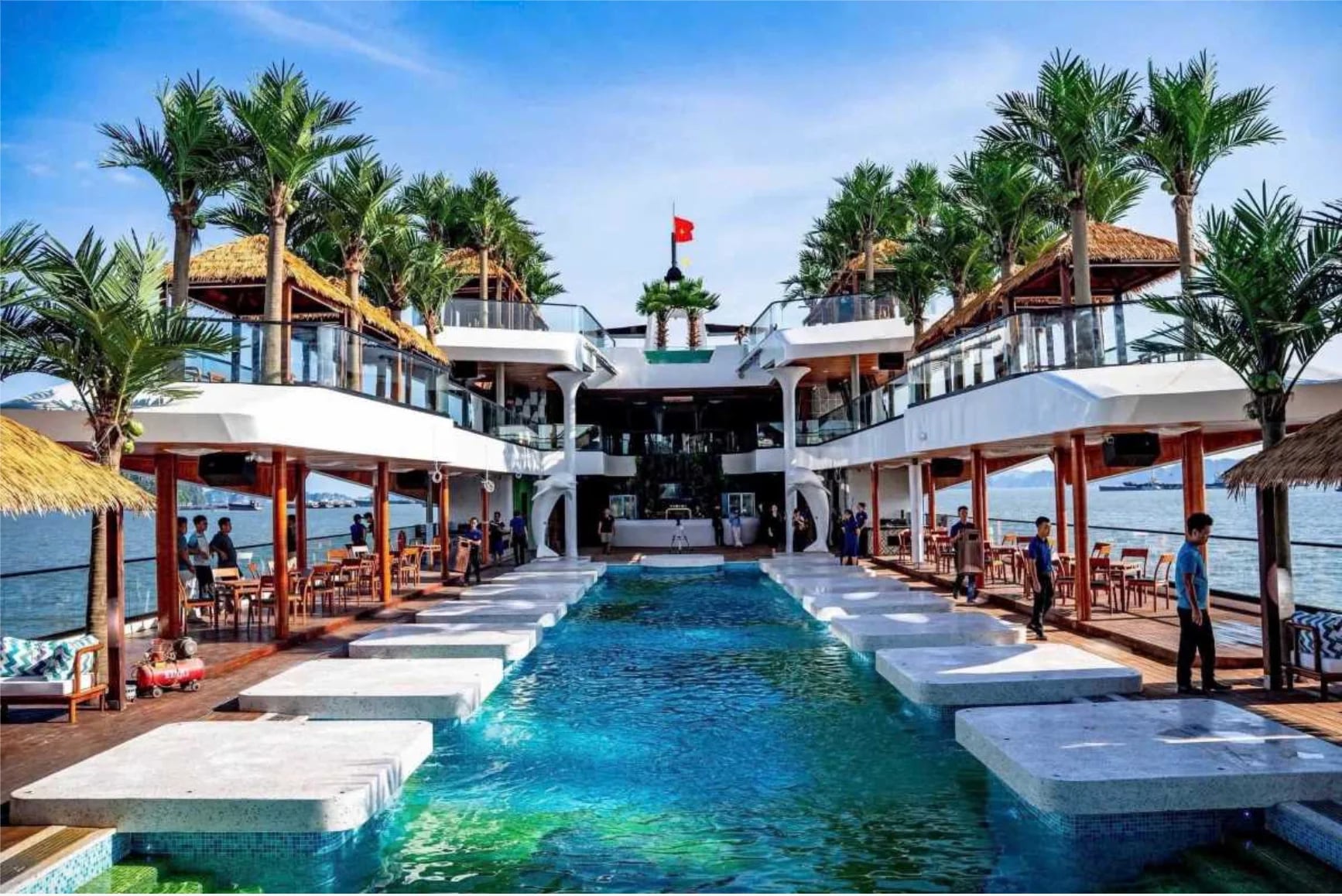
Against this backdrop, Dolphin Halong Cruise – a project slated for launch just before Q4, a period considered low season for domestic tourists and high season for inbound visitors – faced a significant challenge. The inbound market requires a short lead time for bookings (a trend that has shortened further since pre-COVID times). The problem for NewSun Hospitality was not merely how to maximise occupancy in the initial months of operation, but more importantly, how to prevent Dolphin from being drawn into the “discount-to-survive” spiral, a common trap for many cruises in the bay. Filling rooms with low prices might generate short-term cash flow, but it also lays the groundwork for a difficult-to-escape vicious cycle: low prices – disloyal customers – thin margins – insufficient resources for product upgrades. Therefore, our solution was not to compete directly on scale or conform to rigid market standards. Instead, NewSun Hospitality chose a more challenging but sustainable path: a comprehensive restructuring, starting from Product Strategy – clearly defining Dolphin’s identity, target audience, and unique value proposition – to Distribution Model – where each sales channel is not just a revenue generator, but also a tool to control brand image, value, and customer behaviour in the long term. This strategic foundation enabled Dolphin Halong Cruise to enter the market not with a mindset of “survival”, but with the goal of building a product with a distinct identity and sustainable growth potential. 1. Product Strategy: From “Selling a Location” to “Selling a Tailored Experience” From the very first meetings, NewSun Hospitality recognised a clear truth: if Dolphin Halong Cruise merely aimed to be a beautiful ship, the project would quickly be lost among the hundreds of other beautiful ships operating day and night in Ha Long Bay. In a market where aesthetics are no longer a long-term competitive advantage, appearance is a necessary condition – but not a sufficient one. Therefore, we advised the investor to take a bold yet fundamental step: rebrand from the outset, before Dolphin officially entered the market.
Rebuilding Brand DNA
Instead of rushing to launch a product to "occupy a spot" in the market, NewSun and the Dolphin investor chose a slower but more certain approach: to sit down and view Dolphin as a true brand, not just a means of transport on the bay. We reviewed and restructured the entire brand identity, and re-established the communication strategy from the outset. Dolphin was not built on what the market already offered – which was already too crowded and similar – but on market gaps and the investor's core desire for a product with depth, personality, and the potential for sustainable development.
The overarching goal of this strategy is to shift the business model from a "passive" state – waiting for customers, filling rooms with promotions during market downturns – to an "active" state – where the brand can shape customer flow, drive demand, and create reasons for customers to choose Dolphin, even during off-peak seasons. This approach is concretised through the 7P Marketing Mixmodel, in which the first P – Product – is fundamentally redefined by NewSun: the product is not the cabin, nor the number of seats on the boat; the product is the emotion customers carry with them after the journey.
Core Differentiation
In terms of design, Dolphin Halong Cruise possesses a refined and distinctive aesthetic. However, in NewSun's consulting philosophy, a product that is beautiful in its "physical form" only truly gains value when infused with a sufficiently strong "soul". Therefore, we place Customer Centricity at the heart of our entire product development and operational thinking. Every decision – from the itinerary, services, service script, to the communication style of the staff – is viewed from the customer's perspective: what they feel, what they expect, and what makes them remember Dolphin after their trip.
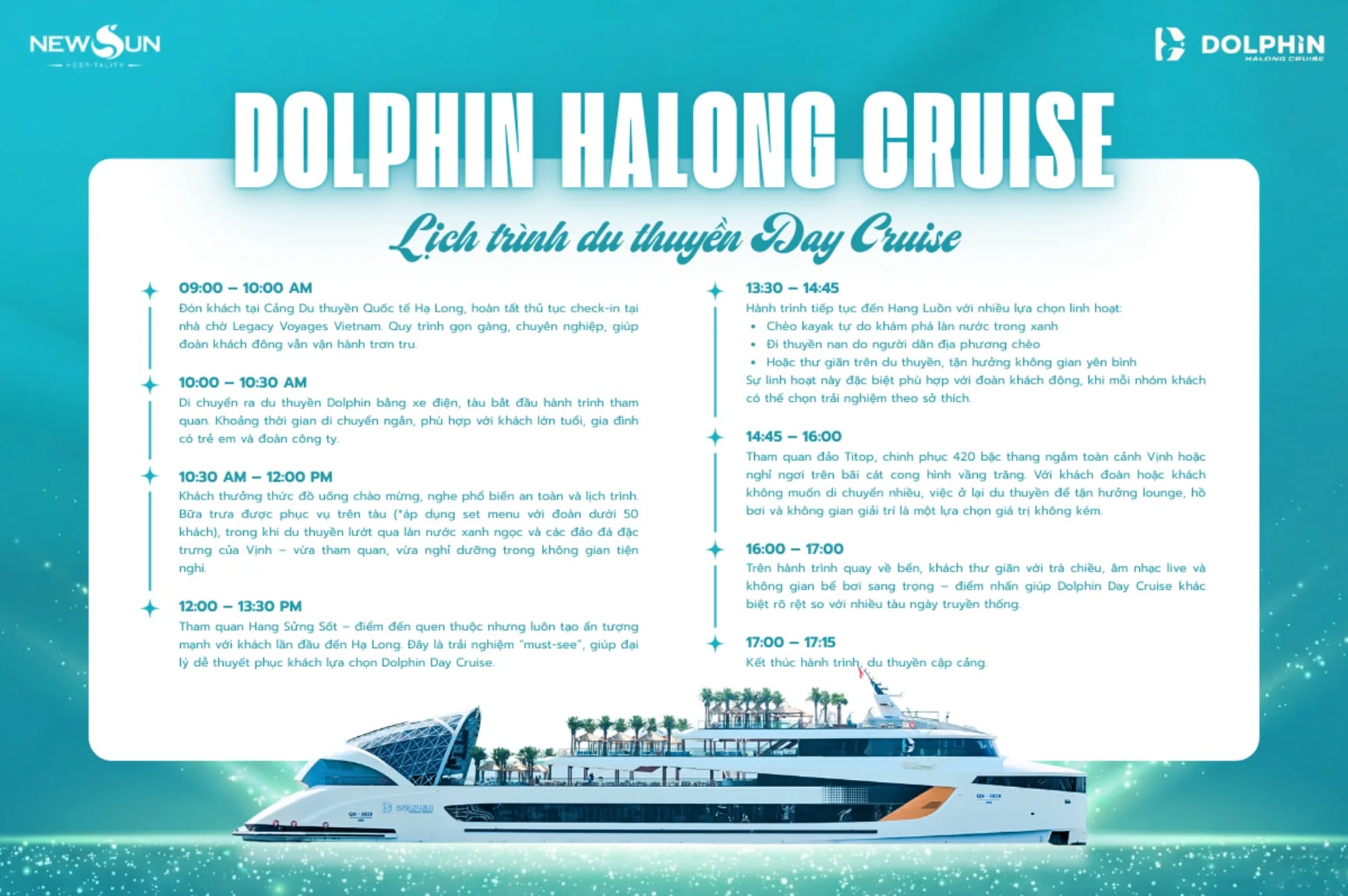
In an environment where travellers are increasingly sophisticated, discerning, and prioritise highly personalised experiences – especially as the trend of experiential tourism is predicted to continue its rise in 2025 – Ms. Bui Thu Huyen, Founder of Legacy Voyages Vietnam and Investor of Dolphin Ha Long Cruise, a progressive business leader who also places customers at the centre, boldly eliminated cumbersome, mechanical processes common in mass tours. Instead, the focus was placed on designing and optimising emotional touch-points throughout the journey, from the moment guests step aboard until they depart. Dolphin does not sell a fixed itinerary for everyone; Dolphin sells a refined experience, where each guest clearly feels they are a valued guest, not an anonymous number in a revenue statistic.
2. Business Model: The Art of the Flow "Architect"
If the product strategy is likened to The Heart – where core value is created for customers – the business model and sales channel system are key. the circulatory system that sustains the entire project. A good product with inefficient revenue flow will soon suffer from "oxygen deprivation." For Dolphin Halong Cruise, the biggest challenge wasn't selling tickets, but rather how to sell correctly, sell through the right channels , and sell with optimised operating costs, while avoiding dangerous over-reliance on a single source of customers – a pitfall that has left many cruises in the bay vulnerable and passive when the market fluctuates. NewSun Hospitality's solution lies in a purposefully designed model: Sales Cluster & Multi-channel Diversification . This is not a short-term fix, but an operational structure built to support sustainable growth in the medium and long term. Sales Cluster & Multi-channel Diversification
Cluster Model: Optimising Resources, Boosting System Resilience
Instead of building a cumbersome, costly sales apparatus solely for Dolphin Halong Cruise, NewSun advised adopting the Cluster Sales model – a modern management trend often implemented in large hotel chains and cruises. In this model, a lean yet versatile sales team can cross-sell and support various products within the same ecosystem, such as IRIS Cruise, Dolphin Halong Cruise, and upcoming projects like Jasmine Cruise.

This approach offers three distinct strategic benefits for the investor. Firstly, optimising personnel costs, reducing the burden of fixed costs while ensuring necessary market coverage. Secondly, increasing customer source synergy, as customers unsuitable for one product can still be directed to another within the same system, helping to retain cash flow and increase Customer Lifetime Value. More importantly, the Cluster model creates operational flexibility, allowing the business to scale sales up or down without disrupting the entire organisational structure.
"Architect" of Distribution Channel Flow
In its advisory role, NewSun likens itself to a traffic network planning architect. The tourism market is not a single flow, but a collection of many different customer streams: OTAs, traditional travel agents, corporate clients, international inbound tourists, independent domestic tourists, etc. If not properly planned, these flows can easily become congested, overlap, or – more dangerously – flow directly to competitors.
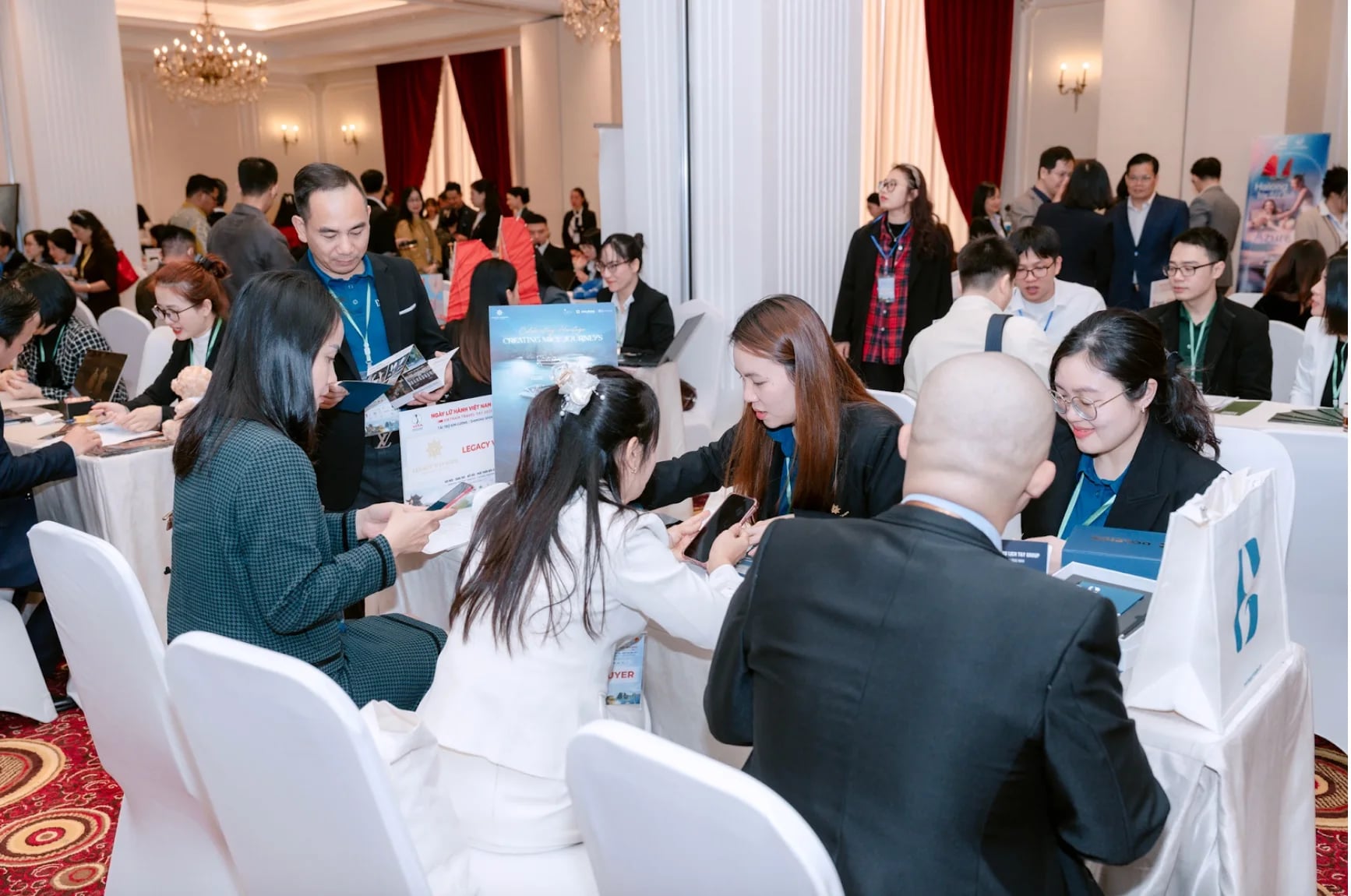
Therefore, NewSun designed a diversified yet controlled sales channel structurefor Dolphin, to avoid the risk of "putting all eggs in one basket". We optimise the nature of each sales channel to achieve the best results. At different times of the year, each sales channel will experience sinusoidal fluctuations that require a conductor to direct them up and down in rhythm, ensuring every sales channel is effectively utilised. The primary method is a channel system built for balance and flexibility, allowing for the "opening and closing" of revenue control valves depending on market conditions, seasonality, and specific business objectives.
Scenario and Data-Driven Management: Proactive in the Face of Volatility
In a market with many variables like tourism, emotional decision-making is the biggest enemy of business. Instead of reactive decisions based on short-term situations, NewSun helps Dolphin build a system of Business Scenarios combined with Forecasting & Data-driven Reports.

Specifically, scenarios are pre-designed for the Owner to activate corresponding actions when encountering early warning signals from the consulting unit. The allocation of revenue proportions among channels is calculated based on actual data and trend forecasts, helping the Owner maintain a "far-sighted" perspective – proactively making decisions before the market shifts, rather than being caught in a reactive cycle when it's too late. A sharp product strategy combined with a flexible business model – will NewSun Hospitality's theoretical approach truly yield "sweet fruits" in the fiercely competitive operational reality? What compelling figures will demonstrate the effectiveness of Dolphin Halong Cruise after a short period since its launch? And what are the potential risks that even a good strategy needs to guard against? We invite readers to look forward to Part 3 (Final Part): Lessons on "The Right Path" Mindset and the Value of a Companion