


 VN
VN EN
ENIn the hospitality industry – where experience, emotion, and trust play a decisive role in purchasing behaviour – a website is no longer just a formal information channel. It is the brand's "digital storefront," the first and most crucial touchpoint between the business and the customer in the digital age. Before booking a room, tour, or choosing a resort, customers often spend time researching, comparing, and evaluating information online. If the website is not professional enough, unclear, or unconvincing, business opportunities can slip away from the company in the very first seconds. Market research shows that most booking journeys now begin with an online search. Users not only look for price information but also care about images, experiential content, customer reviews, and the brand's credibility. In this context, a website is not just a place to "introduce the business" but also the hub of the entire digital marketing ecosystem, where traffic from advertising, social media, OTAs, email marketing, and other communication campaigns converges. A well-built digital platform can convert visits into bookings; conversely, a weak platform will lead to the loss of all invested marketing resources.
However, a worrying reality is that many hotels, resorts, and tourism businesses still possess a fragmented and strategically lacking "digital presence." Websites are designed without brand direction, content structure is chaotic, page loading speeds are slow, mobile optimisation is absent, SEO is largely neglected, and content is not regularly updated. As a result, businesses are virtually "invisible" on search engines. When a brand fails to appear in key positions, organic revenue gradually erodes, leading to increasing reliance on intermediary channels. Therefore, in "ARTICLE 5: INVISIBLE ON GOOGLE – A WEAK DIGITAL PRESENCE ERODING REVENUE", we will delve into analysing the current state of weak digital presence in the hospitality industry; clarify the core reasons behind unstrategic websites and unoptimised SEO; highlight the potential consequences for brand, competitiveness, and revenue; and propose strategic solutions to sustainably and long-term restructure a business's "digital storefront." This is not merely a story about technology or technicalities, but a strategic challenge directly related to growth potential in the digital age.
The Reality: Websites Exist But Fail to Generate Value
In the hospitality industry, a website should ideally convert traffic into bookings, tour reservations, and consultation requests. However, the reality for many businesses reveals a worrying paradox: websites exist, are updated with basic images and information, but generate almost no real business value. They function more like an online brochure than a strategic sales tool.
1. Websites are merely "informational," not "conversion-oriented"
Many businesses invest in a website as a step to complete their brand identity, but lack a conversion-oriented mindset. Websites are built simply "to have one" or "for customers to look up information," rather than being designed as a journey guiding users from interest to action. Common manifestations include:
- Lack of clear and consistent calls to action (CTAs)
- Complex booking processes with many intermediate steps
- Failure to integrate user behaviour tracking tools like Google Analytics, heatmaps, or CRM systems
- Generic service descriptions, focusing on listing amenities rather than highlighting unique experiences and value
According to HubSpot research, up to 75% of users judge a business's credibility based on its website design. This means that within the first few seconds, customers form an impression of the brand's professionalism. Furthermore, user behaviour studies show that 88% of visitors will not return if they have a poor website experience. In the accommodation industry – where trust is crucial – an unoptimised website not only reduces conversion rates but also erodes brand image over time. More notably, according to data from Forrester Research, a well-optimised user experience (UX) can increase conversion rates by up to 200%, and even higher when combined with appropriate content and personalisation strategies. This indicates that the issue is not "having a website or not," but whether that website is designed as a revenue-generating tool.
2. Poorly optimised SEO – the brand is invisible when customers search
If a website is a "digital storefront," then SEO is the path that leads customers to that storefront. However, many hospitality businesses today still view SEO as a supplementary technical task, rather than a long-term strategy for addressing market demand.
Common issues include:
- No long-term keyword strategy linked to the customer journey
- Duplicate, thin, or low-value content
- Slow page loading speed, especially on mobile devices
- Lack of mobile optimisation, despite most users searching on their phones
- Absence of internal linking systems and clear content structure
According to BrightEdge statistics, over 53% of all website traffic comes from organic search. This means that more than half of customer acquisition opportunities depend on search engine visibility. Meanwhile, user behaviour research indicates that over 90% of clicks are concentrated on the first page of search results, and most users rarely go to the second page. Especially in the travel and accommodation sector – where customers actively search for terms like "Da Nang beachfront hotel," "family resort," "Ha Long Bay cruise 2 days 1 night" – if a brand does not appear in prominent positions, it almost certainly means missing out on opportunities to reach customers with genuine needs and willingness to pay.
According to Google data, over 70% of booking journeys begin with an online search query. This shows that SEO is not merely about keyword optimisation, but a strategy for presence at the exact moment customers develop a need. When SEO is neglected, businesses not only lose organic traffic but also become increasingly dependent on OTAs and paid advertising – leading to shrinking profit margins. In summary, a website that exists but is not conversion-optimised, combined with weak SEO, will leave a business "present but invisible" – existing in the digital environment but not truly competing for customers. And in an increasingly competitive hospitality market, this invisibility is a far greater strategic risk than not investing at all from the outset.
Core Cause: Short-term Implementation Mindset and Lack of Holistic Strategy
Behind an ineffective website, it's rarely a purely technical issue. Most causes stem from the implementation mindset: treating website development as a short-term project, rather than building it as a strategic, long-term revenue-generating asset. When a business lacks a holistic view of the role of digital presence within its marketing and sales ecosystem, all implementation activities become fragmented, directionless, and struggle to create sustainable value.
1. Viewing the website as a technical item, not a strategic asset
A common reality in the hospitality industry is that investors fully entrust website development to a design agency or freelancer, with the main requirements revolving around an "attractive," "luxurious," "brand-aligned" interface. The marketing department – if one exists – typically only participates in providing basic content or images. As a result, the website may be visually appealing, but:
- Lacks a content structure for long-term SEO
- Does not build a clear conversion funnel
- Does not integrate customer data collection systems
- Is not linked to specific revenue goals (e.g., increasing direct bookings, reducing OTA dependence)
For example, a resort in Central Vietnam invested hundreds of millions of VND in a new website with a modern interface and numerous visual effects. However, the homepage lacked a prominent "Book Now" button, the booking process required too much information, and there was no content addressing frequently asked questions such as "Is the resort suitable for families with young children?" or "What is the cancellation policy?". After 6 months of operation, traffic increased due to advertising, but the conversion rate remained below 1% – significantly lower than the hospitality industry average (typically 2–5% depending on the segment).
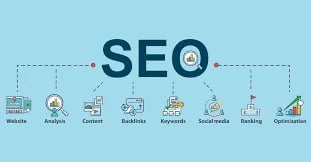
According to Forrester Research's study on customer experience ROI, businesses that view digital experience as part of an overall business strategy can achieve significantly higher revenue growth compared to those that only invest sporadically on a project-by-project basis. This shows that a website cannot be seen as an "IT item," but must be viewed as a strategic asset – similar to a physical location in traditional business.
2. Lack of an SEO-optimised content strategy
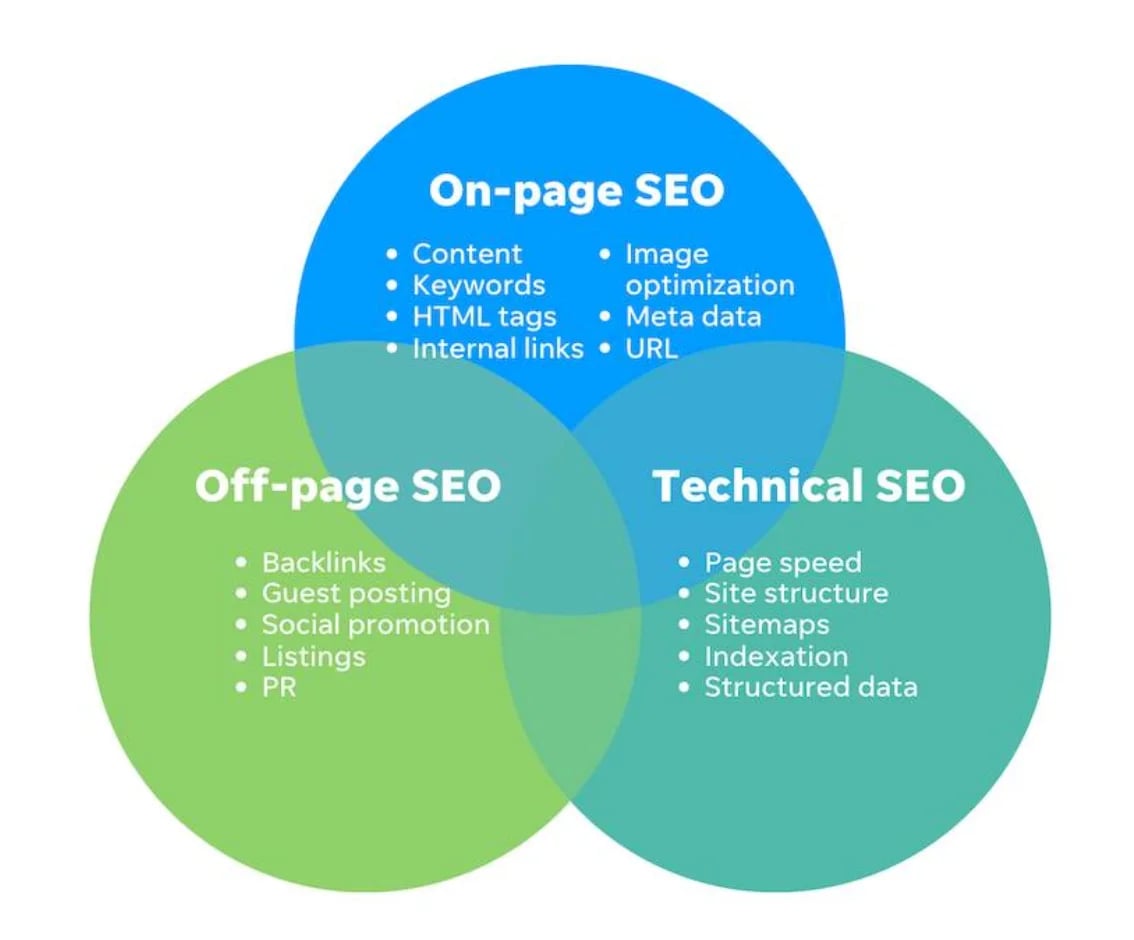
Effective SEO doesn't come from "keyword stuffing" or posting a few scattered blog articles. It requires a well-structured content strategy, including:
- Researching customer behaviour and search intent
- Building topic clusters around key needs
- Producing in-depth, genuinely valuable advisory content
- Continuous updating and optimisation based on data
According to the Content Marketing Institute, businesses with a well-defined content strategy generate three times more leads than those without a clear strategy, while also significantly reducing the cost per lead.
However, in the hospitality industry, many websites only feature:
- Room description pages
- Price lists
- A few images of amenities
- Internal news announcements
There are almost no advisory articles such as: "Tips for choosing the right resort for a three-generation family", "Comparing 4-star and 5-star cruises in Ha Long Bay", or "Checklist for preparing for a luxury holiday". Yet, it is precisely this type of content that represents crucial touchpoints when customers are researching and comparing options.

According to data from BrightEdge, over 53% of website traffic comes from organic search. If businesses do not invest in content to appear in informational and commercial search queries, they will miss out on a large number of potential customers from the very beginning of the purchase journey.
3. Lack of data measurement and analysis
Another core reason is the lack of measurement or ineffective utilisation of data. Many businesses install analytics tools but fail to use them for decision-making. Others don't even track any metrics beyond total visits. Without a measurement system, businesses won't know:
- Which channels customers come from (SEO, advertising, social media, OTAs, etc.)
- Which pages have unusually high bounce rates
- Which keywords or articles generate the most conversions
- Which step in the booking process causes customers to abandon
According to Google data, optimising based on user behaviour data can significantly improve conversion performance, especially when combined with A/B testing and content personalisation. Conversely, without data, all decisions are based on intuition: changing the interface based on "a feeling", writing content based on "subjective opinions", or running ads without knowing if the landing page is truly effective. For example, a boutique hotel in Hanoi discovered through data analysis that 60% of users left the website at the check-in/check-out date selection step because the system did not clearly display room availability. After optimising the interface and streamlining the booking process from 5 steps to 3, the booking completion rate almost doubled in just 2 months. The difference did not come from increasing the advertising budget, but from understanding and optimising based on real data. In summary, when businesses implement websites and SEO with a short-term mindset, lacking an overall strategy and not relying on data, their digital presence will struggle to become a growth driver. Instead of being a "revenue-generating machine", the website becomes merely a maintenance cost – existing, but not truly creating sustainable business value.
Consequence: Loss of growth opportunities in a fiercely competitive market
In the hospitality industry, where competition is increasingly intense and customer behaviour constantly changes, digital presence is no longer an advantage – it is a minimum requirement for survival. When a website and SEO operate inefficiently, the consequences extend beyond a few missed bookings, leading to a gradual loss of competitive position and long-term growth opportunities.
1. Dependence on OTAs and intermediaries
When a website fails to generate direct bookings, businesses are forced to seek revenue through intermediary platforms such as Booking.com, Agoda, or Traveloka. These are powerful distribution channels, but they come with commissions ranging from 15% to 25%, or even higher depending on the segment and display policy. In the short term, OTAs help fill room capacity. But in the long term, excessive reliance on intermediaries causes businesses to:
- Significantly narrow profit margins
- Lose control over customer data
- Struggle to build a loyal customer base
- Easily get caught in price wars
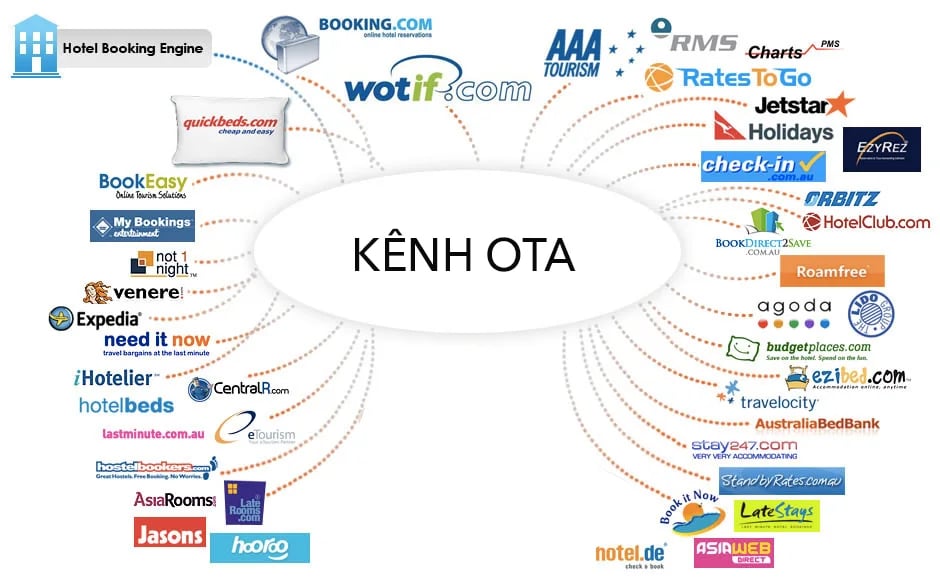
For example, a 4-star hotel in Hanoi receives up to 75% of its total bookings from OTAs. Without a strategy to attract direct bookings via its website, the hotel pays hundreds of millions of VND in commissions each month. Meanwhile, if the direct booking rate could be increased by just 15–20% through website and SEO optimisation, the business could retain a significant portion of profit to reinvest in customer experience. A weak digital presence thus not only reduces direct revenue but also causes businesses to lose control over their own distribution channels.
2. Increased marketing costs with disproportionate effectiveness
One of the most evident consequences of a poorly optimised website is a significant "leakage" of marketing budget. Businesses may invest heavily in Google Ads, Facebook Ads, or KOL collaborations to drive traffic to their website. However, if the landing page is not designed to persuade and convert, most visitors will leave without generating value. According to industry data, the average conversion rate for hotel websites typically ranges from 2% to 5%. If a website achieves less than 1%, it means the business must spend two or three times the budget to achieve the same number of bookings.

For example:
- With an average advertising cost of 10,000 VND per visit
- If the conversion rate reaches 3%, the cost to generate one booking is approximately 333,000 VND
- But if the conversion rate is only 1%, the cost per booking will increase to 1,000,000 VND
This discrepancy directly impacts profitability. According to Google's research on conversion optimisation, improving the landing page experience and booking process can significantly reduce the cost per acquisition (CPA) without increasing the advertising budget. In other words, when a website platform is not optimised, businesses are pouring money into advertising but failing to build a "conversion machine" strong enough to effectively leverage that traffic.
3. Decreased brand competitiveness
In the digital environment, display position is a competitive advantage. When customers search for "luxury resort Phu Quoc" or "Ha Long Bay cruise 2 days 1 night", they typically only pay attention to results appearing on the first page. If your competitor appears at the top of search results with in-depth content, impressive images, and a smooth experience, while your website loads slowly, lacks information, and is not mobile-friendly, the customer's decision is almost certainly made.

According to BrightEdge statistics, over 53% of website traffic comes from organic search, and the majority of clicks are concentrated on the top positions of the results page. This means that businesses not appearing at the top are virtually "invisible" to potential customers. The decline in competitiveness doesn't happen suddenly, but subtly over time:
- Search market share captured by competitors
- Brand image gradually fades
- Fewer new customers are aware of the brand
- Businesses must compete on price instead of value
More dangerously, when businesses don't immediately recognise this loss, they may mistakenly believe that the market is "generally difficult," when in reality the problem lies in their digital presence and ability to capitalise on opportunities in the digital environment.
Strategic Solution: Restructuring Digital Presence for Sustainability
In the fiercely competitive hospitality industry, simply "fixing the website" or "re-doing SEO" as isolated tasks will not solve the root problem. What is needed is not a few technical adjustments, but a comprehensive restructuring – where the website, SEO, and content are integrated into the business's overall growth strategy. At NewSun Hospitality, we do not view a website as merely a design product, nor do we see SEO as simply keyword optimisation. The website and SEO must be core foundations in the strategy to build brand, attract customers, and maximise direct revenue. Therefore, every solution begins with strategic thinking, followed by technical implementation.
1. Strategic Marketing & Brand Positioning Consulting Package
Before discussing page load speed or URL structure, the most important question to answer is: Who does the business want to be in the customer's mind? A website can only be effective if it accurately reflects the brand's positioning and serves the correct target segment. Therefore, the first step in restructuring the digital presence is to clearly define:
- Strategic customer segments (luxury families, couples on retreat, MICE guests, international guests…)
- The decision-making journey for each customer group
- Core differentiators compared to competitors
- Key messages across all communication channels
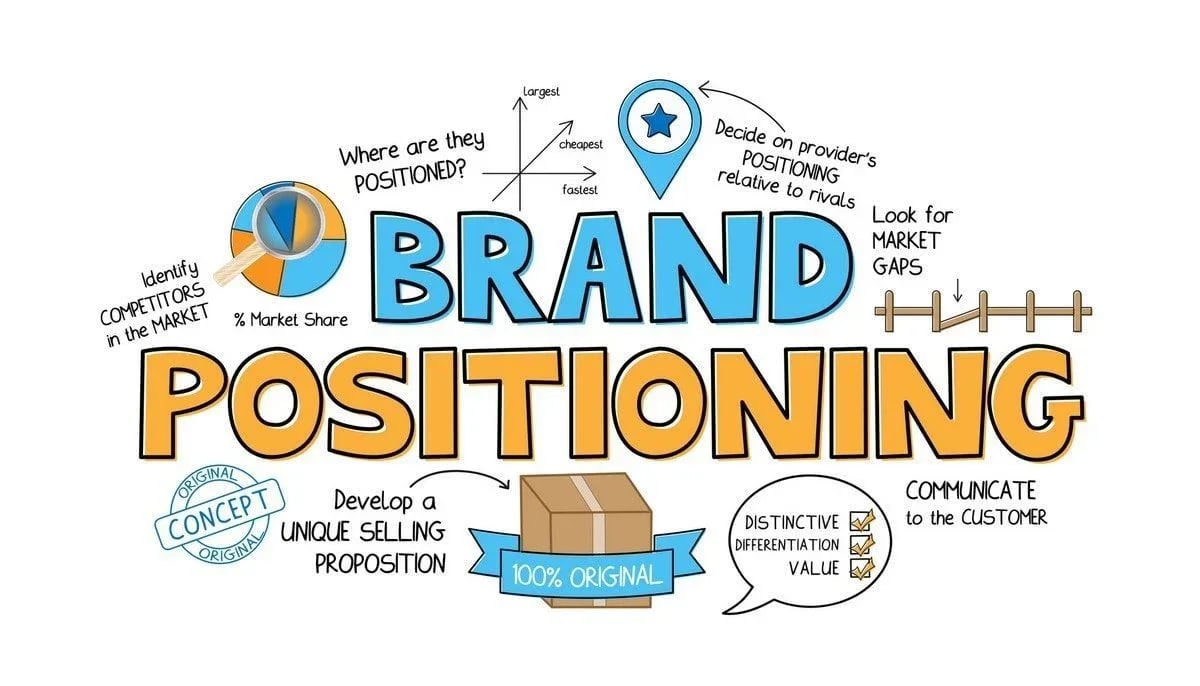
NewSun Hospitality's Strategic Marketing & Brand Positioning Consulting Package helps businesses build this foundation systematically. With clear positioning, all website content, page structure, and SEO strategy will revolve around specific business objectives – for example: increasing direct booking rates by 20% in 12 months, or expanding market share in the luxury customer segment. Instead of fragmented implementation, all digital activities are placed within a logical system: from brand messaging, advisory content, to guiding booking actions.
2. Conversion-Optimised Website Development & Optimisation Package
An effective website is not just "beautiful" but must also operate as a sales machine. This requires a combination of content strategy, user experience (UX/UI), and data measurement systems.

NewSun implements websites using an integrated model, including:
- SEO-standard content structure from the ground up
- Optimised page load speed and mobile display capability
- Conversion-oriented design with clear CTAs
- Streamlined, intuitive booking journey optimisation
- Integration of tools for tracking user behaviour and measuring effectiveness
Instead of letting customers "find their own way" on the website, we design a purposeful journey: from homepage → services page → advisory content → call to action → booking completion. Each touchpoint is optimised to reduce bounce rates and increase conversion potential. In this model, the website is no longer an online catalogue, but becomes the operational hub of the digital marketing ecosystem – where all traffic from advertising, social media, or SEO is converted into real value.
3. In-depth Hospitality SEO & Content Marketing Package
Unlike generic SEO services, NewSun's strategy focuses specifically on the unique customer behaviour within the hospitality industry. We don't just research keywords using tools, but analyse them based on actual booking behaviour and the stages of the purchasing journey.

The strategy includes:
- Keyword research by need group: information seeking, option comparison, brand search, and direct booking behaviour
- Development of in-depth content systems on destinations, experiences, travel trends, and accommodation solutions
- Creation of topic clusters to enhance the website's professional credibility
- Continuous optimisation based on traffic data, conversion rates, and keyword performance
The goal isn't merely high search engine rankings. Rankings are just a means to an end. The ultimate objective is sustainable revenue growth from direct channels – reducing reliance on OTAs, improving profit margins, and building a loyal customer base. Restructuring your digital presence isn't a short-term campaign; it's a strategic process. When your website, SEO, and content are synchronised under a clear growth strategy, hospitality businesses don't just "appear" in the digital environment; they truly master the game – proactively attracting customers, driving conversions, and achieving sustainable long-term development.
Conclusion: A strong digital presence is the foundation for long-term growth.
In a hospitality market that is continuously expanding yet increasingly competitive, the battle isn't just about location, room count, or investment in facilities – it's also fiercely fought in the digital realm. Today's customers no longer make decisions based on traditional advertising or isolated recommendations. They search, compare, read reviews, view real images, and analyse multiple options before clicking "book". Therefore, a weak digital presence is no longer just a technical oversight; it's a strategic risk. When a brand doesn't appear in key positions on search engines, when its website isn't compelling enough to retain customers, the business doesn't just lose a few bookings – it gradually loses the opportunity for sustainable long-term growth. Websites and SEO, when implemented correctly, don't merely help businesses "be present" online. They help businesses appear at the precise moment customers have a need, in front of the right target segment, and with a message clear enough to build trust. A strong digital presence is a combination of sharp positioning strategy, in-depth content, a seamless experience, and a continuously optimised data measurement system. This is the foundation for direct revenue growth, reduced reliance on intermediaries, and building a loyal customer base. NewSun Hospitality partners with investors and hotel managers not just as an implementation unit, but as a strategic partner in the process of restructuring the entire digital marketing ecosystem. From brand positioning, developing content strategies, optimising conversion-ready websites, to implementing in-depth hospitality SEO – every solution aims at one core objective: transforming digital presence into a true competitive advantage, rather than just an operating cost. If your business has a website but isn't leveraging its conversion potential, if your marketing budget is increasing but the effectiveness isn't commensurate, now is the time for a serious re-evaluation. Redefining your "digital storefront" isn't just about improving your image; it's about restructuring your growth foundation. ???? Contact NewSun Hospitality for comprehensive digital presence strategy consulting, tailored to your brand's direction and long-term growth objectives. Because in the digital age, sustainable growth begins with mastering your own online space.
- Hotline: +84 768 68 2913
- Email: dosm@nshm.com.vn
- Zalo OA: https://zalo.me/2452770272256938463 (NewSun Hospitality)
- Website: https://nshm.com.vn/ (NewSun Hospitality)