

 VN
VN EN
ENIn the hospitality industry, where every space is designed to tell a story and every experience is meticulously crafted to evoke emotion, communication should ideally be a long-term journey, evolving alongside the brand. However, amidst the fast-paced demands of revenue, occupancy rates, and short-term targets, promotion activities at many hotels are often reduced to fragmented, temporary campaigns. When rooms need filling, marketing is intensified. Once peak season passes, everything slows down. Communication becomes an "instant activation" tool rather than a sustained, long-term strategic approach. It's not hard to spot the familiar pattern: each season brings a new message, each promotional offer a different concept, and each communication platform uses its own tone of voice. The brand image flexibly changes with each campaign, yet lacks a consistent core value to anchor it in customers' minds. Content is regularly produced, and budgets are continuously allocated, but the fundamental question remains unanswered: what is the brand building over time? What image does the hotel want to be remembered for in the next 3–5 years?
In an increasingly competitive market with a growing number of customer choices, brand presence is no longer about a few short-term promotional bursts. Promotion is not just about launching an attractive offer; it's about a business maintaining a consistent presence, telling a cohesive story, and building recognition at every touchpoint. However, without a long-term promotional campaign as its "backbone," communications can easily get sidetracked by short-term goals and immediate revenue pressures. This very inconsistency creates a silent but persistent gap in brand strategy. It's not loud or immediately obvious, but it's enough to fragment all promotional efforts. Instead of accumulating over time, communication value is broken into disparate pieces. Each campaign is a standalone bright spot, but lacks an overall picture to connect them. In "DECODING HOTEL PROMOTION STRATEGY – PART 4: Lack of long-term promotional campaigns, inconsistent communication – A 'strategic loophole' causing hotel brands to fall behind in the growth race", NewSun Hospitality offers an in-depth perspective on this reality. This article will delve into how many hotels are implementing promotion activities with a short-term mindset, how the lack of connection between campaigns and departments creates disjointed messaging, and how "silent periods" in communication gradually form a strategic loophole that is hard to see but has long-term impact.
The Current Landscape: When Hotel Communications Operate in Silos
According to Statista (2024), the global tourism and hospitality industry spends over US$1.3 trillion annually on marketing and promotion. This figure reflects a reality: brands have never invested so heavily in communications as they do today. From digital advertising, social media, KOLs, and OTAs to large-scale image campaigns, marketing budgets increasingly account for a significant portion of operating costs. However, what is noteworthy is that high investment does not equate to high effectiveness. The gap in ROI between businesses with long-term strategies and those that only implement short-term, opportunistic campaigns is becoming increasingly clear. While some brands accumulate recognition value year after year, many other hotels have to "start over" every peak season, despite substantial budgets.

Lucidpress's Brand Consistency Report also presents a thought-provoking statistic: businesses that maintain brand consistency across all channels can increase average revenue by up to 23%. This 23% is not just a statistical ratio; it is proof of the power of synchronisation – from imagery, colours, and messages to brand tone of voice. In the hotel industry, where booking decisions are often strongly influenced by emotion and trust, consistency not only helps customers "recognise" a brand but also helps them "remember" and "trust" it over time. However, the operational reality at many businesses reveals a completely different picture. In the Vietnamese market, it is not uncommon to find hotels that only boost communications during summer, holidays, or when occupancy rates drop significantly. During peak seasons, fan pages are filled with offers, and advertisements saturate multiple platforms. But when the market is quiet, these channels become almost "silent." Promotional activities are reactive rather than proactive, driven by revenue pressure instead of a brand plan formulated at the beginning of the year. This turns communications into a short-term problem-solving tool, rather than a long-term strategy for building brand equity. Moreover, the communication content at many establishments changes constantly without a consistent positioning. One month emphasises "family retreats," the next shifts to "Instagrammable check-ins," and then focuses on "shock price deals." Each message has its own reason for existence, but when placed side-by-side, they do not form a coherent story. Customers interact with the brand through various campaigns but struggle to identify the core identity the hotel wishes to represent. The brand thus becomes flexible but lacks depth.

This fragmentation is also evident in how platforms operate independently. Facebook uses a youthful set of images and tone, the website adopts a formal style, OTAs focus entirely on price and promotions, while TikTok follows short-term trends. Each channel operates, but lacks a "backbone" to ensure they all tell the same story. The result is a fragmented brand perception among customers: they see many different images but do not perceive a unified personality. More notably, very few hotels develop long-term Brand Campaigns lasting 6-12 months with a consistent message, implemented synchronously across the entire communication ecosystem. Most activities still revolve around short-term promotions or seasonal demand-stimulation programmes. Without a long-term campaign serving as a "backbone," all promotional activities become isolated bright spots, difficult to accumulate into sustainable value. In an environment where each customer can be exposed to thousands of advertisements daily across multiple platforms, consistency is no longer an option but a prerequisite for survival in the market's mind. When a brand changes too quickly, appears inconsistently, and lacks connection between channels, the company's image easily becomes blurred. It's not because they don't communicate enough, but because what they communicate isn't consistent enough to create a clear impression. And that is the thought-provoking current state of many hotels today – where communications still operate in a "to each their own" manner, rather than aligning with a shared long-term strategy.
Core Cause: When Strategy Is Not Prioritised
A deeper look into the inconsistent communication landscape of many hotels reveals that the issue isn't that businesses "don't do marketing," but rather that marketing isn't given its proper strategic role. When strategy doesn't serve as a guiding principle, all promotional activities can easily be swayed by short-term pressures, immediate revenue targets, and market fluctuations. Short-term thinking – when immediate revenue overshadows long-term vision In the high-pressure operational environment of the hotel industry, occupancy rate and RevPAR often become the dominant metrics influencing every decision. When vacancies increase, the common reaction is to launch flash sales, deep discounts on OTAs, and short-term demand-stimulating ads. Marketing budgets are therefore almost entirely allocated to immediate sales campaigns, with the expectation of "seeing results right away." However, this approach inadvertently pushes long-term brand strategy into a secondary position. Marketing becomes a tool for managing revenue pressure rather than a tool for building sustainable value.

The famous study The Long and the Short of It by Les Binet and Peter Field showed that the most effective marketing strategies typically allocate budgets with approximately 60% for long-term brand building and 40% for short-term sales activation. This balance helps businesses secure immediate revenue streams while nurturing brand equity for the future. When the balance shifts too heavily towards the short term, sales may increase during peak periods, but brand awareness, loyalty, and pricing power gradually decline over time. Customers come for promotions but do not stay for brand value. And every low season, businesses have to continue "burning through their budget" to attract customers all over again.
Lack of a Clear Brand Identity and Foundation
Another underlying reason is that many hotels have not truly invested systematically in their brand foundation. Many businesses have been operating for years but have yet to fully develop a Brand Guideline – a document that serves as the "constitution" for all communication activities.
- Brand Positioning is not clearly defined: which segment does the hotel belong to, what makes it different, what lifestyle does it represent?
- Core Values have not been systematised into principles guiding the customer experience.
- Brand Personality has not been concretised into a consistent tone of voice and communication style.
- The Key Message changes with each campaign instead of being developed from a consistent "big idea".
When these foundational elements are unclear, marketing teams often have to "improvise" for each period. Content revolves around market trends. If competitors promote a certain concept, adjustments are made to avoid being "outdone". The result is a lack of a fixed content axis for communication to accumulate value over time. Each campaign might be creative, but the overall brand lacks coherence.
Lack of Integrated Marketing Communication (IMC) plan – when departments operate in silos
In many hotels, Sales, Marketing, Digital, and OTA operate as separate "islands". Each department has its own KPIs and objectives, but lacks an Integrated Marketing Communication (IMC) plan to connect them all under a unified strategic direction. Without IMC, messages can become fragmented. Social media ads might emphasise a premium experience, while OTA content focuses on deep discounts. The website builds a luxurious image, while offline materials use different designs and colours. Promotions communicated across channels are not synchronised, and may even differ in price and content.
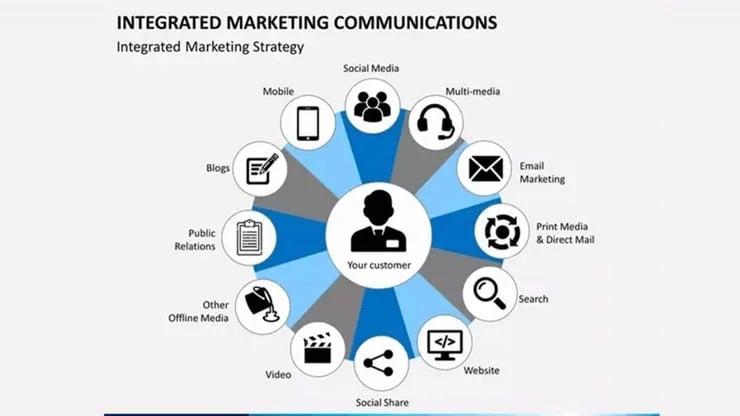
This lack of connection not only wastes resources but also leads customers to perceive multiple "versions" of the same brand. Instead of creating a synergistic effect, communication channels operate in parallel without intersecting or supporting each other. When strategy is not at the core, marketing is easily seen as a collection of disparate activities – running ads, posting content, launching promotions – rather than a long-term, directed system. And it is this absence of a strategic foundation that causes promotion campaigns, despite being continuous, to fail to truly build brand strength over time.
Consequence: When the brand "has no memory" in customers' minds
In modern marketing, a strong brand is not only recognised but also naturally remembered, recalled, and prioritised in decision-making moments. However, when communication lacks continuity and consistency, the brand gradually falls into a state of "no memory" in customers' minds. They may have seen, heard, or scrolled past a campaign, but it wasn't impactful enough to become a preferred choice.
Decline in long-term brand recognition when the brand fails to create "mental availability"
According to Nielsen's advertising effectiveness studies, campaigns that maintain consistency and strategic repetition over a long period significantly increase brand recall compared to fragmented, intermittent communication activities. This is particularly important in the hotel industry where booking decisions are often not immediate but depend on a process of consideration and comparison. The concept of "mental availability" – the readiness to be recalled in the customer's mind – becomes a key factor. When a traveller thinks of a family holiday, a luxury retreat, or a weekend getaway, which brand comes to mind first? That's not when the business is running ads, but the result of a long-term accumulation of recognition.
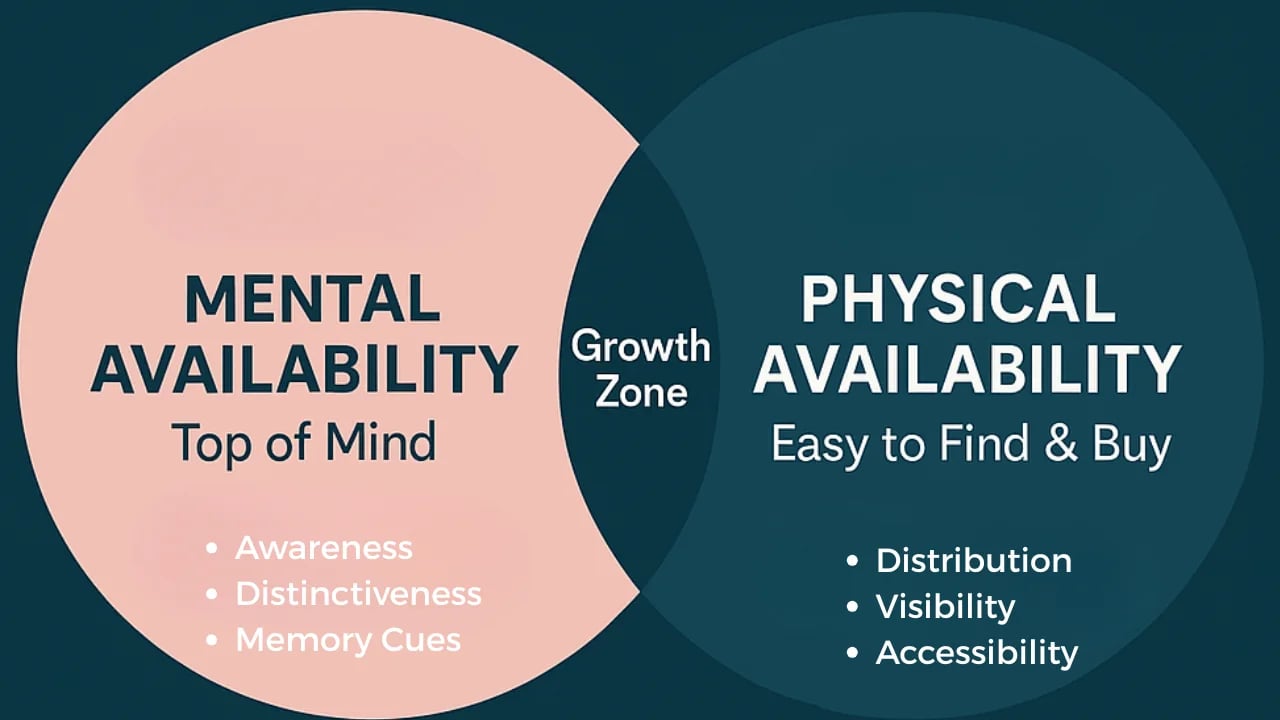
When communication lacks continuity, a brand struggles to build that mental presence. Each campaign appears and disappears like a short wave, without enough repetition to leave a lasting impression. Meanwhile, competitors who maintain a stable image, clear messaging, and consistent presence will gradually claim "priority positions" in the market's mind. And when it comes to decision-making, customers tend to choose familiar, memorable, and more trustworthy names.
Increased reliance on OTAs – when weak brands must depend on intermediary platforms
When a brand is not strong enough to generate direct bookings, hotels are forced to rely more heavily on OTA platforms like Booking.com or Agoda. In the short term, OTAs provide a stable flow of guests and broad market access. But in the long term, this reliance creates significant financial pressure. Commission costs for OTAs can range from 15% to 25%, or even higher depending on preferred display programmes. This means that every room sold through an OTA reduces the profit margin. When the proportion of revenue from OTAs increases, hotels not only lose a portion of their profit but also gradually lose control over customer data, from behaviour and habits to contact information for remarketing.
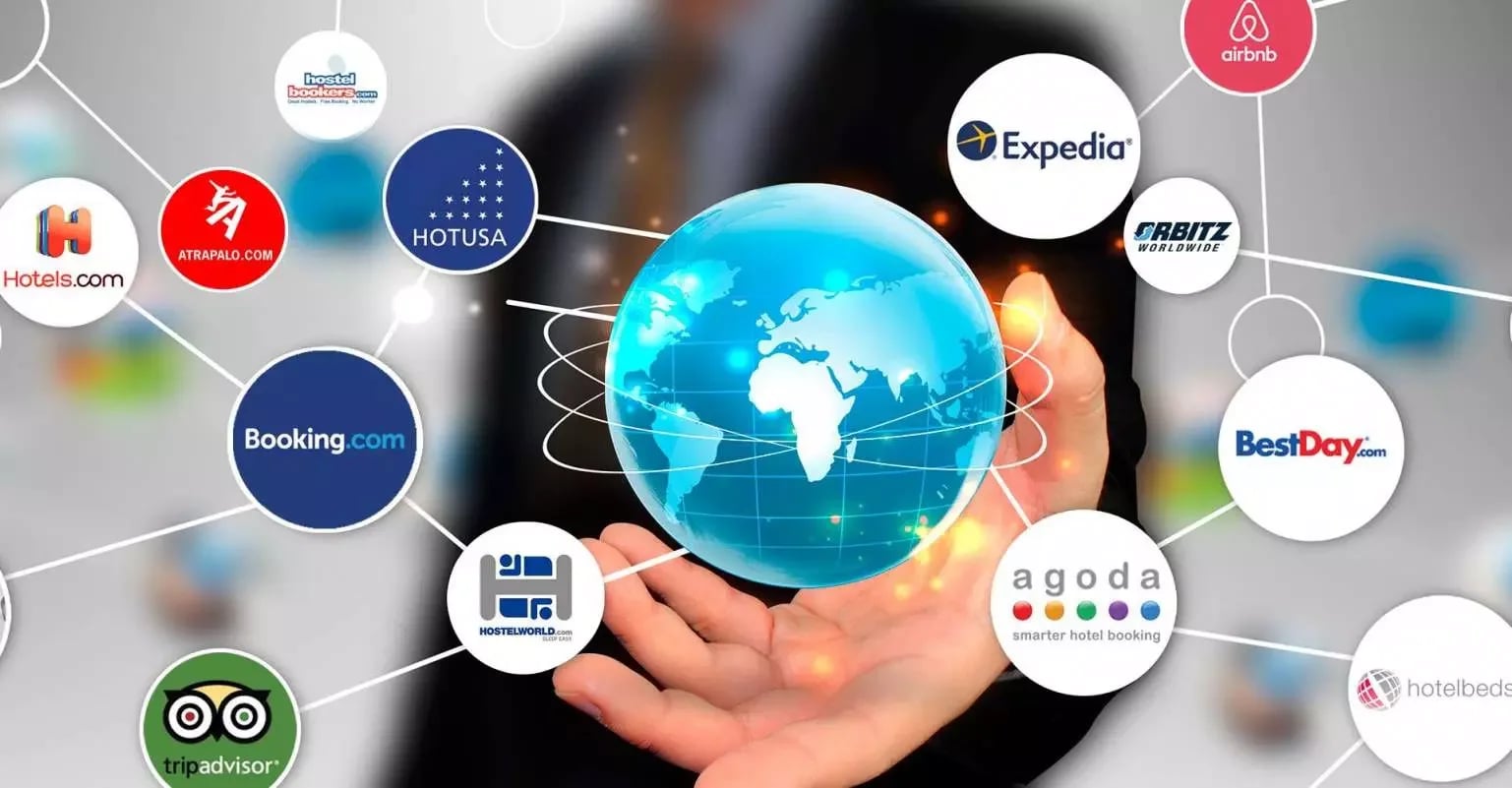
More importantly, in the OTA environment, hotel brands are placed alongside dozens, even hundreds, of other options on a single search page. When the image and positioning are not strong enough, price becomes the primary competitive tool. This easily pushes businesses into a continuous price-cutting race – an unfavourable financial cycle where profits are gradually eroded with each business season.
Wasting marketing budget – when each campaign has to "start from scratch"
One of the less immediately visible but most far-reaching consequences is the waste of marketing budget due to a lack of cumulative effect. Without a long-term strategy as a foundation, each campaign operates almost independently. New images, new messages, new concepts – everything is restarted as if the brand never existed before. Instead of leveraging the synergistic power of what has been built in the past, businesses constantly spend money to create new recognition. This fragments the return on investment (ROI). Short-term growth metrics may appear, but they are difficult to sustain and their long-term impact is hard to measure. Marketing becomes a series of disconnected "waves" instead of a continuous flow.

When a brand is not nurtured as a long-term asset, the marketing budget no longer serves as an investment but gradually becomes a mandatory operating cost. In an increasingly competitive landscape, the lack of accumulated brand value over time can force businesses to spend more and more just to achieve the same level of recognition as before.
Strategic Solution: Build a Long-Term, Consistent Communication Axis with NewSun Hospitality
To fill the "strategic gap" in promotion activities, businesses cannot simply adjust a few individual campaigns. What needs to change is the foundational mindset: from short-term, campaign-based marketing to building a long-term communication ecosystem where all activities revolve around a unified strategic axis and accumulate value over time. With extensive experience in consulting and implementing projects for numerous hotels and resorts, NewSun Hospitality proposes a systematic 4-step roadmap, integrated into our comprehensive marketing strategy consulting and implementation packages. This is not a "campaign-running" solution, but a way to redesign the brand's foundation for sustainable business growth.
Building the Brand Foundation Package – Laying the Foundation Before Building the House
Every long-term communication strategy must start with a solid brand foundation. Without clear positioning, all subsequent promotional activities can easily become fragmented. In this step, NewSun Hospitality conducts comprehensive market research: analysing trends, direct and indirect competitors, and consumer behaviour across target customer segments. Instead of just looking at occupancy rates or average daily rates, the strategy is built on a core question: what will this brand represent in the customer's mind?
From this, the business gains clarity on:
- Brand Positioning – A distinct market position.
- Core Values – Core values that permeate the entire service experience.
- Brand Personality – Brand character expressed through tone of voice and communication style.
- Brand Story & Key Message – The brand story and strategic long-term message.
Concurrently, a Brand Guideline system and Key Visual System are established to ensure consistency in colour, typography, imagery, and design standards. This forms the "backbone" to prevent all subsequent campaigns from deviating.
Designing Long-Term Brand Campaigns (Annual Brand Campaign) – Nurturing Revenue on a Brand Foundation
Instead of operating on a "seasonal campaign" model, NewSun Hospitality develops Annual Brand Campaigns with a 6–12 month vision. The campaign's focus is not just on promotions, but on a Big Idea strong enough to permeate all communication activities throughout the year. This Big Idea is developed into a strategic content system for each phase, ensuring coherence between themes, channels, and sales activation activities. The budget is balanced between Branding (building long-term recognition) and Performance (optimising conversions), based on scientific principles of marketing effectiveness. The KPI system is also designed in layers: from brand awareness metrics and engagement levels to conversion rates and revenue. As a result, long-term campaigns do not eliminate the goal of room sales; on the contrary, they help nurture revenue on an increasingly strong brand foundation.
Implementing Integrated Multi-Channel Communication (IMC Implementation Package) – Creating Synergy Instead of Disjointed Efforts
A good strategy will not be effective without synchronised implementation. Therefore, NewSun Hospitality develops an Integrated Marketing Communication (IMC) model, ensuring all communication channels operate within the same strategic framework.
Messages are synchronised across Website, Social Media, OTAs, Email Marketing, and offline activities. Content Pillars are clearly defined to maintain a consistent content axis. Image standards and tone of voice are applied consistently across all platforms – from Facebook posts and TikTok videos to OTA banners and printed brochures. More importantly, online and offline strategies are not separate but mutually supportive at every customer touchpoint. The goal is not to "appear the most," but to "appear consistently and purposefully." When all channels tell the same story, the brand is exponentially strengthened.
Long-Term Measurement and Optimisation System – Flexible Adjustment Without Breaking the Strategic Axis
A long-term strategy does not mean it is static. On the contrary, it needs continuous monitoring and optimisation based on real data. NewSun Hospitality implements an in-depth measurement system, focusing on key metrics such as:
- Brand Awareness Index – Brand recognition over time.
- Direct Booking Ratio – The ratio of direct bookings to OTA bookings.
- Customer Lifetime Value (CLV) – The total revenue a customer is expected to generate over their lifetime.
- Cost per Acquisition (CPA) – The cost to acquire a customer.
This data system allows for flexible strategy adjustments to market fluctuations while maintaining the established positioning. Businesses no longer chase short-term waves but operate marketing as a controlled and cumulative investment process.
Conclusion: A Strong Brand is Built with Consistency
In the hotel industry – where booking decisions are profoundly influenced by emotion, trust, and brand recall – a few prominent campaigns are insufficient to create a long-term competitive advantage. Guests may be attracted by an appealing offer, but they return due to trust and familiarity. This trust is only built when the brand appears consistently, coherently, and with clear direction throughout the customer journey. Consistency and long-term communication are not merely "aesthetic" or purely image-based factors. They are financial and strategic foundations. A well-built brand can command better pricing, reduce reliance on promotions, increase direct booking rates, and optimise marketing costs over time. Conversely, when communication lacks a consistent core, each campaign only creates a temporary impact, making it difficult to accumulate sustainable value. Businesses may achieve short-term growth but lack the foundation to sustain development in the long run. With a comprehensive strategic consulting approach, NewSun Hospitality partners with investors to build systematic, integrated, and long-term marketing systems. We don't just execute campaigns; we redesign the strategic core so that the brand operates as a cohesive ecosystem where every communication activity reinforces core values. The goal is not just to make the brand more visible, but to be more deeply remembered, more frequently chosen, and to foster sustainable customer loyalty. If your business is seeking a cohesive, long-term communication strategy capable of generating genuine growth rather than fragmented short-term results, now is the opportune time to restructure your marketing foundation. Let NewSun Hospitality's team of experts accompany you on the journey to build a strong brand that is steadfast in its positioning, consistent in its communication, and sustainable in its growth. ???? Contact NewSun Hospitality today for in-depth strategic consulting and begin the journey to elevate your hotel brand.
- Hotline: +84 768 68 2913
- Email: dosm@nshm.com.vn
- Zalo OA: https://zalo.me/2452770272256938463 (NewSun Hospitality)
- Website: https://nshm.com.vn/ (NewSun Hospitality)