


 VN
VN EN
ENIn the complex symphony of the hotel business, every strategic element is like a note in a grand composition – a single wrong note can throw the entire melody off key. Among these, market segment positioning and location selection are two pivotal notes, critical to the entire investment score. An investor may possess creative ideas, world-class designs, and abundant capital, but without strategic vision from the outset, all these advantages can easily become a "burden" if the project fails to find its place in the market or connect with the right target customer group.

In reality, incorrect market segmentation or poor location choices not only lead to reduced revenue but also trigger a cascade of negative consequences: ineffective marketing campaigns, inflated operating costs, low occupancy rates, and eroded brand reputation over time. A hotel built in a prime location but unsuitable for the target customer's consumption behaviour, or conversely, targeting the luxury segment but choosing a location with limited development potential – these are strategic "blind spots" that many investors encounter during product development. In the second article of the series "Decoding Hotel Product Strategy", NewSun Hospitality's team of experts will delve into analysing these strategic "blind spots" – from their causes and consequences to valuable lessons learned in practice. More importantly, this article will demonstrate how to recalibrate the strategic compass, helping businesses regain their direction, accurately position their products, and maximise location advantages. Because only when the opening note is played in tune can the symphony of "success" resonate fully.
Tailoring for the Unclad: The Tragedy of Misaligned Market Positioning
Incorrect market segment positioning in the hotel business is akin to a high-end fashion designer attempting to sell exquisite tailored suits to individuals who are only looking for active sportswear. No matter how meticulously crafted or superior the product, it will fail to resonate with customers – simply because it does not align with their needs, preferences, and purchasing power. In the hotel industry, this is even more critical: once positioning is wrong, the entire product strategy, pricing, communication, and operations will be "out of sync," leading to a cascade of systemic failures.

The Root Cause of "Misalignment"
There are numerous reasons why investors fall into the trap of incorrect positioning, but upon deeper analysis, it becomes clear that most stem from subjective thinking – a common ailment in the hotel industry, where intuition and personal confidence sometimes override data and strategy. Many projects are launched with the strong belief that "my idea will definitely succeed," forgetting that the market operates not on emotion, but on actual needs. This lack of objectivity has led many projects, despite significant investment and beautiful design, to slide into failure – simply because they couldn't answer the core question: "Who is my real customer?" Firstly, there is the "One-size-fits-all" mindset – the belief that a good hotel can serve everyone. This is a dangerous illusion, because in an increasingly fragmented market with constantly changing consumer behaviour, no single product can appeal to all customer segments simultaneously. Trying to please everyone only makes the product bland, lacking distinctiveness, and failing to create a clear "brand story" in the minds of users. A hotel cannot simultaneously be a quiet retreat for couples, a lively entertainment hub for families, and also meet the business travel needs of professionals. Trying to cater to too many audiences is the shortest path to losing identity and diluting brand value.

Secondly, there is superficial market research, or worse – a complete absence of this step. Many investors make decisions based on personal feelings, a few tips from friends, or superficial data like tourist numbers, while overlooking deeper factors such as demographics, psychographics, and the actual spending power of each customer segment. They also often neglect or perform perfunctorily the Feasibility Study report – which is precisely the "roadmap" for determining the appropriate scale, investment level, positioning, and operating model. As a result, many seemingly promising projects end up in a situation where they are "beautiful but unsellable," because no customer truly needs that product. And finally, there is the "product illusion" – a common mistake when investors become overly enamoured with their personal vision, believing that "what I like, the market will also like." They pour their heart and soul into creating a unique property, a "different style no one has ever done," but forget to verify whether enough people are willing to pay for that difference. Passion, if not illuminated by data and reality, can easily turn into strategic blindness. A luxury hotel in a budget tourist area, or a quiet resort in a region known for events – these are prime examples of letting emotion drive strategy.

Ultimately, the most frightening thing is not incorrect positioning, but not realising one is wrong. Because in the hotel industry – where every small detail can impact revenue, brand, and reputation – complacency is the most dangerous "blind spot" on the journey to finding a product's true identity.
Tangible Consequences on the Balance Sheet
Errors in positioning are not confined to strategy; they are clearly reflected in the numbers. Soaring marketing costs with low effectiveness are the first obvious sign. When you don't know who you're talking to, communication messages become vague and generic. Advertising budgets are "burned" on uninterested customer segments, leading to high Conversion Costs. According to Hospitality Net, personalised and segment-targeted marketing campaigns can yield 5–8 times higher ROI than mass campaigns. Subsequently, occupancy rates suffer from "empty nights": a quiet, luxurious 5-star hotel will struggle to achieve good occupancy if located in a vibrant area popular with young backpackers. As a result, RevPAR (revenue per available room) never meets expectations, and the brand gradually becomes diluted, lacking a clear image in customers' minds.

For example, a boutique hotel designed with a sophisticated classical style, targeting couples who appreciate romantic settings. However, if this property is built in the heart of a high-tech zone – where most guests are professionals and engineers on short business trips – then the product and market are "out of sync" from the start. Romantic details like scented candles, lace curtains, or double bathtubs might be seen as superfluous, while essential amenities for business travellers such as desks, small meeting rooms, or high-speed Wi-Fi are overlooked. In such a scenario, no matter how beautiful the hotel, it remains a finely tailored suit... for someone who will never wear it.
"Oasis in the Desert": The Price of Choosing the Wrong Location
In the hotel business world, the mantra "Location, location, location" remains an immutable guiding principle – a golden rule that never goes out of style. Even with excellent service, perfect facilities, and a dedicated team, all will be meaningless if customers cannot – or do not want to – reach you. A mistaken location can turn a project worth hundreds of billions of VND into an "oasis in the desert" – beautiful and luxurious, yet deserted and quiet, simply because it fails to integrate with the market flow. In an industry where convenience, connectivity, and overall experience are vital, location is not merely "where the hotel is placed," but the very "heart" that dictates the business's pulse.
Common Misconceptions
The first and most common mistake is overlooking the surrounding "ecosystem". Many investors only consider natural beauty or attractive land prices, without comprehensively evaluating demand generators – factors that create demand, such as convention centres, airports, hospitals, tourist attractions, or even shopping malls and entertainment complexes. A hotel, no matter how beautiful, will struggle to operate effectively if it lacks these "sources of demand" in its vicinity.

The second mistake is underestimating accessibility. A pristine coastal resort, amidst majestic natural scenery, might be an investor's dream – but if the road leading to it is winding and treacherous, without convenient transportation, or far from major transport hubs, it will severely limit its customer base, leaving only adventurous travellers.

Finally, many investors suffer from a lack of future planning vision. They choose a location that is "good" in the present, forgetting that in just a few years, the area could change completely: a factory might appear, a highway could cut through, or a new project could disrupt the landscape. Such changes can cause investment value to plummet uncontrollably.
Direct Impact on Cash Flow and Operations
Choosing the wrong location means the business faces a series of severe consequences – the most obvious being being forced into a price war. When location becomes a weakness, the only way to retain guests is often to lower prices. This erodes the Average Daily Rate (ADR) and profit margins, making it difficult for the hotel to maintain stable cash flow. Meanwhile, competitors in central locations can easily achieve higher prices, better Occupancy Rates, and superior ROI.

Not only that, but operating costs also escalate. A hotel located far from the city centre will find it difficult to attract staff, leading to higher recruitment and retention costs. Expenses for transporting supplies, food, or daily logistics also increase significantly. And most regrettably, the business loses strategic partnership opportunities. A favourable location allows a hotel to easily collaborate with tour companies, restaurants, spas, or nearby entertainment venues to create synergistic product packages – something an isolated hotel would struggle to do. Ultimately, choosing the wrong location not only costs the business money but also loses its "connection frequency" with the market. A good hotel needs to be in the right place – where potential customers can easily find it, where the natural flow of tourism and commerce leads them. Conversely, if it isolates itself from that flow, no matter how beautiful and distinctive the hotel, it will be like a "magnificent oasis" forgotten in a vast desert – where the whispering wind replaces the footsteps of visiting guests.
Calibrating the Strategic Compass: When Mistakes Become Opportunities for Rebirth
When a hotel has veered off course, the important thing is not to lament the past, but to bravely confront, identify, and systematically restructure. A misalignment in positioning or location choice does not equate to absolute failure – it is merely a "turning point" that forces investors to re-evaluate their path and redefine their development strategy. In the dynamic business world of the hospitality industry, the ability to adapt and be reborn is what distinguishes businesses that survive from those that lead. When done correctly, the strategic calibration process not only helps the hotel "survive" but also opens up opportunities to emerge stronger, smarter, and more relevant to the market.
Solutions for Incorrect Segment Positioning
First, it is essential to begin with a "Comprehensive Diagnosis" – returning to the core foundation of market research. Invest in gathering real data through customer surveys, analysing consumer behaviour, evaluating competitors, and utilising data analytics tools to paint an accurate picture of the current market. Sometimes, the "treasure" lies in a niche market you once overlooked – a small but loyal customer group willing to pay a premium for the exact value they seek.

Based on these new insights, the hotel needs to reposition and rebrand. This is the time to be bold in making changes – perhaps to the brand name, logo, design style, or communication messages – as long as everything aims to connect more strongly with the new target segment. Concurrently, refining products and services is also mandatory. A hotel's "product" is not just the room, but the sum of the entire experience. Adjust every detail – from the culinary menu, entertainment facilities, customer service, to the service culture – so that every touchpoint "speaks the right language" to the customers you wish to attract.
Solutions for Unsuitable Locations
For hotels stuck in an unfavourable location, the solution is not to give up, but to transform the weakness into a unique identity. "Become a destination" – a place customers are willing to travel far to experience something unavailable elsewhere. This could be an exclusive fine-dining restaurant, a spa & wellness centre hidden in nature, or a unique art and event space. When the product is distinctive and unique enough, customers will actively seek you out, rather than you having to "chase" them.
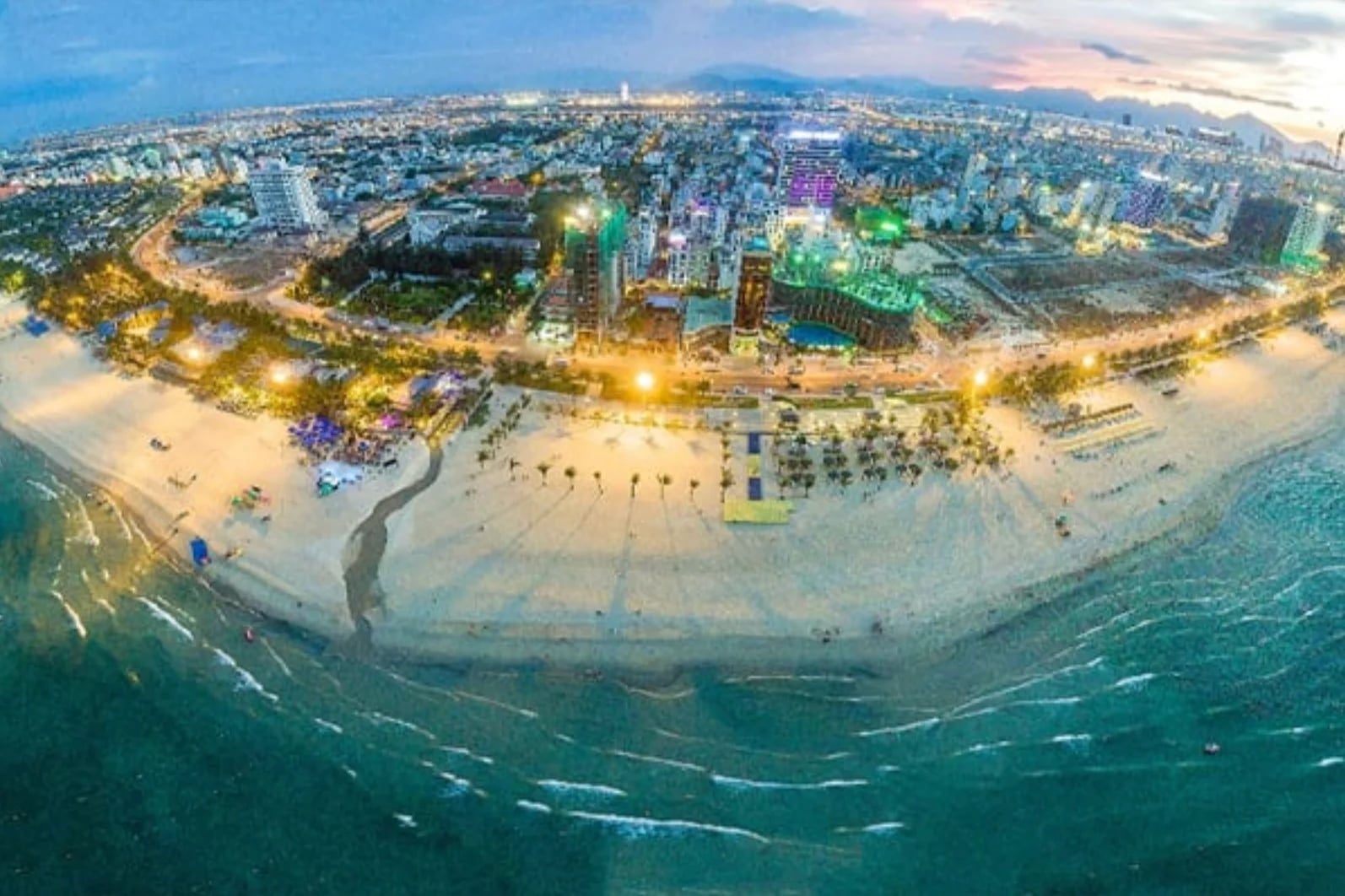
Concurrently, it is crucial to optimise value compensation. If a hotel is located far from the city centre, strongly communicate the unique advantages it offers – such as tranquillity, green spaces, panoramic views, or a sense of seclusion from the bustling pace of life. At the same time, minimise inconvenience through smart service solutions, such as shuttle buses to tourist attractions, shopping centres, or airports; and collaborate with local businesses to create a more integrated and convenient experience. In the hotel business, every mistake can become a stepping stone for new progress if the business dares to face it directly and act strategically. After all, what matters is not how far you have gone wrong, but whether you dare to turn back, firmly grasp the strategic compass, and once again chart your course – accurately, sustainably, and inspiringly.
NewSun Hospitality: Your Trusted Guide on Your Journey
Recognising mistakes and finding ways to rectify them requires significant effort, resources, and most importantly, specialised expertise. Understanding this, NewSun Hospitality provides strategic consulting solutions, acting as a reliable guide for investors.
- Pre-Development Consulting & Feasibility Studies: We join you from the conceptual stage, conducting extensive and objective market research to ensure your strategic compass is accurately calibrated from the outset, helping the project establish its foundation on solid data rather than intuition.
- Restructuring & Repositioning Services: For hotels facing difficulties, our team of experts will conduct a comprehensive "diagnosis," then develop a thorough and viable restructuring roadmap. We help you identify the most suitable niche market for your existing resources and outline a strategy to conquer that market.
- Operational Management & Revenue Optimisation: NewSun Hospitality doesn't just provide strategies; we partner with you in their implementation. With extensive operational management experience, we transform strategies on paper into tangible business results, optimising all resources to sustainably increase revenue and profit.
Conclusion
Incorrect market positioning or choosing the wrong location are avoidable mistakes. They are not market risks, but rather the result of lacking a systematic strategic planning process. By investing appropriately in research, analysis, and collaborating with experienced consulting partners, investors can ensure their projects are not only built on a solid foundation but also equipped with an accurate compass to navigate the competitive ocean. References:
- CBRE. (2024). Vietnam Hotel Market Outlook Report.
- Grant Thornton Vietnam. (2023). Vietnam Hotel Survey.
- Hospitality Net. (2025). The Power of Personalization in Hotel Marketing.
- Skift. (2024). The Evolving Landscape of Hotel Feasibility Studies.
- STR. (2025). Global Hotel Performance Data & Insights.