


 VN
VN EN
ENIn a market where customers can find information, compare prices, read reviews, and make decisions in just a few minutes, brands are no longer primarily shaped by what businesses say about themselves. Brands are increasingly shaped by what customers actually experience at each touchpoint, especially digital touchpoints.

From the moment a customer first encounters a brand on Google, social media, or a booking platform, to visiting the website, interacting with a chatbot, booking a service, receiving a confirmation email, using an app, or leaving a post-experience review, every touchpoint contributes to their perception of the brand. A fast, convenient, and consistent experience can build trust; conversely, a difficult-to-use website, slow responses, or a complex booking process can diminish brand value, even if the business offers an excellent product. This is precisely why digital experience is transitioning from a technological concern to a strategic brand imperative.
What is Digital Experience and why is it increasingly important?
Digital Experience can be understood as the sum of a customer's perceptions when interacting with a brand through digital platforms and touchpoints. Websites, mobile apps, social media, search engines, chatbots, email, e-commerce platforms, online booking systems, or AI-powered tools can all be part of that experience. It's noteworthy that today's customers don't clearly distinguish between "marketing experience," "sales experience," or "service experience." In their perception, it all belongs to a single brand. If an advertisement creates an expectation of luxury but the website is slow and lacks information, the brand will lose points. If a hotel promotes personalised service but the booking process is entirely generic, the gap between brand promise and actual experience will quickly emerge.

The scale of the digital environment in Vietnam makes this issue even more critical. According to Statista, Vietnam will have approximately 80 million internet users by February 2025, equivalent to about 80% of the population, while the average internet access time exceeds 6 hours per day. This indicates that most of the consumer's journey of discovering and evaluating brands now takes place in the digital environment. In the tourism and hospitality sector, this impact is even more pronounced. Customers might start their journey with a TikTok video, then search on Google, view images on Instagram, read reviews on OTA platforms, visit the hotel's website to check information, and only then make a booking decision. Therefore, a brand is no longer built at a single point but is shaped throughout the entire customer's digital journey.
Digital experience is becoming part of brand value
Previously, businesses often viewed brands through elements such as identity, advertising, communication messages, or awareness. These elements are still important, but in the experience economy, they are only part of the story. Kantar believes that customer experience plays a crucial role in building Brand Equity and driving brand growth, potentially having a greater impact than paid advertising. Kantar's analysis of BrandZ data shows that brands that most significantly improve their experience are 2.5 times more likely to achieve substantial market share growth compared to brands with weaker experiences.

This is particularly noteworthy because experience is not merely about "whether the customer is satisfied or not." A good experience also helps a brand become Meaningful, Different, and Salient, three factors Kantar uses to explain brand strength. When the actual experience accurately reflects the brand's promise and differentiation, customers have more reasons to remember, choose, and return. Kantar also points out that in an analysis of 10,000 brands over two years, brands with strong experiences were 2.5 times more likely to achieve significant market share growth. At the same time, Kantar data shows that approximately 75% of the impact on brand strength comes from brand experience and word-of-mouth, rather than solely from paid media. In other words, a brand is built not only by what a business says but also by what customers feel after each interaction.
Three ways digital experience directly impacts brands
1. Digital experience determines initial brand perception
In a traditional environment, the first touchpoint might be a hotel's facade, a front desk agent, or a brochure. In a digital environment, that touchpoint could simply be a Google search result, a social media post, or a website interface. A slow-loading website, unprofessional design, outdated information, or a complex booking process can make customers question a brand's capabilities even before they use the service.
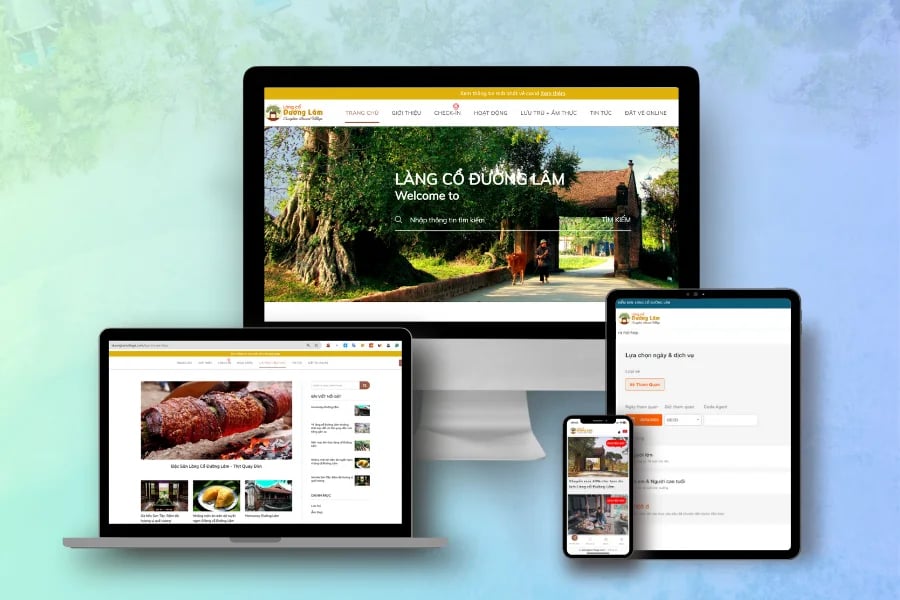
Conversely, a well-designed digital experience can immediately convey the attributes a brand wants customers to perceive: premium, modern, friendly, personalised, or professional. Therefore, UX/UI design should not be seen merely as a task for the technology or design department. It is part of the brand experience. For hotels and resorts, this is even more crucial. Images, website speed, room presentation, ability to check room availability, pricing policies, payment methods, and quick response capabilities all contribute to shaping guests' expectations before they even step into the hotel.
2. Digital experience creates or breaks brand differentiation
As products and services become increasingly easy to replicate, experience becomes one of the most difficult factors to copy. Two hotels might have comparable rooms, similar prices, and be in the same segment, but the brand that creates a more convenient, consistent, and customer-needs-aligned journey will have a clearer competitive advantage. This can be seen through the change in digital consumer behaviour in Vietnam. Decision Lab's Connected Consumer Q4/2025 report shows that users are increasingly distributing their attention across multiple platforms and becoming more selective about where they spend their time. Decision Lab emphasises that the brand's challenge is no longer simply "being everywhere" but being effective where customers care.

In Q1/2025, Decision Lab also reported that approximately 80% of surveyed Vietnamese consumers had used AI tools, with ChatGPT reaching 57% usage. By Q3/2025, the percentage of online consumers using AI tools was recorded by Decision Lab at approximately 87%. This indicates that digital experience continues to expand into a new space: experience with AI. Customers may no longer begin their journey by directly accessing a brand's website but rather through an AI tool for searching, comparing, and receiving recommendations. In this scenario, the brand's ability to be correctly understood by AI, appear in the right context, and provide consistent information also becomes part of the brand experience.
3. Digital experience directly impacts loyalty
One of the greatest values of digital experience is the ability to transform data into more relevant interactions for each customer. Deloitte Digital states that brands with high personalisation capabilities are 48% more likely to exceed revenue targets and 71% more likely to see improvements in customer loyalty compared to brands with lower maturity levels. However, Deloitte also found a significant gap between what businesses believe they are personalising and what customers actually perceive: brands believe they personalise an average of 61% of the experience, while consumers only perceive 43% of the experience as personalised.

This gap is an important warning. Having customer data does not equate to creating a personalised experience. True personalisation only occurs when data is used to create meaningful value for the customer. For example, a customer who has frequently booked weekend stays might receive recommendations for short weekend getaways instead of a generic promotional email sent to all customers. A customer who regularly uses spa services might receive relevant content about wellness. A business traveller might be prioritised with information about express check-in, workspaces, or airport transfer services. In such cases, technology doesn't just help businesses sell another product. Technology helps the brand demonstrate that it understands its customers.
From Digital Experience to Brand Experience: businesses need a mindset shift
An effective digital experience strategy should not begin with the question, "What software do we need to implement?" It should start with the question, "Where are customers encountering difficulties in their journey with the brand?" From there, businesses can identify the most critical touchpoints and prioritise improvements based on their impact. For hotels, this could include the ability to find information, book directly, respond to requests, check-in, use in-hotel services, or post-stay care.

Next is building a data ecosystem capable of connecting these touchpoints. Websites, CRM, booking systems, PMS, loyalty programmes, social media, and customer service platforms should not operate as independent "data islands." When data is connected, businesses gain the ability to see the customer journey comprehensively and create a consistent experience. Finally, measurement. Businesses should not only measure website visits or social media interactions. More important metrics might include direct conversion rates, booking journey completion rates, response times, service usage rates, repeat customer rates, Customer Lifetime Value, NPS, and brand perception. Q&Me shows that the Vietnamese e-commerce market in 2025 will increase by 41%, from 7.064 billion USD to 9.926 billion USD, while online shopping frequency continues to rise. Although these figures pertain to e-commerce, the broader trend they clearly reflect is: customers are increasingly accustomed to fast, convenient, and highly personalised digital journeys. The hotel industry is not immune to this change.
Conclusion: A strong brand in the digital age is one that creates a consistent experience
In the digital age, a brand is no longer an "image" entirely controlled by the business. A brand is the sum of hundreds, even thousands, of small experiences that customers accumulate throughout their interactions with the business. An advertisement might generate attention. A promotion might lead to a transaction. But it is the experience itself that determines whether customers trust, remember, return to, and recommend the brand. Especially in the hotel and hospitality industry, where emotion and service are at the core of brand value, digital transformation should not be viewed merely from an automation perspective. The ultimate goal of technology must be to make the customer journey more convenient, more personal, more consistent, and more valuable. With an integrated perspective encompassing hospitality, operations, marketing, technology, and customer experience, NewSun Hospitality partners with hotels, resorts, and service businesses in building digital ecosystems, from strategy to practical implementation. If your business is looking to enhance customer experience, increase personalisation, and transform digital transformation into a competitive advantage for your brand, connect with NewSun Hospitality to build a distinctive and sustainable experience journey.
- Hotline: +84 768 68 2913
- Email: dosm@nshm.com.vn
- Zalo OA: https://zalo.me/2452770272256938463 (NewSun Hospitality)
- Website: https://nshm.com.vn/ (NewSun Hospitality)
References
- Deloitte Digital. (2024). Personalizing growth: It’s a value exchange between brands and customers. Deloitte.
- Deloitte Digital. (2024). The keys to a successful customer experience personalization strategy. Deloitte.
- Deloitte. (2024). The annual report on consumer loyalty expectations and preferences. Deloitte.
- Kantar. (2024). The customer experience: An integral role in building brand equity. Kantar.
- Kantar. (2024). The vital importance of linking brand and customer experience to deliver growth. Kantar.
- Decision Lab. (2025). The Connected Consumer Q1 2025. Decision Lab.
- Decision Lab. (2025). The Connected Consumer Q3 2025. Decision Lab.
- Decision Lab. (2025). The Connected Consumer Q4 2025. Decision Lab.
- Q&Me. (2025). Online Shopping Market Trends in Vietnam 2025. Q&Me.
- Savills Vietnam. (2025). Viet Nam Real Estate Market Report Q1/2025. Savills Vietnam.
- Statista. (2025). Internet usage in Vietnam: Statistics & facts. Statista.