


 VN
VN EN
ENFor many years, a hotel's competitive advantage was often seen through its location, design, room quality, F&B, or service quality. However, as traveller behaviour changes dramatically under the impact of digital technology, a new factor is increasingly determining how customers evaluate a hotel: the intelligence of the experience. A modern customer can search for hotels using digital platforms, consult reviews on social media, use AI to plan trips, book online, check in on their phone, open room doors with a Digital Key, control in-room devices, and continue interacting with the hotel after checking out. The line between direct and digital experiences is therefore becoming increasingly blurred. Market data shows that this trend is no longer in the experimental phase. In its 2025 Travel Industry Outlook report, Deloitte notes that AI is being increasingly applied across the travel industry, from customer service, operational optimisation, and predictive maintenance to search, discovery, and personalised communication with guests. Deloitte also suggests that AI trials in the industry are accelerating as businesses seek applications that can directly impact both business efficiency and customer experience. From a consumer behaviour perspective, Euromonitor reports that 51% of surveyed consumers stated they had used AI to plan a trip in the Voice of the Consumer: Travel 2025 survey. This is particularly noteworthy because as AI becomes part of the pre-trip search and decision-making process, hotels no longer compete solely on OTAs or traditional search engines but must increasingly prepare for a customer journey involving AI interfaces. Savills also notes that the hotel industry is entering a phase where owning a beautiful and well-equipped property is no longer enough. As international travel demand strongly recovers, travellers are increasingly interested in an adaptive, sustainable, and destination-specific experience. In 2024, the world recorded approximately 1.4 billion international overnight stays, an 11% increase compared to 2023, while global hotel ADR rose by 2.6% to about $142/room/night. In this context, technology is no longer merely a back-end operational support tool. In leading hotels worldwide, technology is being designed as a new infrastructure layer for the entire Hospitality experience.
1. AI is shifting hotels from "reactive" to "predictive"
While the Internet helped hotels digitise their business operations, AI is ushering in another phase of development: enabling hotels to understand, predict, and proactively respond to customer needs. AI in hotels is more than just chatbots answering questions. AI systems can analyse booking data, stay history, website behaviour, service requests, engagement levels, and many other signals to help hotels make decisions. Notable applications include demand forecasting, room rate optimisation, personalised offers, customer service support, predictive maintenance, and workforce scheduling optimisation. According to Statista, a 2025 global survey of 171 hotel chains, corresponding to 175 responses, focused on AI applications that chains are currently using or plan to implement within the next 12 to 24 months. Statista's dedicated data collection on AI applications, AI solutions, and business areas leveraging AI demonstrates that AI has become a strategically monitored technology category in the global hotel industry.

More notably, AI is beginning to directly impact the customer journey. Deloitte's The Future of Hospitality 2026 study suggests that AI can be involved from destination discovery and itinerary building to in-hotel interaction and post-stay care. Systems can offer suggestions for spas, restaurants, additional services, or local experiences based on the guest's timing and behaviour. This leads to a significant shift in hotel management thinking. Instead of waiting for guests to ask, "What time can I book a spa?", the system can recognise that the guest has just checked in, has free time, and has previously shown interest in wellness, proactively suggesting a suitable option. This is the transition from Reactive Hospitality to Predictive Hospitality, where technology does not replace human hospitality but empowers hotel staff to "read" needs before guests have to voice them.
2. Smart Hotels and IoT: When the Room Becomes an Intelligent System
One of the most visible manifestations of Hotel Technology is the development of Smart Hotels, where in-room devices no longer operate independently but are connected into an ecosystem. The Internet of Things, or IoT, allows devices such as air conditioners, lighting, TVs, door locks, presence sensors, curtains, temperature sensors, and energy management systems to communicate with each other. When connected to a central management system, data from these devices can be used to enhance the guest experience while optimising operations. Hilton is a prime example. Their Connected Room Experience allows guests to use personal devices to control various in-room elements and personalise entertainment content. According to Hilton, the number of hotels offering Connected Room has exceeded 2,400 hotels, while this technology allows guests to use mobile devices to control their entertainment experience and access digital content in their rooms. Hilton also notes increasing demand for in-room technology. In their trend report, 33% of Hilton team members surveyed globally said they have seen an increase in guest demand for in-room technology. Connected Room had been implemented in over 1,700 hotels at the time of the report, while 63% of travellers said they wanted the option to use a Digital Key. The key aspect of a Smart Hotel is not about having as many devices as possible. The real value lies in the ability to connect data and automate decisions. For example, when sensors detect that a room is unoccupied, the system can automatically adjust the air conditioning or lighting to reduce energy consumption. When guests return, settings can be restored. In a more advanced model, operational data can even be combined with AI to predict equipment status and plan maintenance before issues occur. Savills also notes that AI can become the "brain" of buildings by analysing data generated by sensors and building management systems, thereby supporting the automation of functions such as maintenance, security, access control, and energy management. For the hospitality industry, this is a particularly important direction, as the technology challenge is measured not only by customer experience but also by the ability to reduce operational costs and use resources more efficiently.
3. Digital Key and Mobile Check-in: Eliminating Unnecessary Waiting Points
One of the most evident changes in major hotel chains is the shift of the check-in and check-out process to mobile devices. Guests no longer necessarily have to queue at the front desk to complete all procedures. With Mobile Check-in, Digital Key, and Mobile Check-out, many steps of the stay journey can be completed before or during the trip using a smartphone. Hilton reported that from January to August 2024, nearly 14.3 million Digital Keys were downloaded, with over 870,000 Digital Keys shared with companions. The company also stated that Digital Keys save approximately 100 tons of plastic annually.
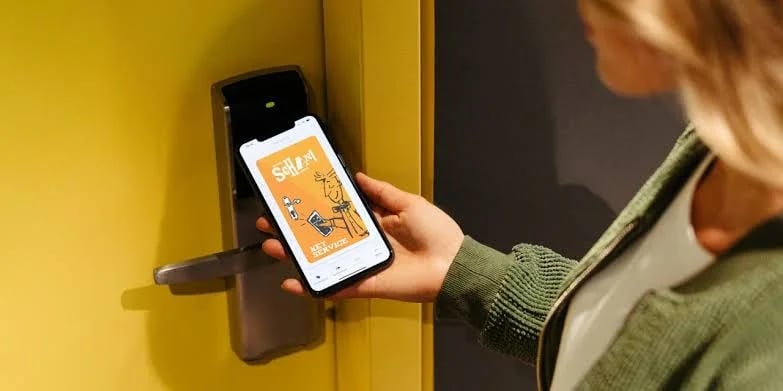
Marriott is also developing a Mobile Key ecosystem within the Marriott Bonvoy app. Guests can use their phones to open room doors and access certain hotel areas, as well as send requests to the hotel, receive local recommendations, or order room service through the app. The notable point is that a Digital Key is not just a replacement for a physical room card. When the door lock is connected to the app and the customer management system, it becomes a digital touchpoint in the stay journey. Guests can select their room before arrival, receive notifications when the room is ready, open the door with their phone, share access with companions, and receive service recommendations directly in the app. Marriott also currently allows sharing Mobile Keys for guests registered together on the same booking at properties that support this feature. From an operational perspective, this model helps reduce the burden on the front desk during peak times. But from an experience perspective, the greater value lies in guests having more control over their own journey.
4. AI Concierge and Digital Assistants Redefining Customer Service
While first-generation chatbots primarily answered pre-programmed questions, AI Concierge is moving towards a more natural interaction model. Instead of searching through dozens of categories, guests can ask questions in natural language such as: “I only have three hours before my flight, can the hotel suggest a suitable experience?” or “I want a quiet restaurant, no more than 15 minutes from the hotel, suitable for an anniversary dinner.” AI can combine information about guest profiles, time, location, preferences, and service data to provide more relevant recommendations. Hilton has introduced Hilton AI Planner, a development in the brand's digital experience ecosystem. This tool aims to use generative AI to support the travel discovery and planning process, and Hilton states it will continue to learn from real-world behaviour and user feedback to improve personalisation capabilities. This trend aligns with changes in traveller behaviour. Deloitte reported in its 2025 summer study that 15% of surveyed travellers used GenAI for travel planning, up from 10% a year prior. Among GenAI users, 61% used the technology to research activities and attractions at their destination, while 47% used it to find dining options. Thus, AI Concierge is not a standalone technological feature. It is a natural continuation of user behaviour that has formed outside the hotel. As guests become accustomed to conversing with AI for information, they will also expect to interact with hotels in a similar way.
5. Personalisation Technology: From "Hotel Room" to "My Own Space"
One of the most significant developments in Hotel Technology is personalisation. Today's premium guests don't just want a beautiful room; they want a room that feels right for them. This can start from how the system greets guests, the content displayed on the TV, room temperature, entertainment options, pillow types, wellness services, and even suggested offers during their stay. Hilton Connected Room is a clear example. The system allows guests to control certain in-room devices via an app and personalise entertainment choices. Hilton also reported that over 80% of global travellers in their study consider it important to seamlessly use personal devices with in-hotel technology.
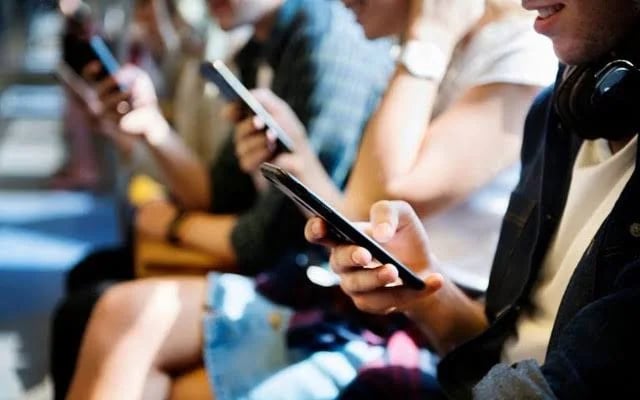
Notably, personalisation is expanding from amenities to wellness. Hilton has integrated content from Calm into Connected Room, allowing guests to access meditation content, Sleep Stories, and relaxing sounds directly on their in-room TV. This highlights a remarkable trend: good technology doesn't necessarily have to make guests "feel like they're using technology." On the contrary, the best technology operates almost invisibly behind the experience. Guests don't need to care what IoT or AI system is being used. What they feel is that the room quickly becomes more suited to their needs.
6. Robotics and Automation: Optimising Operations Instead of Replacing Humans
Robots were once seen as symbols of the hotel of the future, but robotics is now gradually shifting from a performative element to an operational tool. Delivery robots, public area cleaning robots, automated material transport systems, and housekeeping support solutions can handle repetitive, time-consuming tasks or those performed in environments not optimal for humans. However, the key question is not “does the hotel have robots?”, but where robots are best used to create value. Deloitte noted that 60% of hotel leaders in a study on technology and automation expected automation to improve customer experience. Concurrently, Hospitality industry leaders recognise cloud computing's significant role in guest processing, booking management, and providing personalised recommendations. This highlights an important principle: technology should not be implemented just because it is new. Technology needs to be introduced where it helps staff reduce repetitive tasks, minimise errors, or free up time for human interactions. In Hospitality, this is particularly crucial. A robot can deliver towels quickly, but it cannot fully replace the subtlety of a staff member recognising a guest needs assistance. Therefore, the future is more likely to be Human + Technology, rather than “Human versus Robot”.
7. Energy Management Technology and Sustainable Hotel Development
A trend that receives less attention than AI or robots but has a significant impact on operational efficiency is energy management technology. Building Management Systems, IoT sensors, smart thermostats, HVAC management, zone-based electricity consumption measurement, and AI data analysis can help hotels identify abnormal energy consumption points and optimise operations in real-time.
This is an increasingly critical issue as hotels simultaneously face operating costs, ESG requirements, and rising guest expectations for sustainability. Savills notes that PropTech creates value across three main dimensions: sustainability, operational efficiency, and user experience. When building data is collected and analysed in real-time, businesses can optimise both operations and resource utilisation. Therefore, the Smart Hotel of the future is not merely a hotel with smart TVs, electronic door locks, or smartphone controls. It must be an intelligent operational ecosystem, where technology serves three simultaneous goals: enhancing customer experience, improving staff productivity, and optimising asset efficiency.
8. What can Vietnamese hotels learn from pioneering models?
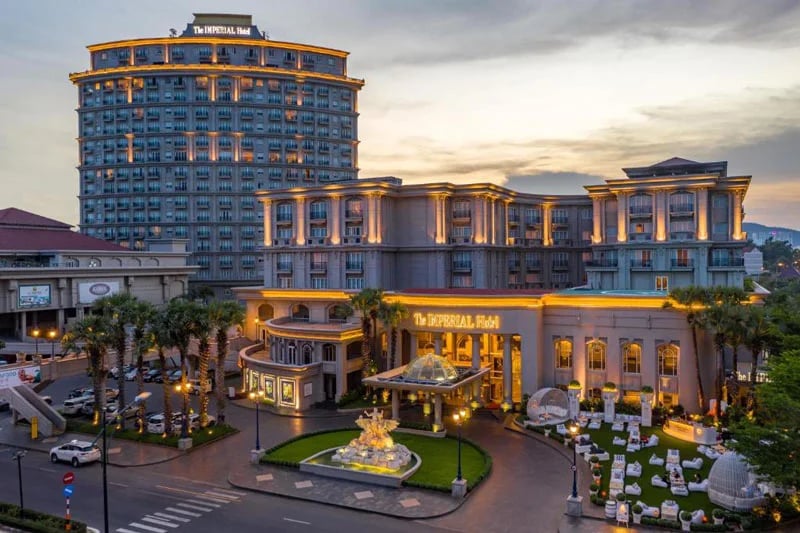
Looking at the world's leading hotels, a common mistake is to focus too much on showcase technologies like robots, large screens, or "high-tech" devices, while neglecting data foundations and operational processes. In reality, the value of a Smart Hotel lies not in the number of technologies installed, but in the ability to connect these technologies. A hotel might start with a mobile app, but if the app doesn't connect with the PMS, CRM, booking system, and operations, personalization capabilities will be limited. An AI system can be very intelligent, but if the input data is incomplete or inaccurate, the results will struggle to create value. An IoT system can help save energy, but if staff lack processes for responding to and processing data, actual efficiency will be low. [caption id="attachment_6790" align="aligncenter" width="640"]

the grand ho tram strip vung tau[/caption] This is also one of the biggest challenges of digital transformation. According to the 2025 European Accommodation Barometer cited by Statista, approximately 3/5 of European accommodation establishments believe that high implementation costs and the complexity of integrating with existing systems are barriers to adopting digital technology and AI. The lesson for Vietnamese hotels, therefore, is not to chase every new technology. More important is to build a technology roadmap aligned with the business strategy. A hotel can start with Digital Booking and CRM to centralize customer data. Then, implement Mobile Check-in, Digital Key, and a request management system to reduce bottlenecks in the guest journey. Once data is sufficiently large and structured, AI can be introduced to forecast demand, personalize, optimize revenue, and support customer service. Concurrently, IoT and energy management systems can be deployed in areas that yield the clearest efficiency. For the Vietnamese market, this is a strategic time to invest. Savills reported that in Q1/2025, hotel occupancy in Hanoi reached 76%, an increase of 11 percentage points year-on-year, while the Ho Chi Minh City market achieved 68% occupancy with 16,666 rooms. Savills also noted a positive market outlook due to tourism demand and infrastructure improvements. As demand recovers and competition among brands intensifies, technology can become a crucial tool for hotels to differentiate themselves without necessarily relying solely on expanding physical facilities.
NewSun Hospitality: Partnering with hotels on their technology transformation journey
As technology profoundly changes how customers search, book, stay, and interact with hotels, digital transformation is no longer an experimental option but is becoming a long-term competitive capability. NewSun Hospitality partners with hotels and resorts to build operational strategies, optimize revenue, standardize processes, and progressively integrate technology into Hospitality operations. Instead of chasing trendy technologies, NewSun Hospitality focuses on identifying the right business challenges, selecting appropriate solutions, and building systems capable of creating real value for both customers and operational teams. If your business is seeking direction to build a Smart Hotel, implement AI in Hospitality, optimize operational processes, or enhance customer experience with technology, contact NewSun Hospitality to develop a transformation roadmap tailored to your hotel's model and business objectives.
- Hotline: +84 768 68 2913
- Email: dosm@nshm.com.vn
- Zalo OA: https://zalo.me/2452770272256938463 (NewSun Hospitality)
- Website: https://nshm.com.vn/ (NewSun Hospitality)
References
- Deloitte. (2025). 2025 travel industry outlook. Deloitte Insights.
- Deloitte. (2025). Deloitte 2025 summer travel study. Deloitte.
- Deloitte. (2026). The future of hospitality: Six imperatives for hospitality companies to consider. Deloitte.
- Euromonitor International. (2025). AI: A turning point in global travel. Euromonitor International.
- Euromonitor International. (2025). Top five trends in travel. Euromonitor International.
- Hilton. (2024). 2025 trends report. Hilton.
- Hilton. (2025). Hilton introduces the Hilton AI Planner, advancing the future of curated travel discovery. Hilton Newsroom.
- Hilton. (2025). Hilton and Peloton elevate wellness travel through in-room fitness experience. Hilton Newsroom.
- Savills. (2025). Impacts 2025: How the global tourism boom is changing hotels. Savills World Research.
- Savills Vietnam. (2025). Viet Nam real estate market report Q1/2025. Savills Vietnam.
- Savills. (2025). AI and property management: Adding a brain to your building. Savills.
- Statista Research Department. (2025). Artificial intelligence (AI) solutions that hotel chains are currently using or planning to use worldwide in 2025. Statista.
- Statista Research Department. (2025). Leading artificial intelligence (AI) applications that hotel chains are currently using or plan to use in the next one to two years worldwide in 2025. Statista.
- Statista Research Department. (2025). Areas where hotel chains are currently using or planning to use artificial intelligence (AI) worldwide in 2025. Statista.
- Hilton. (2026). Hushpitality: Seeking sweet silence – 2026 Hilton Trends Report. Hilton.
- Marriott International. (2026). Marriott Bonvoy mobile app. Marriott International.