


 VN
VN EN
ENIn the digital transformation of the hospitality industry, online booking systems are increasingly becoming a crucial tool for hotels, resorts, tourism businesses, and cruises. A suitable booking platform can help businesses automate their service booking process, reduce manual tasks, enhance response speed, and create a more convenient experience for customers or partners. However, investing in a technology system does not guarantee efficiency if the implementation process is not properly prepared.

Experience shows that many businesses embark on online booking projects with high expectations, only to find the system underutilised, staff reverting to old processes, or agents continuing to send bookings via email and Zalo. The root cause is often not the technology itself, but rather how the business identifies needs, selects solutions, and organises implementation. A feature-rich system that doesn't align with actual operational processes can become an inefficient investment. Therefore, before implementing an online booking system, hospitality businesses should view it as a business process transformationproject, rather than simply purchasing and installing software. Below are 7 common mistakes businesses should be particularly aware of.
1. Choosing a system based on features rather than operational needs
One of the most common mistakes is choosing a booking system based on a feature list without thoroughly analysing current operational processes. A platform may have many functions such as account management, payments, reporting, user permissions, multi-language support, or system integration, but these features may not necessarily suit the specific business model. If a business does not clearly define which problems it needs to solve, technology selection can easily become a process of "choosing the software with the most features".

For a hotel, booking needs can differ significantly from those of a cruise operator or a B2B travel company. Businesses need to clearly identify whether the system users are end customers, travel agents, tour operators, or various other partner groups. Simultaneously, they must analyse the process from when a partner searches for a product, checks service availability, makes a reservation, receives confirmation, to tracking transaction history. An effective system is not necessarily the one with the most features, but rather the one that addresses the most critical bottlenecks in the process. Therefore, businesses should start by asking "what do we want to improve?" before asking "what features does the system have?".
2. Failure to standardise processes before system implementation
Technology can digitise a process but cannot automatically transform an unclear process into an efficient one. If a business has multiple booking handling methods among staff, inconsistent policies, or information stored in various sources, migrating all data to a new platform can complicate matters further. This is why process standardisation must be carried out before or in parallel with system implementation.
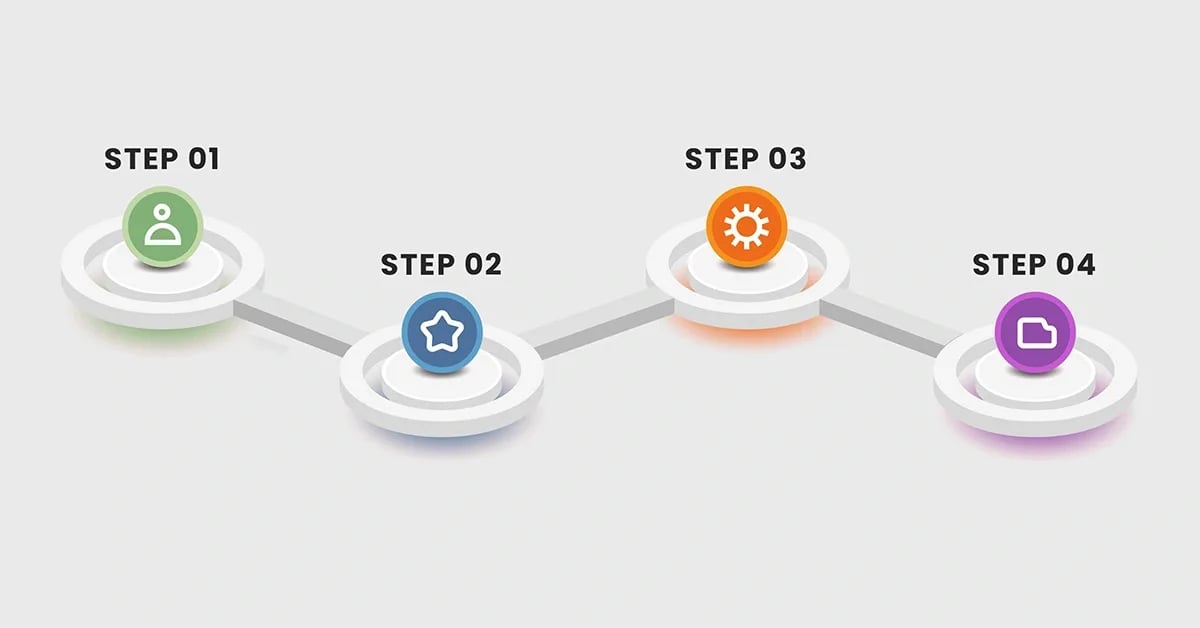
Businesses need to clearly define each step in the booking journey, from agent login, product search, inventory check, service selection, booking creation, to confirmation and transaction tracking. Regulations on pricing, cancellation policies, payment terms, access rights, and special case handling also need to be clearly established. Once processes are standardised, the system has a basis for automation and reduced reliance on individual handling methods. Skipping this step can lead to a situation where the system is built, but staff still have to perform many manual steps outside of it. In such cases, the effectiveness of digital transformation is significantly reduced because the system becomes merely an additional tool instead of an integral part of the operational process.
3. Focusing solely on interface while neglecting user experience
A beautiful interface is a positive factor but not the sole determinant of an online booking system's effectiveness. A Booking Portal with a modern design but an overly complex service booking process, difficult search functions, or unclear information can still deter agents from using it. Especially for B2B systems, the user experience needs to be designed for speed and convenience in daily work.

Agents typically do not access the system just to "browse"; they enter the system to perform a specific task such as checking prices, availability, or creating a booking. Therefore, the system needs to help them complete these actions as quickly and intuitively as possible. Factors such as search capability, filters, information display, booking confirmation, and transaction history retrieval all directly impact usage levels. A good user experience also needs to be considered across multiple devices. In the travel business environment, agents may use a computer in the office but also access the system via phone or tablet when advising clients. Multi-device compatibility should therefore be considered part of the overall experience rather than just a technical feature.
4. Lack of a strategy to guide agents to the new system
This is one of the reasons why many online booking systems, despite being implemented, have low actual usage rates. Businesses often focus on perfecting the technology but do not allocate enough resources to changing user habits. Meanwhile, if agents are accustomed to sending bookings via email, Zalo, or calling staff, they will not automatically change simply because the business provides a new platform.

The transition requires a clear plan to help agents understand the benefits the system offers them. Businesses can organise user training, provide visual materials, offer support during the initial phase, and gradually encourage agents to make bookings on the platform. More importantly, the system experience must be convenient enough for agents to realise that using the Portal genuinely saves them time. Businesses also need to clearly define the role of sales staff during the transition. Staff should not become "booking entry agents for the agents," as this would prevent the system from achieving its automation goals. Instead, the Sales team should act as guides, support, and partner care providers, while standard booking operations are gradually shifted to the platform.
5. Neglecting integration capabilities with existing systems
A standalone online booking system can address some needs but will struggle to achieve maximum efficiency if data cannot connect with other business systems. In Hospitality, booking data can relate to many departments such as Sales, Reservations, Revenue, Finance, and Operations. If each system stores a different version of the data, staff will still have to manually enter and reconcile information.

Therefore, before implementation, businesses need to assess the Booking Portal's connectivity with existing systems. Depending on the model, connections may involve PMS, CRM, revenue management systems, payment systems, or internal management platforms. Not every business needs to integrate all systems from the outset, but the solution's architecture should be scalable as needs evolve. A good booking system should not be viewed as a "technological island" operating in isolation from the business's entire ecosystem. Greater value lies in its ability to create a unified data flow, reducing repetitive data entry and helping businesses build more interconnected operational processes.
6. Disregarding data, permissions, and security
Online booking directly involves transaction data, customer information, partner information, and the business's commercial policies. However, some businesses focus solely on the service booking function without fully evaluating account management, authorisation, and security requirements. This oversight can create risks in long-term operations.

Especially for the B2B model, each agent may have different pricing policies, access rights, and service usage scopes. The system needs appropriate authorisation mechanisms to ensure users can only access permitted information. Additionally, businesses need to consider managing action history, data backup, and user account protection mechanisms. Security should not be seen as an add-on feature only addressed after the system is complete. It must be an integral part of the solution's architecture from the initial stages. When the system becomes a critical transaction channel, its ability to protect data and maintain stability will directly impact the trust of both the business and its partners.
7. Believing that system implementation completes digital transformation
One of the biggest mistakes is viewing the system's official launch date as the project's end. In reality, it's merely the beginning of the operational and optimisation phase. An online booking system only generates value when users actually use it, data is accurately updated, and processes are continuously improved based on real-world feedback.

After implementation, businesses need to monitor key metrics such as the number of activated agent accounts, online booking rates, the number of automatically processed transactions, and requests still requiring manual handling. This data helps businesses identify what is working well and what needs improvement. If a feature is designed but rarely used, businesses also need to investigate the reason instead of assuming users "don't want to change." The optimisation process may include improving the interface, simplifying processes, adding features, adjusting policies, or retraining users. When a business views its Booking Portal as a component of a long-term operational strategy rather than a short-term technology project, its potential to generate real value will be significantly higher.
How to implement an effective online booking system?
To avoid these mistakes, businesses should start by evaluating their entire current booking process. Identify the most time-consuming steps, frequently error-prone actions, and points where agents are dependent on staff. This forms the basis for defining the scope of digitisation, rather than implementing technology based on a pre-existing model. Next, businesses need to clearly define the target users and objectives of the system. A B2B agent portal will have very different requirements from a direct booking website for end-customers. By understanding their users, businesses can prioritise features that truly add value, such as service lookup, availability checks, account management, service booking, booking tracking, and partner data management. The implementation process should also be phased, rather than attempting to digitise all operations at once. Businesses can start with basic booking functions, pilot with a group of agents, gather feedback, and then expand. This approach reduces risk, allows users to familiarise themselves, and gives the business time to adjust the system to real-world conditions.
Booking Portal must be built from real operational challenges
An effective online booking system doesn't start with technology; it starts with understanding how the business operates. Especially in the Hospitality industry, each business model has unique characteristics regarding products, pricing policies, distribution channels, and booking processing. Therefore, the closer the solution is designed to actual operations, the higher the likelihood of user acceptance and long-term use. For the B2B model, the goal is not just to create an interface for agents to book services. The system needs to become a transaction channel capable of connecting the business with its network of partners, while also reducing reliance on manual processing methods such as Email, Zalo, and phone. When bookings are converted into structured data and centrally managed, the business gains a foundation to optimise Sales, Reservation, and Operations. This is also why the selection process for an implementation partner needs to consider both technology and operations. A partner who only understands software may create a technically functional system but might not solve the real-world problems of a Hospitality business. Conversely, a solution built from practical operational experience will have a stronger basis for meeting the needs of the business and end-users.
NewSun Hospitality – Developing Booking Portal solutions from practical operational experience
Drawing on our experience in strategic consulting, operational management, and partnering with businesses in the tourism, hotel, resort, and cruise sectors, NewSun Hospitality developed the 24/7 Service Booking Portal – B2B Booking Portal Solution with a focus on combining technology and operational practicality. The solution is designed to help businesses digitise B2B booking operations, reduce manual tasks, and create a convenient online transaction channel for agents and partners.

Through the system, partners can proactively access and look up service information, check availability, make bookings, and track transaction history. For businesses, the system centralises booking data, reduces reliance on Email and Zalo for standard transactions, and expands the ability to accept bookings outside of business hours. The solution is also designed to support multiple languages and devices, and can be developed according to the operational needs of each business. The solution has been successfully implemented for Dolphin Halong Cruise and IRIS Halong Cruise, proving its effectiveness in a real-world cruise business environment. This also forms the basis for NewSun Hospitality to continue researching and refining its ecosystem of technology solutions for the Hospitality industry. The goal is not only to bring businesses onto a digital platform but also to help build a flexible, scalable sales and operational model for the long term.
Conclusion: Implementing Online Booking is a transformation challenge, not just a technology challenge.
The seven common mistakes when implementing an online booking system all share one commonality: businesses focus too much on "having a system" without adequately considering how the system will be used in practice. From selecting solutions based on features, failing to standardise processes, overlooking user experience, to lacking a travel agent conversion strategy, all can diminish the effectiveness of a technology project. Therefore, the success of a Booking Portal depends on a combination of appropriate technology, clear processes, and effective practical implementation. For hospitality businesses looking to digitise B2B booking operations, the first step is not necessarily to find a system with many features. More importantly, it is about identifying the right problems to solve, understanding the needs of travel agents, and choosing a solution that can support the operational process. When technology is built around real-world needs, a Booking Portal will not just be a service booking tool but an important part of the business's overall system. Effective digital transformation does not start with buying software. Digital transformation begins with identifying the right problems and designing a better process. This is also the foundation for hospitality businesses to gradually transition from a manual booking model to a proactive, automated, and scalable B2B sales model.
- Hotline: +84 768 68 2913
- Email: dosm@nshm.com.vn
- Zalo OA: https://zalo.me/2452770272256938463 (NewSun Hospitality)
- Website: https://nshm.com.vn/ (NewSun Hospitality)