


 VN
VN EN
ENThe global hospitality industry is entering its most significant generational workforce transition in decades. According to Deloitte, by 2030, Gen Z and Millennials will account for approximately 74% of the global workforce. Gen Z, in particular, is increasingly present in frontline positions such as reception, F&B, housekeeping, customer service, and service operations. In Vietnam, the strong post-pandemic recovery of the tourism and hospitality sectors has led to a rapid increase in recruitment demand. In this context, Gen Z has become a crucial human resource, helping businesses address labour shortages. However, the arrival of this generation brings significant changes in career mindset, expectations for the work environment, and approach to work.

Unlike previous generations, who were accustomed to hierarchical management models and the principle of "service above all else," Gen Z desires respect for their individuality, autonomy in their work, and to find meaning in what they do. This creates an interesting yet challenging intersection between Gen Z's free spirit and the strict discipline that forms the foundation of the hospitality industry.
Gen Z aren't lazy; they're redefining success.
In many discussions about young workers, Gen Z is often labelled as impatient, prone to job-hopping, or averse to pressure. However, recent studies reveal a much more complex reality. The Deloitte Global Gen Z & Millennial Survey 2025, with over 23,000 participants across 44 countries, shows that only 6% of Gen Z view becoming a senior leader as a top career goal. Instead, they prioritise a balance between income, meaningful work, and mental well-being. Concurrently, 89% of Gen Z believe that a sense of purpose in their work is crucial for job satisfaction and quality of life.
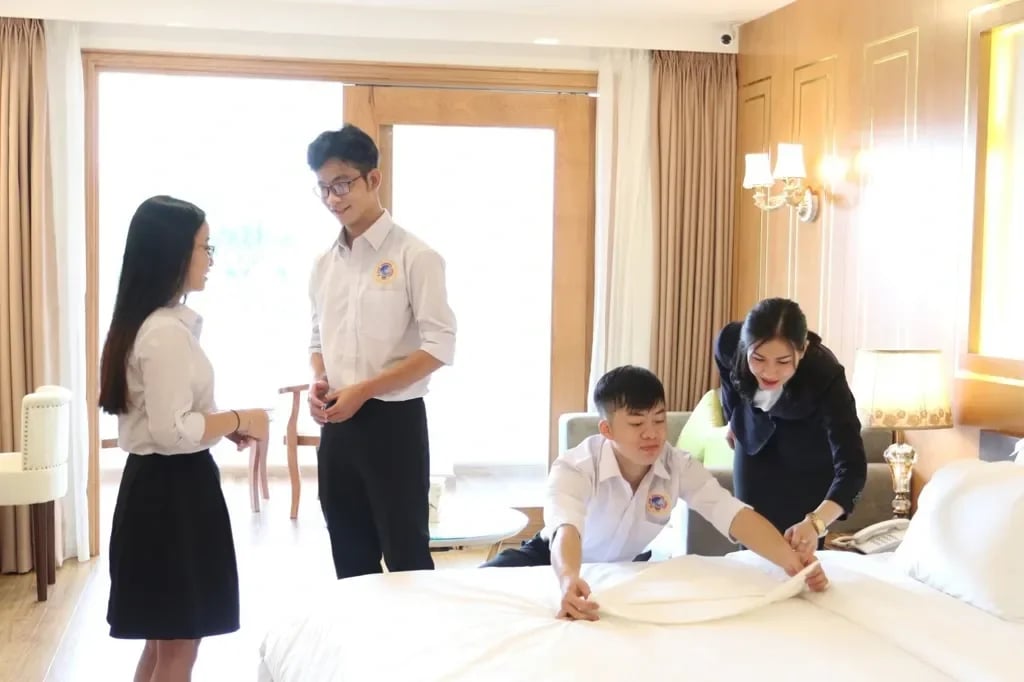
This reflects a significant shift in the perception of success. While success was previously measured by titles, seniority, or managerial power, Gen Z evaluates success through personal experience, learning opportunities, and the ability to maintain quality of life. In the hotel environment, where long working hours, high service pressure, and continuous direct customer interaction are common, this difference creates a substantial gap between the expectations of young employees and traditional management models.
Personal Freedom and the Need to Be Heard
One of Gen Z's most prominent characteristics is their desire for self-expression and involvement in decision-making. The Deloitte 2025 survey shows that learning and development are among the top three reasons Gen Z chooses to stay with a company. Up to 70% of Gen Z actively develop professional skills weekly, and 67% continue learning outside of work hours. This indicates that Gen Z is not lacking in ambition, as many believe. On the contrary, they have a very high need for development but prefer to be guided through coaching, mentoring, and collaboration rather than one-way directives.

Within the hotel industry, this presents new demands for management teams. Authoritarian, top-down management models or those lacking positive feedback are increasingly ineffective with the younger workforce. Gen Z employees want to understand the rationale behind processes, contribute their ideas, and have their individual value recognised within the team. This is why many international hotel brands are shifting from a control-based management model to an employee experience management model, treating employees as internal customers who require long-term care and development.
However, the hospitality industry cannot operate without discipline.
While labour expectations have shifted considerably, it remains an undeniable fact that hospitality is a service industry demanding a very high degree of discipline. From guest reception procedures, room hygiene standards and food safety to complaint handling, every operation is standardised to ensure a consistent customer experience. Even a minor error can directly impact service ratings, revenue and brand reputation.

This is the biggest point of conflict between Gen Z and the hotel environment. Gen Z desires flexibility, while hotels require adherence to procedures. Gen Z values individuality, while service demands consistency. Gen Z seeks work-life balance, while the hospitality industry often operates on shifts, including weekends and holidays. However, instead of viewing this as an irreconcilable conflict, many businesses are finding ways to turn these differences into a competitive advantage.
From HR Management to Employee Experience Design
The emergence of Gen Z is forcing hospitality businesses to re-evaluate their entire HR strategy. Instead of solely focusing on recruitment and performance control, successful businesses are investing in the employee experience throughout their career journey. Deloitte reports that the three factors with the greatest influence on Gen Z's career decisions today are income, meaningful work, and mental well-being. This means hotels cannot compete on salary alone. They need to build a work environment where employees feel developed, recognised, and see a clear career path. Internal training programmes, transparent promotion pathways, performance recognition policies, mental well-being activities, and two-way feedback culture are becoming crucial tools for retaining Gen Z employees. Particularly, in a context where technology and AI are transforming hotel operations, Gen Z possesses a significant advantage in digital adaptability. Deloitte notes that 74% of Gen Z believe AI will directly impact their jobs within the next year, and over half already use AI in their daily work. This presents an opportunity for hospitality businesses to leverage the technological capabilities of the younger generation to enhance operational efficiency and service quality.
The Challenge of the Future: Discipline Endures, but Communication Must Evolve
The fundamental nature of the hospitality industry will not change. Service still requires standards, procedures, and consistency. However, the way businesses establish and convey these principles needs to be adjusted to suit the new generation of workers.
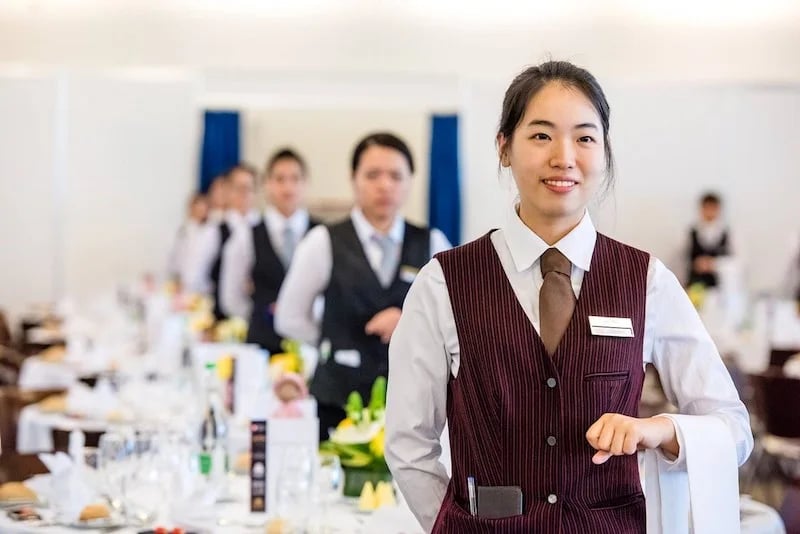
Gen Z does not oppose discipline. They oppose rules that lack transparency, meaning, or clear value. When they understand the purpose of service standards, they are fully capable of adhering to them and even improving them with creative thinking and the ability to apply technology. Therefore, the biggest challenge for hotel managers in the coming period is not to change Gen Z, but to find a way to connect the discipline of the service industry with the new generation's need for autonomy and personal development.
Conclusion
Gen Z is reshaping the global labour market, and the hospitality industry is no exception. They bring new expectations regarding work environments, corporate culture, and career development opportunities. At the same time, they also pose new demands for managers in building effective teams. The intersection of personal freedom and the iron discipline of the service industry is not a confrontation, but an opportunity for hospitality businesses to redefine their human resource management models in the new era. Businesses that understand Gen Z, create a suitable work environment, and leverage the strengths of this generation will gain a sustainable competitive advantage in the war for talent attraction and retention. NewSun Hospitality provides strategic consulting solutions, operational restructuring, corporate culture development, management team training, and human resource development to help businesses effectively adapt to the new generation of workers, enhance operational productivity, and increase market competitiveness. Contact NewSun Hospitality today to build a strong hotel workforce for the future.
- Hotline: +84 768 68 2913
- Email: dosm@nshm.com.vn
- Zalo OA: https://zalo.me/2452770272256938463 (NewSun Hospitality)
- Website: https://nshm.com.vn/ (NewSun Hospitality)
References:
- Deloitte. (2025). Deloitte Global Gen Z and Millennial Survey 2025. Deloitte Insights.
- Deloitte. (2025). Gen Zs and millennials at work: Pursuing a balance of money, meaning, and well-being. Deloitte Insights.
- Kycia, R. A., Niemczynowicz, A., & Nieżurawska-Zając, J. (2021). Towards the global vision of engagement of Generation Z at the workplace: Mathematical modeling. arXiv.
- Le Monde. (2024). Is Gen Z neglecting work, or are their older colleagues too quick to judge them?
- Vogue Business. (2022). Demanding and opinionated? How to manage Gen Z.