


 VN
VN EN
ENIn an increasingly competitive hospitality industry, customer experience is no longer a "differentiator" but has become a survival standard. However, the biggest challenge for hospitality businesses today is not "understanding customers," but maintaining personalised experiences at scale.
This is the time Artificial Intelligence (AI) is no longer a trending technology, but has become a core part of modern operational strategy. AI offers the ability to process large volumes of data in real-time, helping businesses not only "understand customers" but also predict needs and respond instantly. According to market research from Statista and Deloitte, AI is one of the most heavily invested technologies in the service industry, especially in sectors with high customer interaction frequency such as tourism and hospitality. The application of AI not only helps optimise operational costs but also opens up possibilities for real-time personalised experiences – something traditional models struggle to achieve.
What is AI in hospitality? And how is it being applied?
AI in hospitality goes beyond simple chatbots or automation. It's a technological ecosystem that includes:
- AI Chatbot & Virtual Assistant Modern chatbots don't just answer common questions; they can handle multi-context conversations, assist with bookings, provide service recommendations, and even act as a 24/7 "digital receptionist". This helps hotels maintain continuous customer interaction without time or staffing limitations.
- Recommendation Engine Based on behavioural data, booking history, and preferences, AI can suggest suitable services such as room types, experience packages, dining options, or entertainment activities. This is the foundation for shifting from "selling services" to "designing personalised experiences".
- Predictive Analytics AI doesn't just react to current needs; it can predict future behaviour: whether a guest is likely to return, spending trends, booking times, etc. This allows businesses to proactively adjust pricing, marketing, and operational strategies.
- Automation Workflow Customer care processes such as sending emails, upselling services, post-stay surveys, or remarketing can all be automated based on behavioural triggers. This ensures the experience is always consistent – timely – and contextually relevant.
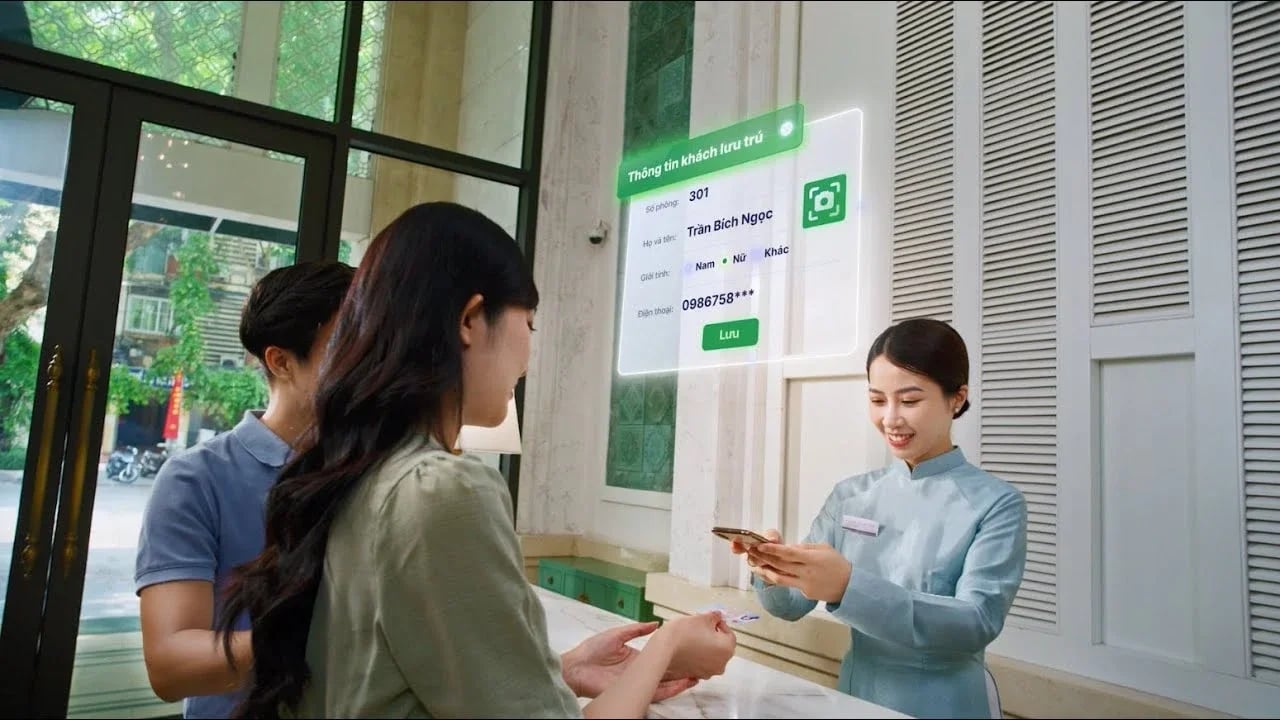
An empirical study in Vietnam with over 600 tourists showed that applying AI chatbots in tourism services can significantly increase booking intentions and actual purchase behaviour. Chatbots not only provide information but also act as an effective "bridge" between latent needs and concrete customer actions. This reflects a fundamental shift in how AI creates value: AI is no longer just a backend operational support tool but is becoming a direct driver of revenue, conversion rates, and customer engagement.
Automating Customer Care with AI: More Than Just Cost Savings
When it comes to AI in hospitality, many businesses still approach it from a "cost optimisation" perspective – reducing staff workload, shortening processing times, automating repetitive tasks. However, that's just the tip of the iceberg. The core value AI brings lies in its ability to restructure the entire Customer Journey Automation, transforming experiences from fragmented to seamless, from passive to proactive, and from generic to personalised.
Instead of handling individual touchpoints, AI allows businesses to design a continuous operational system where every interaction is connected by data and responds in real-time.
Pre-arrival Stage
At this stage, AI acts as an "intelligent sales assistant", operating continuously and without time limits:
- 24/7 Chatbot Consultation
- Room and Service Recommendations Based on Needs
- Automated Confirmation Email and Upsell Service Sending
The result is not only a reduced workload for the sales & reservations department but also an increased conversion rate from the very beginning of the journey.
In-stay
This is the stage that determines customer satisfaction, and where AI most clearly demonstrates its role in "connecting experiences".
- AI concierge support via app/chat
- Restaurant, destination, and experience recommendations
- Handling service requests (housekeeping, F&B, etc.)
As a result, the guest experience is not "broken" between departments but becomes seamless, fast, and consistent, meeting the expectations of modern guests.
Post-stay
The customer journey doesn't end when they check out. On the contrary, this is a crucial stage for building long-term relationships – and AI plays a key role in leveraging post-stay data.
- Automated survey dispatch
- AI-powered feedback analysis
- Personalised remarketing campaigns
Instead of just storing data, businesses can transform data into a strategic asset, serving marketing, operations, and product development.
Real-world Case Study in Vietnam: AI is No Longer Just Theory
Wink Hotels – When AI Becomes a 24/7 "Digital Concierge"
In the digital transformation landscape of Vietnam's hospitality industry, Wink Hotels is one of the pioneering brands in applying AI to the customer experience. Instead of stopping at basic operational support tools, this system has implemented the AI Travel Buddy solution as part of its strategy to upgrade the guest journey towards intelligence and personalisation.

Specifically, AI Travel Buddy is designed as a multilingual chatbot, capable of assisting international guests throughout their journey – from answering questions and guiding them on service usage to suggesting suitable experiences. Not limited to the hotel's internal scope, the system also integrates data on destinations, cuisine, and local activities, thereby providing personalised recommendations based on each customer's needs and behaviour. With this approach, AI is no longer a "question-answering" tool but truly acts as a "24/7 digital concierge" – always ready to accompany guests, regardless of time or language.

Implementation results show clear impacts on both operational efficiency and guest experience. For hotels, AI helps significantly reduce the workload for front desk and concierge staff, especially during peak hours or when serving a large number of international guests. For guests, instant responses and tailored suggestions increase engagement, improve the overall experience, and create a sense of continuous support. More importantly, AI Travel Buddy has expanded the guest experience beyond the accommodation itself. Instead of just "staying in the hotel," guests are more deeply connected to the destination through smart, personalised recommendations. This is a clear demonstration that, when implemented correctly, AI not only optimises operations but can also extend the value of the customer experience – from within the hotel to the entire travel journey.
Strategic Benefits of AI in Customer Care
In the hospitality industry, where customer experience is central, AI is not just an operational support tool but is gradually becoming a strategic lever to enhance a business's competitiveness. When implemented correctly, AI delivers value far beyond cost considerations, directly impacting how hotels understand, serve, and retain customers. First and foremost, one of AI's most prominent benefits is its ability to personalise experiences at scale (Mass Personalisation). By analysing behavioural data, interaction history, and customer preferences, AI can provide tailored service suggestions for each individual – from room types and experience packages to activities during their stay. Beyond merely "responding to needs," AI also has the ability to anticipate what customers might need, thereby creating a proactive and refined experience. The result is that customers are not only served but also feel naturally understood, which is very difficult to achieve with traditional operating models alone.
Additionally, AI plays a crucial role in optimising operational efficiency. Real-world implementation in many businesses shows that AI systems can automatically handle 60–70% of repetitive customer queries, from room information and policies to basic requests. This significantly reduces pressure on staff, especially in front-line departments such as reception or customer service. When repetitive tasks are automated, businesses can reallocate resources to higher-value touchpoints, where human elements – such as sophistication, emotion, and problem-solving abilities – truly make a difference. Another strategic benefit not to be overlooked is the ability to maintain 24/7 customer experience. Unlike traditional operating models limited by time and staffing, AI can operate continuously, ensuring customers always receive instant, uninterrupted responses. Simultaneously, with its multilingual processing capabilities, AI helps hotels effectively serve international guests – a demographic requiring quick and accurate support throughout their journey. In the context of globalised tourism, this is not just a convenience, but a decisive factor in customer experience and satisfaction.
Conclusion
The application of AI in automating customer care processes is no longer an experimental option but is becoming the core operational foundation of the modern hospitality industry. Businesses that lead in AI integration will not only optimise costs but also create a sustainable competitive advantage through:
- Personalised experiences
- Intelligent operational processes
- Service scalability
If you are looking to:
- Implement AI in hotel operations but don't know where to start?
- Optimise customer service processes to enhance experience and revenue?
NewSun Hospitality provides strategic consulting and AI implementation solutions for hotel operations – from process development to practical application. Contact us now to embrace the AI trend in hospitality and elevate your customer experience.
- Hotline: +84 768 68 2913
- Email: dosm@nshm.com.vn
- Zalo OA: https://zalo.me/2452770272256938463 (NewSun Hospitality)
- Website: https://nshm.com.vn/ (NewSun Hospitality)
References:
- IMARC Group. (2024). Vietnam Wellness Tourism Market Report.
- Statista. (2024). Artificial Intelligence in Service Industry Report.
- Deloitte. (2023). AI Adoption in Hospitality Industry.
- Nguyen, T. N. A., et al. (2026). AI Chatbot Adoption in Tourism Services.
- Edge8. (2024). Wink Hotels AI Travel Buddy Case Study.
- Nguyen, H. T., et al. (2024). AI Chatbot for Tourist Recommendations in Vietnam.
- Nguyen, V. T., et al. (2023). Impact of AI Chatbots on Customer Trust in Hotels.