


 VN
VN EN
ENIn a seemingly transparent market like the hotel industry, where all prices are publicly displayed on dozens of different platforms, "room rates" are becoming one of the most complex and difficult factors to control. The paradox lies in this: despite being the service provider, many hotels do not truly have full control over their own selling prices across distribution channels. This reality stems from a familiar yet restrictive mechanism: rate parity – also known as the "equal price guarantee" policy across channels. For many years, this has been the implicit rule in cooperation between hotels and OTAs, ensuring that room rates on OTAs are not lower than on any other channel, including the hotel's official website.

However, as the market becomes increasingly competitive and multi-channel distribution becomes more intertwined, rate parity is no longer merely an operational rule, but is becoming a "strategic bottleneck." This leads to a series of conflicts between sales channels – from OTAs and direct websites to traditional travel agencies. This is also the focus of the article "DECODING HOTEL PLACE STRATEGY – PART 2: The 'Price Matrix' and Channel Conflict – When Hotels Lose Control of the Game" – where we will delve into the nature of the "price war" in the distribution ecosystem and how hotels can regain control.
Current Situation: A Distribution Ecosystem Full of "Friction"
In the modern distribution landscape, "room rates" are no longer fixed numbers listed and maintained for long periods, but have become dynamic variables – constantly changing according to time, customer search behaviour, individual sales channels, and even market segments. Thanks to technological advancements and Revenue Management Systems, hotels today are fully capable of adjusting prices in real-time to optimise occupancy and revenue. However, the paradox lies precisely here: in an environment where prices should be flexible, many hotels are being "boxed in" by rate parity clauses when cooperating with OTAs – significantly limiting their ability to adjust prices.
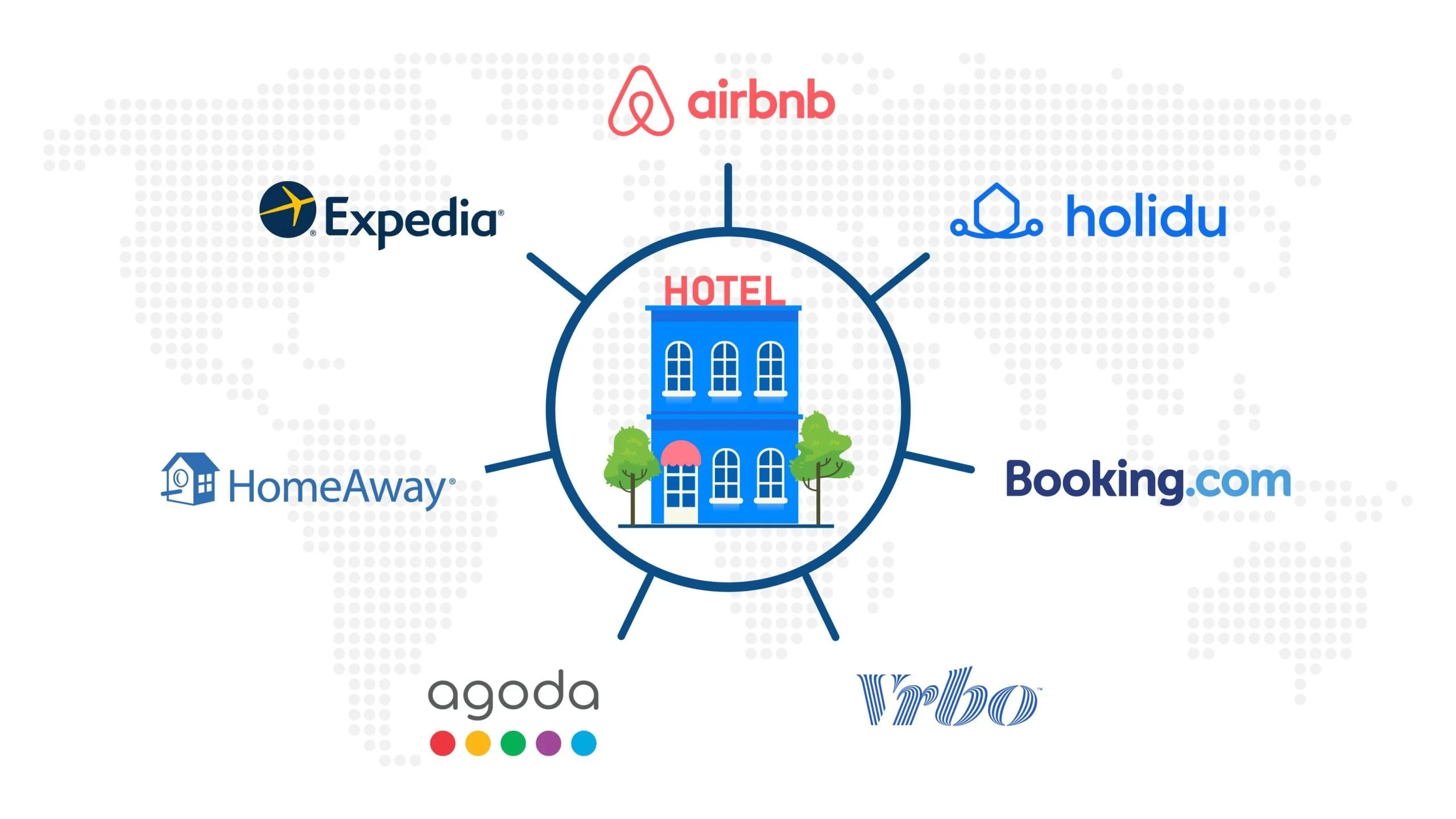
According to OTA Insight's 2024 study, over 65% of hotels globally are still bound by some form of parity clause in their contracts with OTA platforms. In the Asia-Pacific region, where OTAs play a key distribution role, this percentage is significantly higher, especially in developing markets such as Vietnam, Thailand, and Indonesia. A Phocuswright report (2025) also indicates that OTAs account for 60–65% of total online bookings in this region – meaning hotels are almost forced to accept parity clauses if they want to maintain competitiveness and visibility on major platforms. The direct consequence is that hotels cannot publicly offer lower prices on their official websites, even if they have a strategy to promote direct bookings. This creates an "invisible barrier": the direct channel – which has lower costs and yields higher profits – cannot compete on price with the intermediary channel that charges high commissions. Simultaneously, the strong development of the multi-channel ecosystem is making the pricing challenge more complex than ever. A hotel today not only sells rooms through OTAs but also operates various other channels: direct websites, inbound agencies, MICE partners, wholesalers, metasearch platforms like Google Hotel Ads, and even social media. Each channel has its own pricing mechanism, discount policy, and target customers. Without a unified pricing management strategy and effective control tools, "price discrepancies" between channels are almost inevitable.

According to a Skift Research report (2025), over 40% of travellers have found different prices for the same hotel on different platforms at the same time. A PwC report (2025) further shows that 73% of customers believe that price inconsistency negatively impacts their trust in the hotel brand. This indicates that the issue is not just operational but also directly affects customer experience and perception. Conversely, distribution partners are also becoming increasingly sensitive and "demanding" regarding pricing. Traditional travel agencies – especially inbound and MICE – may reduce or cease cooperation if they discover the hotel selling at lower prices on online channels, as this undermines their competitive advantage. Meanwhile, OTAs use various implicit control mechanisms such as adjusting display rankings, limiting participation in promotional programmes, or even reducing visibility if they suspect the hotel is violating parity. According to Hotel News Now (2025), approximately 30% of hotels have experienced a decline in OTA visibility due to pricing policy issues. All these factors are creating a distribution ecosystem that is not only structurally complex but also full of "friction" in its operation. Room rates – instead of being a tool for hotels to proactively regulate supply and demand – are becoming a point of conflict between channels, between partners, and even between the hotel's own internal objectives. And when this "sensitive touchpoint" is not controlled, any distribution strategy, no matter how well-designed, risks being undermined from within.
Cause: When the rules of the game are not set by the hotel
To fully understand the nature of rate parity and the ongoing price conflicts within the distribution ecosystem, it is important to recognise that this is not a short-term or isolated phenomenon. On the contrary, it is the result of a long-term development process of the OTA industry – where intermediary platforms have gradually reshaped the "rules of the game" in global hotel distribution.

Over the past two decades, with the strong rise of OTAs such as Booking.com, Agoda, and Expedia, rate parity clauses have gradually become an almost default part of cooperation agreements. Essentially, this mechanism aims to protect the core interests of OTAs: ensuring they always have competitive prices and are not disadvantaged compared to any other sales channel – especially the hotel's own direct channel. According to a report by the European Commission (2023), before legal regulations were tightened in Europe, over 90% of contracts between hotels and OTAs contained parity clauses in various forms, from "wide parity" (applicable to all channels) to "narrow parity" (applicable only to the direct website). From a market perspective, this once provided a certain stability. However, in the long run, it inadvertently undermined pricing flexibility – one of the hotel's most crucial strategic tools.

From the hotel's perspective, amidst tourism globalisation and pressure for rapid market expansion, accepting parity clauses was once considered a "reasonable trade-off". OTAs provided what hotels struggled to build quickly: global customer traffic, superior marketing capabilities, and optimised technology systems. According to Phocuswright (2025), OTAs now account for over 50% of global online booking revenue, and in Asia-Pacific, this figure can reach 60–65%. Faced with such power, "playing by the rules" of OTAs became almost inevitable for many hotels, especially independent ones. However, over time, this "trade-off" evolved from a short-term measure into systemic dependence. When hotels cannot freely adjust prices on direct channels, they lose one of the most crucial levers for building a long-term distribution strategy. Besides the OTA factor, overlapping and fragmented distribution channels also significantly contribute to the complexity of pricing. In practice, a hotel might simultaneously partner with various types of partners: selling rooms to wholesalers at low rates for group tours, distributing through inbound travel agencies at contracted preferential rates, while listing higher prices on OTAs to reach individual travellers. Theoretically, each channel serves a different segment. But in reality, the lines between channels are increasingly blurred. Without strict control mechanisms, these "internal" rates can easily leak into the market – through sub-agents, resale platforms, or unofficial distribution methods. According to Skift Research (2025), undercutting occurs in over 35% of hotels in developed tourism markets, disrupting the entire pricing structure and leading to widespread loss of control.

Furthermore, pressure from distribution partners themselves exacerbates these conflicts. Traditional travel agents – particularly in the inbound and MICE segments – often demand exclusive preferential rates or even sole distribution rights for certain customer segments. Meanwhile, OTAs continuously launch public discounts, flash sales, and algorithmic promotions to maximise conversion rates. These two approaches are fundamentally divergent: one prioritises control and long-term partnerships, while the other focuses on optimising short-term transactions. As a result, hotels find themselves in a dilemma. Prioritising OTAs risks alienating traditional partners. Maintaining agent rates may reduce online competitiveness. Attempting to balance both without a clear strategy carries the greatest risk of losing control over the entire pricing system. From a deeper perspective, the issue is not with individual channels but with the lack of synchronisation in distribution channel management thinking. When each channel operates as a separate "island" without a cohesive pricing strategy, conflict is almost inevitable. This is precisely why rate parity – originally a protective mechanism – has become a strategic barrier in the current landscape.
Consequences: When losing price control means losing strategic control
If not properly identified and managed, rate parity and distribution channel conflicts will not only prevent price reductions but gradually develop into systemic issues, directly impacting the hotel's long-term competitiveness, financial performance, and brand positioning.

Firstly, the most obvious consequence is the weakening of the direct channel – often considered the "profit pillar" in distribution strategy. When a hotel cannot offer a better price on its official website due to parity constraints, the direct channel almost completely loses its core competitive advantage. In modern consumer behaviour, price remains the primary deciding factor. According to Google Travel Insights (2024), over 60% of users will choose a platform with an equal or lower price, especially if that platform is familiar and offers an optimal booking experience – something OTAs excel at. This gives customers no incentive to leave OTAs and switch to the direct channel, thus prolonging the cycle of dependence. In the long run, distribution costs remain "anchored high" as hotels continuously pay commissions, while the ability to improve profit margins becomes limited. Beyond just costs, channel conflicts can disrupt the entire distribution system if not controlled. In an ecosystem where multiple partners participate – from OTAs, traditional travel agents, to MICE partners and wholesalers – price consistency acts as an "unspoken rule" to maintain trust. When this rule is broken, negative reactions can occur very quickly. Travel agents may reduce or stop selling if they perceive unfair competition from online channels. Conversely, OTAs may implement algorithmic control measures such as reducing display rankings, limiting participation in promotional programmes, or cutting coverage. According to Hotel News Now (2025), over 30% of hotels have experienced issues with OTAs related to violating or suspected violations of parity clauses. It is noteworthy that these impacts often do not occur openly but subtly affect room sales performance over time.

Another long-term but often underestimated consequence is the decline in customer trust. In an increasingly transparent information environment where price comparison is common, customers tend to check multiple sources before making a decision. When they find the same hotel with different prices across platforms, their initial reaction is not "a chance to save" but suspicion about transparency. According to a PwC (2025) study, up to 73% of customers stated they would reduce their trust in a brand if they found inconsistencies in pricing. Trust, once eroded, is very difficult to restore – especially in the 4–5 star hotel segment, where experience and brand reputation play a crucial role. At a deeper level, all these consequences converge on one common point: hotels gradually lose control over their pricing strategy – and, more broadly, over their entire distribution strategy. Room rates are no longer a tool for hotels to regulate supply and demand, optimise occupancy, or position their brand, but become a variable influenced by contractual terms and external pressures. In such cases, all pricing decisions no longer stem from internal strategy but are reactive to the market. According to Deloitte (2025), hotels that effectively control their pricing and distribution strategies can achieve 10–15% higher RevPAR performance compared to those lacking channel management synchronisation. This shows that price control is not just an operational issue but a core competitive capability. Therefore, if the problem of rate parity and channel conflict is not thoroughly addressed, hotels will not only face cost pressures or partner conflicts in the short term but also risk losing the most important "strategic levers" for sustainable long-term development.
Solution: Reshaping Pricing Strategy in a Multi-Channel Ecosystem with NewSun Hospitality
To thoroughly resolve the issue of rate parity and price conflicts across distribution channels, hotels cannot continue to operate with a "compliance" mindset or merely react passively to market pressures. Instead, a more strategic approach is needed: proactively restructuring the entire pricing system and the role of each channel within the overall distribution landscape. In other words, this is not just about "price adjustment" but a process of redesigning how hotels control and allocate value throughout the entire sales journey. The first crucial shift lies in changing the mindset: from "absolute price uniformity" to "controlled flexible pricing." In the context of existing parity constraints, direct price reductions on the website are not always a viable option. However, this does not mean hotels cannot create a competitive advantage for the direct channel. Instead of competing on listed prices, hotels can shift to competing on "added value" – through exclusive direct-channel offers such as breakfast inclusion, room upgrades, late check-out, shuttle services, or personalised experiences. According to a Deloitte (2025) report, hotels adopting a "value-add" strategy instead of direct price reductions can improve direct channel conversion rates by 15–25% without affecting the overall price structure.

In reality, this approach has been implemented by many international hotel groups such as Marriott International and Hilton Worldwide for years. Instead of breaking parity, they build a separate ecosystem of exclusive offers for direct channels, thereby protecting relationships with OTAs while gradually shifting customer behaviour towards owned channels. Concurrently, building and developing loyalty programmes acts as a "strategic lever" to reduce dependence on intermediary platforms. Unlike public offers, loyalty programmes allow hotels to provide "hidden" rates or benefits, exclusively for registered or logged-in customers – an approach that both adheres to parity in terms of display and creates a real advantage for direct channels. According to Skift Research (2025), hotels with effectively managed loyalty systems can increase direct booking rates by 20% to 30% within 12–24 months, while significantly improving customer lifetime value (CLV). NewSun Hospitality assists hotels in designing loyalty programmes that go beyond mere discounts, integrating closely with CRM strategies, data analysis, and personalised experiences – key factors in modern competition. From an operational perspective, technology is an indispensable foundation for ensuring consistency and transparency in multi-channel pricing strategies. The synchronous implementation of systems such as Channel Manager, CRS (Central Reservation System), and rate intelligence tools helps hotels control rates and inventory in real-time across the entire distribution system. According to Hotel Tech Report (2025), hotels that fully utilise channel management systems can reduce rate discrepancies by up to 35% and significantly improve operational efficiency. NewSun provides comprehensive consulting and implementation, helping hotels build a unified "distribution infrastructure" – where all data on rates, inventory, and bookings are connected and centrally controlled, thereby minimising the risk of channel conflict.

However, technology and tactics are only truly effective when placed within a clear overall strategy. One of the core problems many hotels face is the lack of a consistent pricing policy and a rational channel hierarchy mechanism. In reality, not all channels play the same role, yet they are often treated in the same way. This can easily lead to conflicts of interest and reduce the overall effectiveness of the distribution system. Therefore, hotels need to clearly define the "strategic role" of each channel: which is the priority channel for optimising profit (usually the direct channel), which is the market expansion channel (OTA), and which is the channel for ensuring a stable long-term customer base (TA, MICE, wholesaler). From there, a tiered pricing structure can be built – where each channel is allocated rates and benefits appropriate to its role. Making this policy transparent to partners is also crucial for minimising misunderstandings and maintaining sustainable relationships. NewSun Hospitality accompanies hotels throughout this entire process – from revenue management strategy consulting, pricing structure design, to team training and practical implementation. The goal is not just to resolve immediate conflicts, but to build a balanced distribution ecosystem where price is no longer a point of contention, but becomes an effective coordination tool between channels. In doing so, hotels not only "comply" with the market, but truly begin to take control of the game – with their own pricing strategy.
Conclusion
In an increasingly transparent yet competitive market, price is not just a number, but a strategic tool. And when hotels lose control of pricing, they gradually lose control of the entire game. Rate parity is not an "insurmountable barrier," but a problem that needs to be solved with strategic thinking, technology, and operational synchronisation. When handled correctly, hotels can not only reduce channel conflict but also unlock opportunities to optimise revenue and build a sustainable brand. If you are facing the challenge of pricing and distribution channel conflict, now is the time to act. NewSun Hospitality is ready to partner with you in redefining your Distribution Channel strategy – where price is no longer a barrier, but a competitive advantage.
- Hotline: +84 768 68 2913
- Email: dosm@nshm.com.vn
- Zalo OA: https://zalo.me/2452770272256938463 (NewSun Hospitality)
- Website: https://nshm.com.vn/ (NewSun Hospitality)
References
- Phocuswright (2025). Global Online Travel Market Report
- Skift Research (2025). Hotel Distribution Trends Report
- Deloitte (2025). Hospitality Industry Outlook
- Google Travel Insights (2024). Travel Consumer Behavior Report
- STR Global (2025). Hotel Distribution & Pricing Report
- European Commission (2023). Report on Parity Clauses in Online Booking
- PwC (2025). Consumer Trust & Pricing Transparency Study
- Savills Hotels (2025). Vietnam Hospitality Market Report