


 VN
VN EN
ENOn 15 March, the very first day China allowed Chinese travel agencies to organise tours to Vietnam, Vietnamese tourism businesses welcomed large groups of tourists. The reopening of the Chinese market presents a "golden opportunity" for the tourism industry to achieve its goal of welcoming 8 million international visitors in 2023.

At the 2023 National Tourism Conference, Minister of Culture, Sports and Tourism Nguyen Van Hung announced that on March 15, Quang Ninh province welcomed a group of 150 Chinese tourists entering through the Mong Cai border gate, while Lang Son province welcomed a group of 124 Chinese tourists at the Huu Nghi border gate. Le Hong Tu, Director of BT Tour Company, shared that on March 16, the company welcomed a group of 16 Chinese tourists from Shanghai to Ho Chi Minh City by air. The group will stay in Vietnam for 8 days, visiting and experiencing various services in Da Lat (Lam Dong), Nha Trang (Khanh Hoa), Mui Ne (Binh Thuan), and Ho Chi Minh City. Meanwhile, Global Vietnam International Travel JSC also announced that it would welcome 46 Chinese tourists to Vietnam on March 19. Additionally, Kim Lien International Travel JSC and Hanoitourist also stated that they would host Chinese tourist groups in March.
To effectively tap into the Chinese market, Vietnamese airlines are planning to increase the number of charter flights and direct flights from China to Vietnamese destinations. Vietravel Airlines is collaborating with Vietravel Tourism Company and other partners to operate charter flights between Vietnam and China, focusing on routes connecting major Chinese cities with the coastal tourist city of Nha Trang (Khanh Hoa).
To welcome Chinese tourists to Vietnam, travel agencies, hotels, and restaurants have actively prepared facilities and developed tour packages. Mr. Dao Trong Tung, Chairman of the Khanh Hoa Province Association of Travel Agencies for Chinese Tourists, stated that all 21 member travel agencies have plans and programmes to attract Chinese visitors to 1,150 accommodation establishments with over 55,000 rooms in the area. From a business perspective, Mr. Lai Minh Duy, General Director of TST Tourist Company, said the company has invested in developing numerous high-quality tour products and services to welcome Chinese tourists arriving by air to destinations across all three regions of Vietnam. Meanwhile, Mr. Do Xuan Nguyen, Deputy General Director of Hon Gai Tourism & Services PC Company, confirmed that the company has prepared its personnel and has plans to welcome Chinese tourists entering Vietnam via the Mong Cai border gate (Quang Ninh).
Sharing his plan to attract Chinese tourists, Mr. Pham Ngoc Thuy, Director of Quang Ninh Department of Tourism, stated that in addition to organising stimulus activities, Quang Ninh's tourism sector has developed 24 new tourism products, including island and marine tourism, cultural tourism, night tourism, ecological tourism, agricultural tourism, and adventure sports.
Sharing the same sentiment as travel agencies and hotels, the arrival of Chinese tourists in Vietnam is also good news for business recovery, leading hotels to accelerate facility upgrades. Ms. Ho Nguyen Phuong, Vice Chairwoman of the Vietnam Hotel Association, stated that hotels in tourist destinations such as Quang Ninh, Nha Trang, and Da Nang have been renovated, upgraded, and had outdated or damaged facilities and equipment replaced. "The hotel system's facilities are now ready to proactively seize the opportunity to welcome large-scale Chinese tourist groups," Ms. Phuong affirmed.
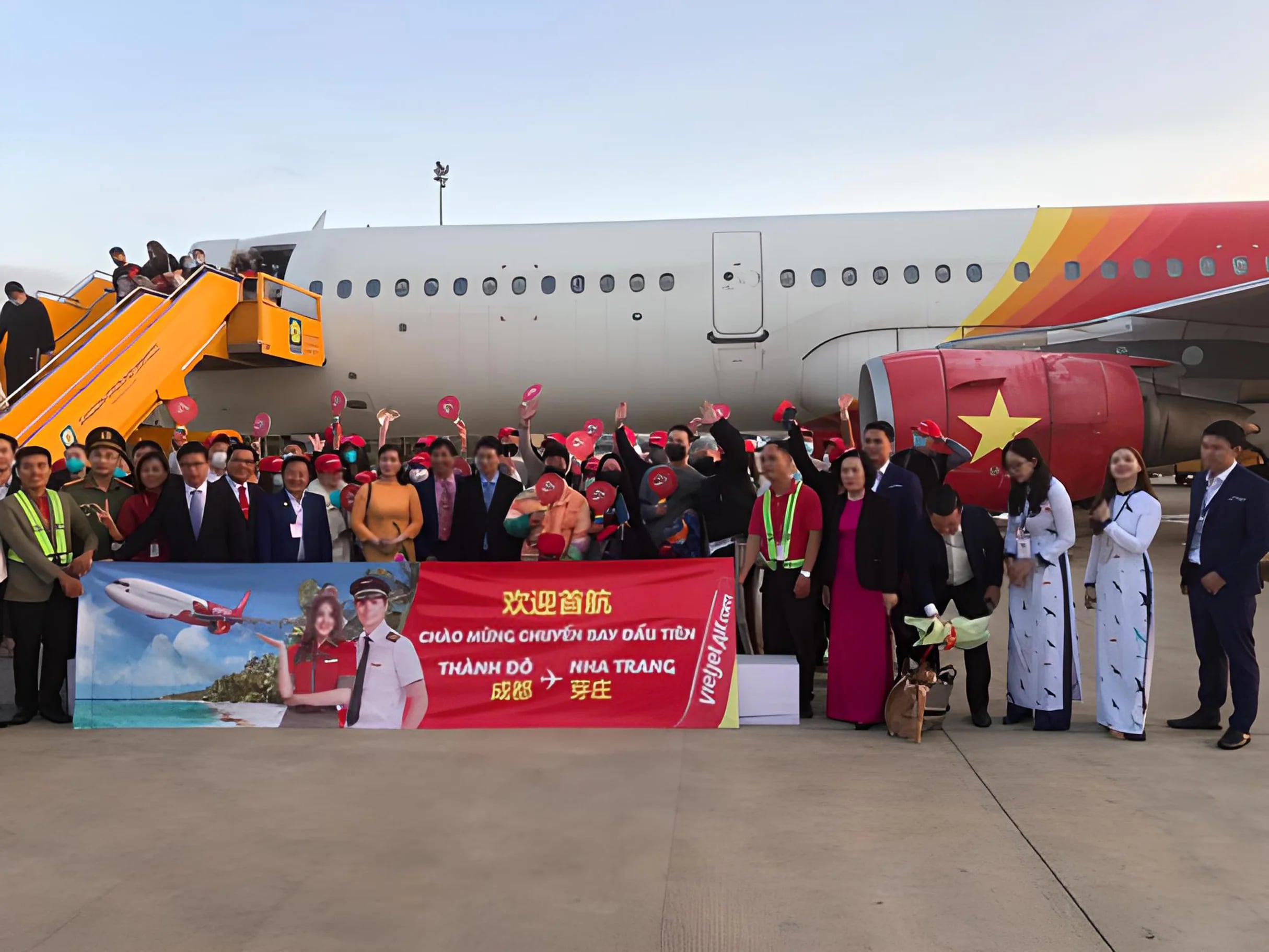
However, post-pandemic, tourist demands have changed, with fewer large groups, so businesses need to adjust their products and services accordingly. Businesses should evaluate past shortcomings and use this opportunity to improve and upgrade to ensure a sustainable and more effective market. To effectively tap into the Chinese tourism market, Mr. Vu The Binh, Chairman of the Vietnam Tourism Association, suggested that while direct flights are limited, businesses need to intensify promotion and outreach with partners to establish routes for bringing in tourists. Destinations need to develop attractive, high-quality tourism products that align with the preferences of Chinese tourists post-COVID-19. "Localities and entities need an investment strategy to attract high-end Chinese tourists to Vietnam and promote sea-based tourism to appeal to this segment," Mr. Binh proposed. Analysis by experts and tourism businesses indicates that attracting Chinese tourists requires upgrading product quality, diversifying tour options, and meeting the demands of various market segments.