


 VN
VN EN
ENWhat is a Digital Twin in Hospitality?
In the digital transformation of the hospitality industry, hotels are moving from simply digitising processes to building systems capable of observing, simulating, predicting, and optimising operations in real-time. While PMS helps hotels manage rooms, CRM manages customer information, and IoT provides data from devices, Digital Twin can be seen as a technology layer that connects this data into a digital model capable of reflecting the operations of physical assets and systems. So, what is a Digital Twin in a hotel? Simply put, a Digital Twin, or digital replica, is a digital model built to represent a physical asset, space, system, or process in the real world. The key difference between a Digital Twin and a conventional 3D model lies in its ability to connect with real-world data. A Digital Twin can receive data from sensors, IoT, building management systems, PMS, CRM, or other platforms to reflect the status of the object in real-time, while also supporting the simulation of scenarios before the business makes decisions.
Deloitte describes a Digital Twin as a highly detailed digital replica of a system or process, where simulations can be used to test "what if" scenarios, identify weaknesses, and support decision-making. Deloitte also cites estimates that the global Digital Twin market could grow from nearly USD 13 billion in 2023 to USD 259 billion by 2032, indicating the rapid development of this technology. In Hospitality, this concept is particularly noteworthy because a hotel is a complex physical system, comprising hundreds of rooms, public areas, restaurants, spas, kitchens, HVAC systems, electricity, water, elevators, technical equipment, and staff. When these components are connected with data, a Digital Twin can become a "digital version" of the hotel, helping managers see what is happening, understand the causes, and test solutions before impacting real-world operations.
How does a Digital Twin differ from a 3D model of a hotel?
This is a crucial point when discussing Digital Twins. A 3D model of a hotel can accurately represent the building's shape, space, and architecture. It is highly useful for design, marketing, virtual tours, or asset management. However, if that model is not connected to real-time operational data, it remains merely a digital model, not a true Digital Twin.
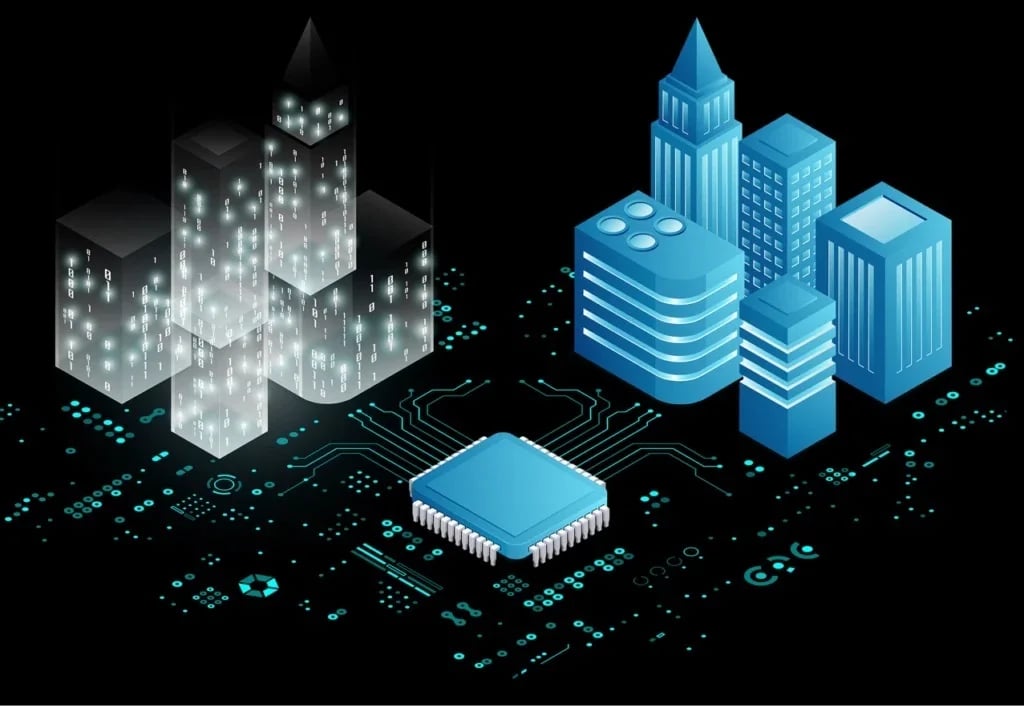
A Digital Twin adds a dynamic data layer. For example, the digital model of a hotel room not only shows the location of the bed, air conditioning, and windows but can also receive data on temperature, humidity, power consumption, equipment status, room condition, and usage history. If a device shows signs of abnormal operation, the system can reflect that status on the digital model. More importantly, a Digital Twin doesn't just "see" the current state but can also integrate AI and simulation models to answer predictive questions. How will energy consumption change if the air conditioning temperature is adjusted in a specific area? If a block of rooms is closed for maintenance for two days, how will it affect occupancy and revenue? Will guest waiting times improve if the flow of movement in the lobby area is changed? It is precisely the ability to simulate before acting that makes Digital Twin a strategic technology rather than just a visualization tool.
Why is Digital Twin becoming noteworthy in Hospitality?
The hotel industry faces a dual challenge: enhancing guest experience while controlling operational costs. This is increasingly evident as staffing, energy, maintenance, and capital investment costs become critical factors for business efficiency. Deloitte's research on the future of Hospitality indicates that 81% of surveyed hotel operators prioritize improving staff productivity, while 49% view integrating AI solutions as a technology priority. These figures show that technology in hotels is shifting from a supporting role to a direct tool serving productivity and operational efficiency goals.
In Vietnam, this need is even more pressing as the Hospitality market recovers and expands. According to Savills, Vietnam welcomed nearly 10.6 million international visitors in the first half of 2025, a 24% increase compared to the same period in 2019. In Q2/2025, the average hotel occupancy rate in Ho Chi Minh City reached approximately 61%, with an average room rate of about USD 77/room/night. As the market scales, asset management and operational challenges become more complex. A hotel cannot merely optimize individual departments but needs to view the entire property as a system with interconnected elements: guests, space, equipment, personnel, energy, and revenue. This is precisely the gap that Digital Twin can address.
How does a Digital Twin work in a hotel?
A Digital Twin system for a hotel is typically built from multiple layers of technology. The first layer is spatial and asset data, including blueprints, BIM models, 3D scans, or spatial data for the entire property. The next layer is real-time data from IoT and building management systems, such as temperature, humidity, air quality, electricity, water, and equipment status. Following this is the operational data layer from PMS, CRM, POS, housekeeping, engineering, security, and other systems. When these data sources are integrated, the Digital Twin can create a digital model that comprehensively reflects the hotel's status. The most crucial layer above this is Analytics, AI, and Simulation. This is where data is transformed into insights. The system can detect anomalies, predict potential issues, simulate scenarios, and help managers choose optimal solutions. The operational flow can be envisioned as follows: Physical Hotel → IoT & Management Systems → Data Platform → Digital Twin → AI & Simulation → Insight → Operational Decisions → Impact on Physical Hotel. This is a continuous loop. The more high-quality and frequently updated data the Digital Twin receives, the more accurately the model can reflect the property's status.
Applications of Digital Twin in hotel operations management
One of the most practical applications of Digital Twin is monitoring and optimizing operations. Instead of a General Manager or Engineering Manager relying on multiple disparate dashboards, a Digital Twin can provide a more intuitive view of the entire property's condition. For example, if an area of the hotel is consuming unusually high electricity, the system can identify the area, equipment, and time the problem occurred. If combined with occupancy data, the system can analyze whether that consumption is proportionate to the number of occupied rooms.
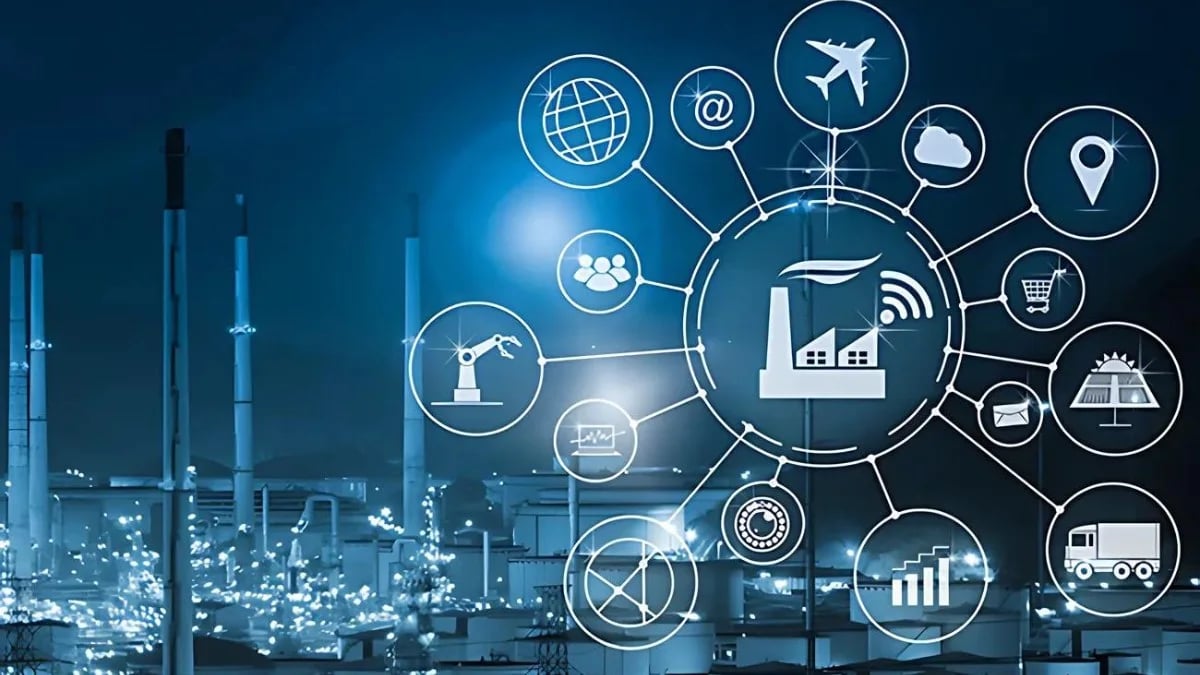
This is particularly significant for large-scale properties. With hundreds of rooms and multiple technical systems operating simultaneously, detecting anomalies manually becomes increasingly difficult. Digital Twin allows managers to shift from reactive maintenance, which only addresses issues after they occur, to predictive maintenance, which detects abnormal signs before serious problems arise. A 2026 study in the Journal of Hospitality and Tourism Technology also indicated that Digital Twin in Hospitality has the potential to improve operational efficiency, personalise experiences, integrate information for decision-making, and support resource management, despite existing challenges related to cost, technical complexity, and data integration.
How does Digital Twin enhance the customer experience?
At first glance, Digital Twin may seem to lean towards Engineering and asset operations. However, the long-term value of this technology may lie precisely in the Guest Experience. A hotel is not just a building. It is a journey of experiences including check-in, moving within the property, using rooms, restaurants, spas, swimming pools, and other touchpoints. If Digital Twin is connected with appropriate operational and customer data, the hotel can simulate how guests move, where bottlenecks occur, and areas that need improvement. For example, during peak check-in hours, the system can simulate the concentration of guests in the lobby, the number of active counters, and the average processing time. By changing the counter layout or staff allocation, the business can test the expected impact on the digital model before actual implementation. A study on Digital Twin in front-end hotel services published in Sensors in 2025 tested the simulation of front desk operations based on historical data and recorded a 25 to 35% reduction in check-in time along with a 20% improvement in staff efficiency within the study context. This is the result of a specific study and should not be interpreted as a default efficiency level for all hotels, but it demonstrates the potential of Digital Twin when applied to repetitive and simulatable processes. Deloitte also emphasises that the hotel customer experience increasingly needs to combine data, technology, and human service capabilities to meet new guest expectations.
What should hotels prepare before implementing Digital Twin?
Digital Twin should not start with purchasing software. It should begin by identifying which business problem needs to be solved. A hotel might start with energy issues if utility costs are high. A resort might begin with predictive maintenance if the property has complex technical systems. A large hotel might start with guest flow if the lobby frequently experiences congestion during peak hours.
After identifying the use case, businesses need to assess their current data connectivity capabilities. To what extent can PMS, BMS, IoT, POS, CRM, housekeeping, and engineering communicate with each other? Is there sufficient historical data? Is the data accurate and consistent? Which system will serve as the primary data source? Finally, there's human capability. Digital Twin only truly creates value when the General Manager, Engineering, Housekeeping, Front Office, Revenue, and related departments can use insights to make decisions. The more powerful the technology, the more limited the actual effectiveness if the decision-making process remains unchanged.
Digital Twin in hotels: From "seeing" to "predicting" and "optimising"
While hotel managers previously relied primarily on reports to know what had happened, Digital Twin opens up the ability to know what is happening and what could happen if we change a factor. That is the biggest difference between a reporting system and an intelligent simulation system. A good Digital Twin doesn't just create a beautiful replica of the hotel on screen. It connects spaces, assets, equipment, operational data, and behaviour into a decision-support model. When combined with AI, the system can go a step further: predicting risks, detecting anomalies, and suggesting optimal solutions. In an industry where every vacant room, every minute a guest waits, every hour equipment operates inefficiently, and every maintenance decision can impact costs or revenue, the ability to simulate before acting is immensely valuable. Digital Twin is therefore not just about technology. It's about how hotels build a "digital brain" for the property, helping managers gain a more comprehensive view, make data-driven decisions, and gradually shift from a reactive to a proactive operational model.
NewSun Hospitality: Partnering with hotels on the Smart Hospitality journey
For Digital Twin to deliver real value, businesses don't necessarily need to start with a complex system. More importantly, it's about correctly identifying the problem, standardising data, connecting existing systems, and selecting use cases that can clearly impact operations, revenue, or customer experience. NewSun Hospitality aims to partner with hotels and resorts in enhancing management capabilities, optimising operations, and applying technology in Hospitality. From standardising processes and building data systems to guiding the application of AI, Automation, and Smart Hotel technologies, the goal is to help businesses transform technology into operational capability and a real competitive advantage. If your business is exploring Digital Twin, Smart Hotel, or wants to identify operational problems that can leverage AI and data, contact NewSun Hospitality to collaboratively build a transformation roadmap tailored to your property's scale, systems, and business objectives.
- Hotline: +84 768 68 2913
- Email: dosm@nshm.com.vn
- Zalo OA: https://zalo.me/2452770272256938463 (NewSun Hospitality)
- Website: https://nshm.com.vn/ (NewSun Hospitality)
References
- Bilgihan, A., Huang, A., & Liu, Y. (2026). Digital twins in hospitality and tourism: A theory-informed framework for system-level integration. Journal of Hospitality and Tourism Technology.
- Deloitte. (2025). From manufacturing to medicine: How digital twins can unlock new industry advantages. Deloitte Insights.
- Deloitte. (2025). The future of hospitality: AI-driven industry trends. Deloitte.
- Deloitte. (2025). The 2025 European Hotel Industry and Investment Survey. Deloitte UK.
- Deloitte. (n.d.). Hotel guest experience measurement and strategy. Deloitte.
- Savills Vietnam. (2025). Hotel & serviced apartment market report: Q2/2025. Savills Vietnam.
- Zhang, et al. (2025). An ontology proposal for implementing digital twins in hospitality: The case of front-end services. Sensors, 25(14), 4504.