


 VN
VN EN
ENCentral Vietnam is not only known for its sun, dry winds, and endless blue coastlines, but also for its UNESCO-recognised World Heritage Sites, which form the "Central Heritage Road" – a convergence of the nation's cultural values. Here are some of the beautiful destinations along this route:
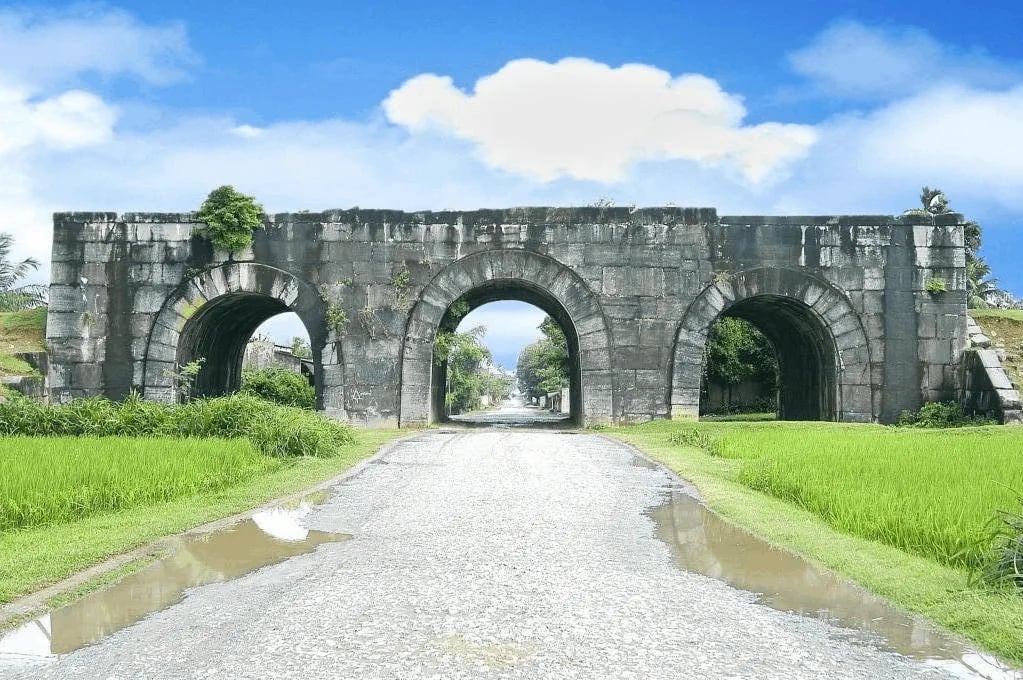
1. Ho Citadel
Ho Citadel, located in Vinh Loc district, approximately 50 km from Thanh Hoa city. It served as the capital of Vietnam from 1398 to 1407. Ho Citadel is a magnificent structure, renowned for its large-stone construction techniques and artistry, combined with unique building traditions unparalleled in Vietnam and Southeast Asia during the late 14th and early 15th centuries. After more than 600 years of historical vicissitudes and weather impacts, Ho Citadel remains remarkably intact, with its square, tightly stacked blue limestone blocks.
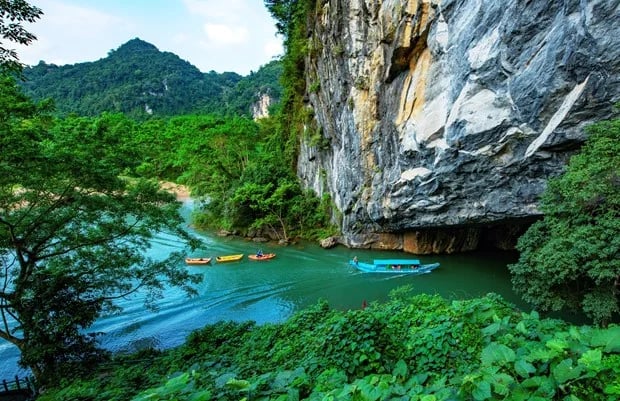
2. Phong Nha-Ke Bang National Park
Phong Nha – Ke Bang is located in the districts of Quang Bo Trach, Tuyen Hoa, and Minh Hoa, 50 km northwest of Dong Hoi city. In addition to its geological, topographical, and geomorphological historical value, Phong Nha – Ke Bang National Park is also blessed with mysterious and magnificent landscapes, featuring caves like splendid castles concealing countless secrets within limestone mountains formed millions of years ago. These include Paradise Cave, Phong Nha Cave, Tu Lan Cave, Va Cave, and especially the wonder of Son Doong Cave.
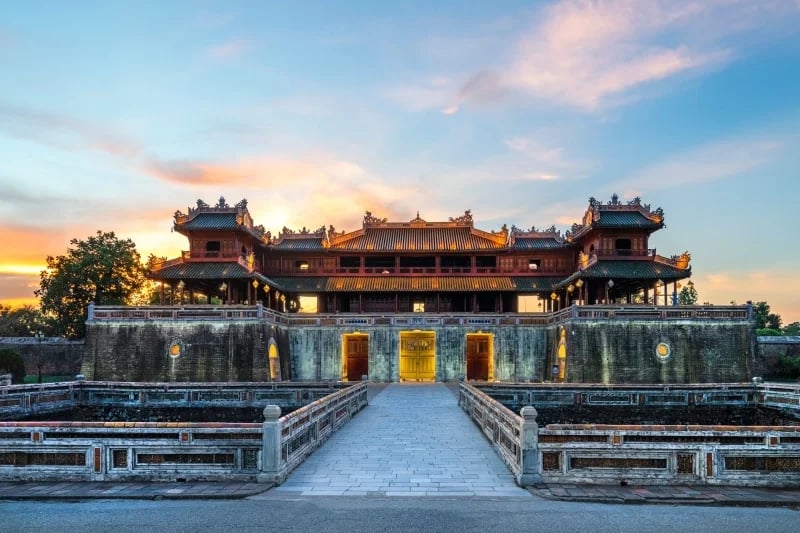
3. Complex of Hue Imperial City Monuments
Situated on the northern bank of the Perfume River, the most important architectural system of the Nguyen Dynasty comprises three interconnected citadels: Hue Citadel, Imperial City of Hue, and Forbidden City of Hue, symmetrically arranged along a north-south axis. Associated with the citadel, palaces, and tombs are also Nam Giao Esplanade, Xa Tac Esplanade, Hon Chen Temple, Linh Mu Pagoda, Tuy Van Pagoda, and more. This is a refined architectural form, with structures harmoniously integrated into the picturesque river and mountain landscape, featuring intricate decorative carvings. Recognized by UNESCO as a Masterpiece of the Oral and Intangible Heritage of Humanity in 2003, Hue royal court music (Nha Nhac) is a genre of feudal court music performed during annual festivals under the Nguyen Dynasty. Hue royal court music symbolizes the prosperity and longevity of the dynasty. In Hue, Nha Nhac can be enjoyed at Duyet Thi Duong, Minh Khiem Duong, or on a boat along the Perfume River in the evening.
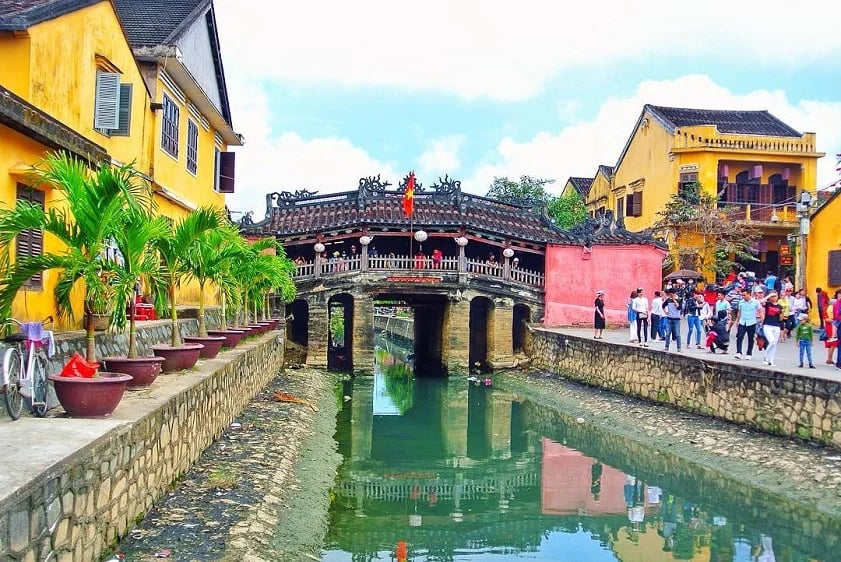
4. Hoi An Ancient Town (Quang Nam)
As a traditional trading port, Hoi An has preserved almost intact over a thousand architectural relics such as streets, houses, assembly halls, communal houses, pagodas, temples, ancestral halls, ancient wells, etc. The architecture exhibits both traditional Vietnamese characteristics and cultural integration with Eastern and Western countries, creating a truly unique cultural heritage. The streets in the ancient town are short and narrow, winding and laid out in a grid pattern. Visitors to Hoi An can easily spot the traces of time not only in the architectural style of each building but everywhere: on moss-covered yin-yang tiled roofs, on old, grey, moldy walls... Especially, the sparkling nights of Hoi An can transport you to a beautiful fairy-tale world, making you never want to end this peaceful journey. This is particularly true given the wonderful cuisine that has captivated so many visitors to Hoi An.
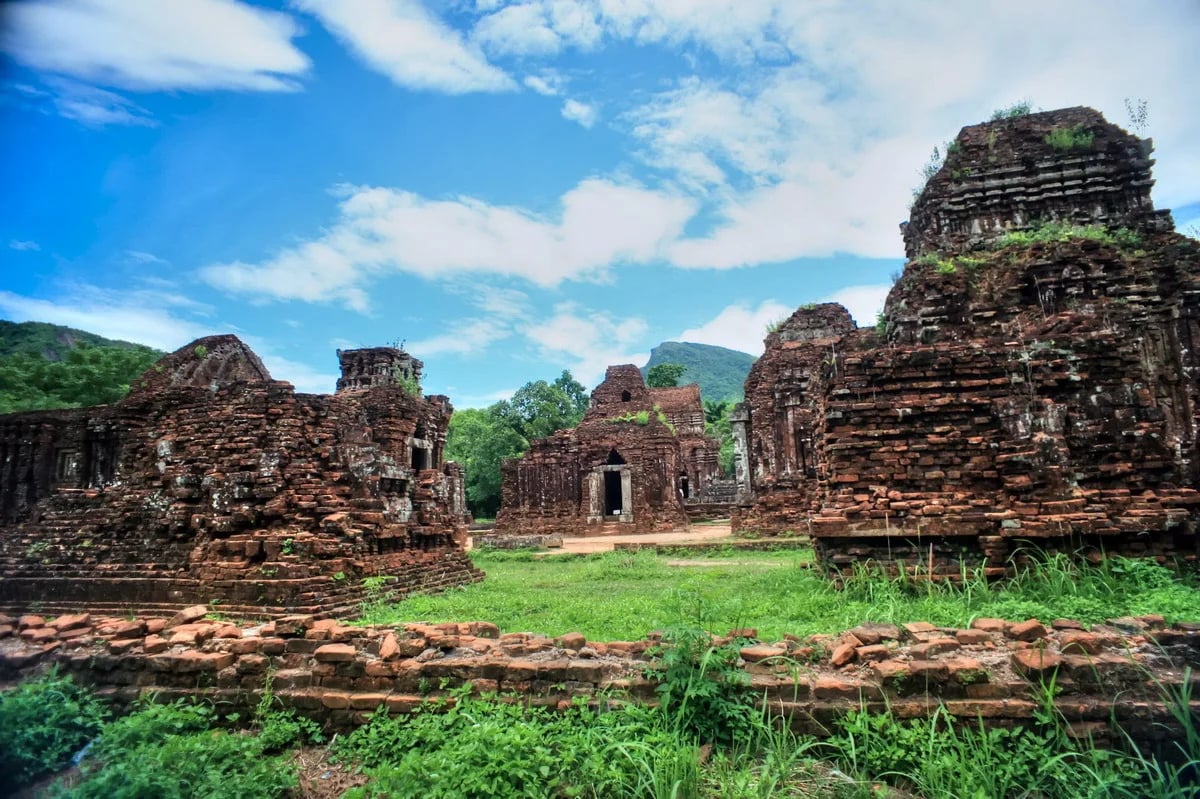
5. My Son Sanctuary
Located in a secluded, solemn valley approximately 2 km in diameter, surrounded by majestic, cloud-covered hills and mountains, within a mountain range ranging from 100m to 400m high from the Eastern Truong Son Mountains through My Son to the ancient capital of Tra Kieu, My Son Sanctuary is considered one of the main Hindu temple complexes in Southeast Asia and the only heritage site of its kind in Vietnam. The sanctuary features over 70 temple-tower architectural works embodying historical, cultural, architectural, and artistic values created over a long period of nine centuries, and is considered on par with famous monuments in Southeast Asia such as Angkor and Bagan. Source: Transviet